
Research Article Summary
5 Minute Read
Brigham Young University Researchers 3D Print Microfluidic Heaters With Near-Uniform Temperature Control
Title
Electronic Supplementary Information (ESI): 3D Printing-Enabled Uniform Temperature Distributions in Microfluidic Devices
Authors
Derek Sanchez, Garrett Hawkins, Hunter S. Hinnen, et al.
Journal
Lab on a Chip (Royal Society of Chemistry), 2022.
DOI Link
Summary
Researchers at Brigham Young University used 3D printing to design and fabricate three new microfluidic heater geometries that hold temperature variation below 0.1°C across several millimeters of channel length, a level of uniformity that is difficult to reach with traditional layered fabrication methods. (Sanchez et al.)

Summary Author
This page was prepared by CADworks3D to summarize and highlight a peer-reviewed research article authored by independent researchers utilizing the CADworks3D system.
Title
3D Printing-Enabled Uniform Temperature Distributions in Microfluidic Devices
Authors
Derek Sanchez, Garrett Hawkins, Hunter S. Hinnen, et al.
Journal
Lab on a Chip (Royal Society of Chemistry), 2022.
DOI Link
Key Results at a Glance
91%
Thermal Gradient Reduction
New 3D printed heater designs cut internal temperature gradients by up to 91% compared to standard heater shapes
<0.1°C
Isothermal Precision
Temperature stayed within 0.1°C across up to 9.1 mm of channel length in the best performing design
~30 Minutes
Rapid Fabrication
A complete heater chip can be 3D printed in about 30 minutes
~20 µm
Fine Feature Resolution
The printer used to fabricate the chips can resolve internal channels as small as 18 x 20 µm
Objective
Microfluidic devices are widely used to run temperature-sensitive lab processes at a tiny scale, including polymerase chain reaction (PCR) and melt curve analysis (MCA). Both techniques are central to disease detection and genetic testing, and both depend on holding a fluid sample at a precise, evenly distributed temperature. For MCA in particular, some genes have melting temperatures that differ by less than 0.4°C, so even a small temperature gradient inside the device can produce an inaccurate reading.
Most microfluidic heaters are built using traditional fabrication methods such as bonded layers of glass, silicon, or PDMS. These methods are fundamentally two-dimensional. A flat heater is placed underneath a microfluidic channel, and while the heater itself may reach a uniform temperature across its own plane, that heat has to travel upward through the chip to reach the sample. This creates a temperature gradient in the direction perpendicular to the heater, sometimes as large as 7°C across a 200 µm channel. That kind of variation is far too large for sensitive processes like MCA, and it is difficult to correct using 2D fabrication methods because the heater geometry itself is limited to a single flat layer.
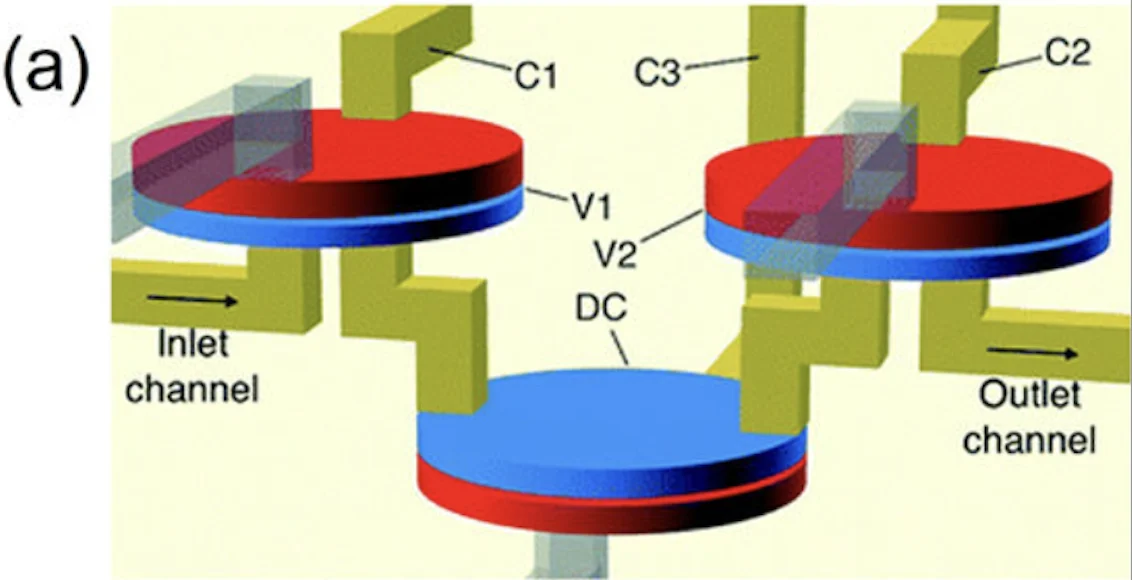
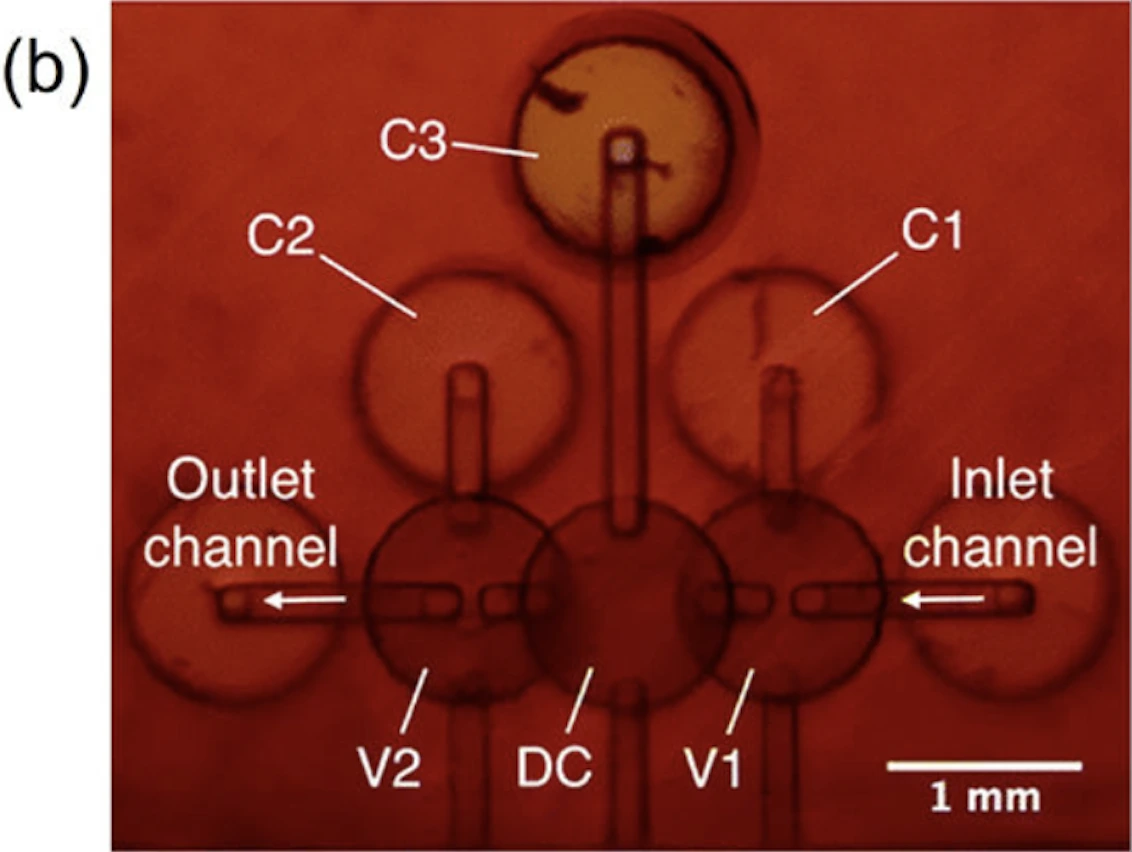
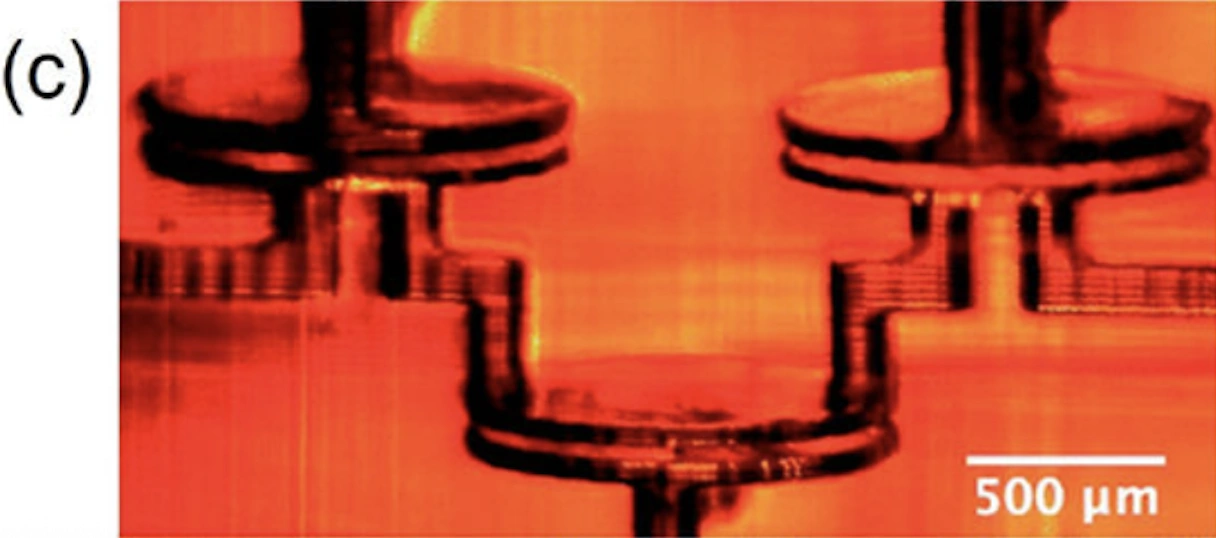
Figure 1. A CAD model (a) compared to the same microfluidic channel network after 3D printing, viewed from the top (b) and side (c). This level of feature detail is difficult to achieve with traditional microfluidic fabrication. Source: Sanchez et al. 3D Printing-Enabled Uniform Temperature Distributions in Microfluidic Devices. Lab Chip. 2022.
3D printing removes that constraint. Because a 3D printer can build structures in any orientation and shape, a heating channel can be designed to wrap around a microfluidic channel from multiple directions instead of sitting beneath it in a single plane. This raises a design question that had not yet been systematically explored: what heater geometries take full advantage of 3D printing to keep an internal channel isothermal, and what design rules can guide engineers toward those geometries instead of relying on trial and error?
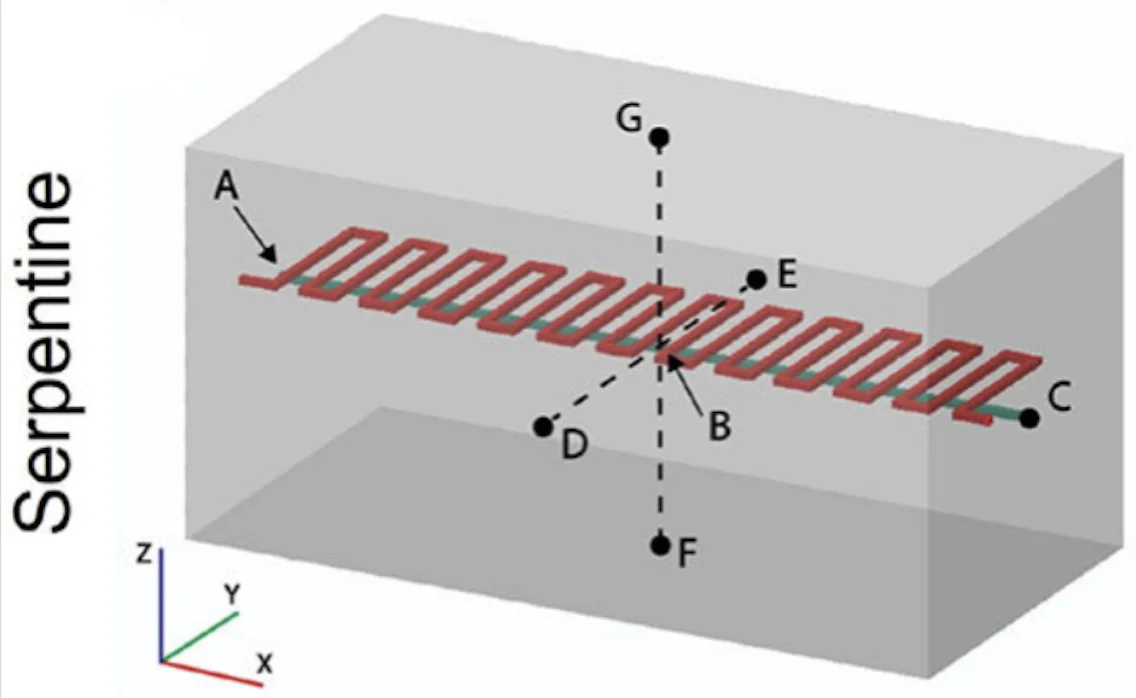
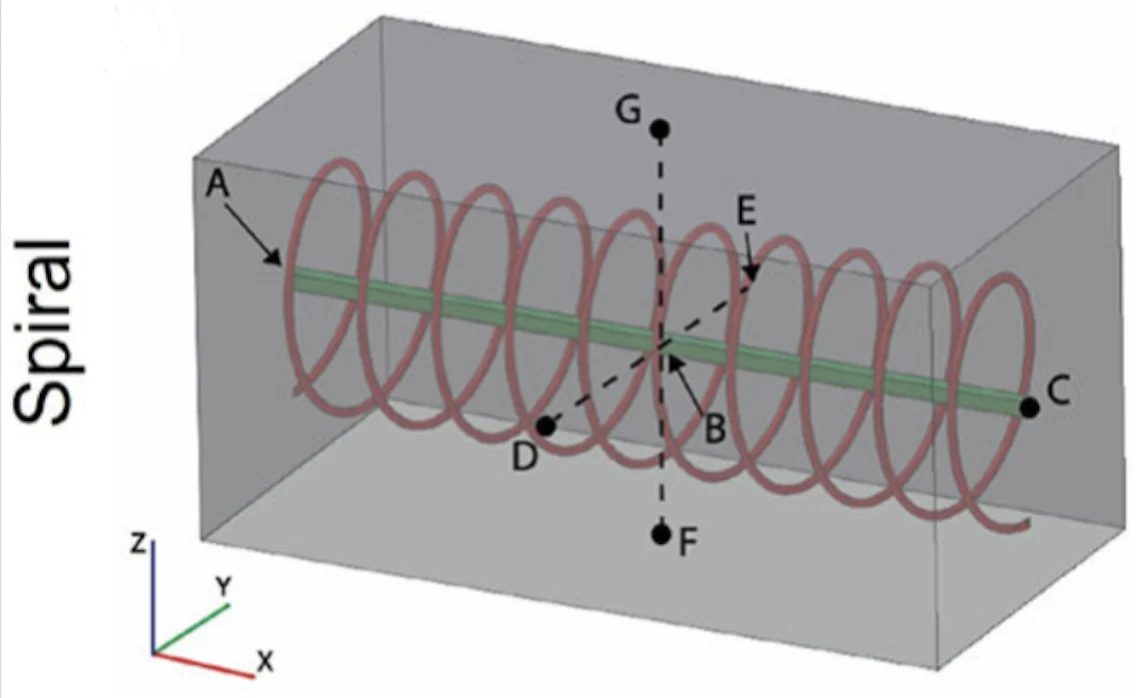
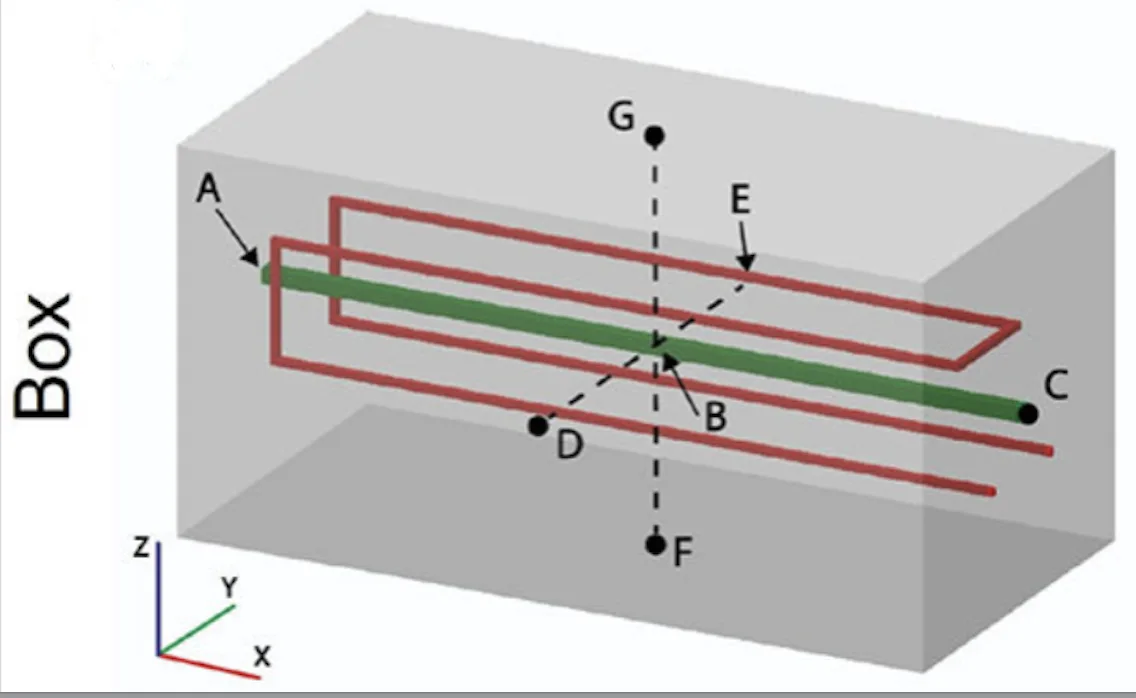
Figure 2. CAD models of three conventional microfluidic heater geometries used as a baseline for comparison: a serpentine channel (left), a helical channel (spiral) (center), and a box channel (right). Source: Sanchez et al. 3D Printing-Enabled Uniform Temperature Distributions in Microfluidic Devices. Lab Chip. 2022.
Methodology and Design
Every heater design in this study followed the same basic pipeline. The team first modeled a heater geometry around a central microfluidic channel in CAD software, then imported the model into COMSOL Multiphysics for finite element simulation to predict its temperature distribution. Once a design showed promise in simulation, it was converted into a print file and fabricated on a high-resolution DLP resin 3D printer, allowing the team to move from a digital concept to a physical, testable chip without machining, molding, or cleanroom processing.
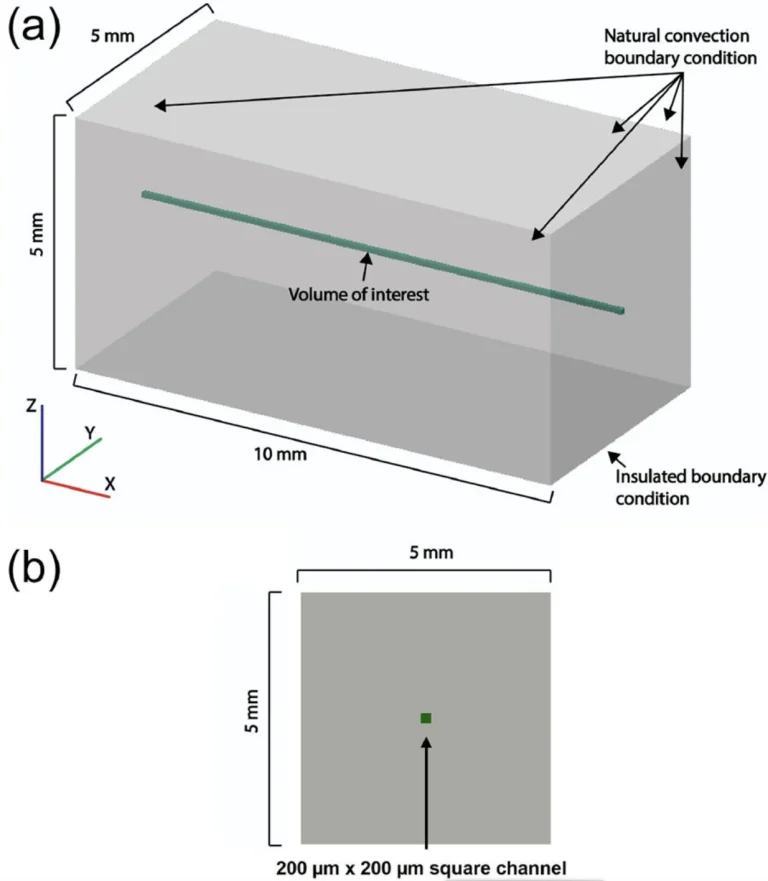
Figure 3. (a) The base CAD model used for every heater design in this study, showing a heating channel with two electrical contacts built around a central microfluidic channel. (b) A side view of the same model, showing the size, shape, and position of that central channel, the "volume of interest," at the core of the 10 mm chip. Source: Sanchez et al. 3D Printing-Enabled Uniform Temperature Distributions in Microfluidic Devices. Lab Chip. 2022.
Using this pipeline, the team designed and printed three new 3D heater geometries, each with strengths suited to a different microfluidic use case:
Non-Planar Serpentine Channel
Tapered Helical Channel
Diamond Channel
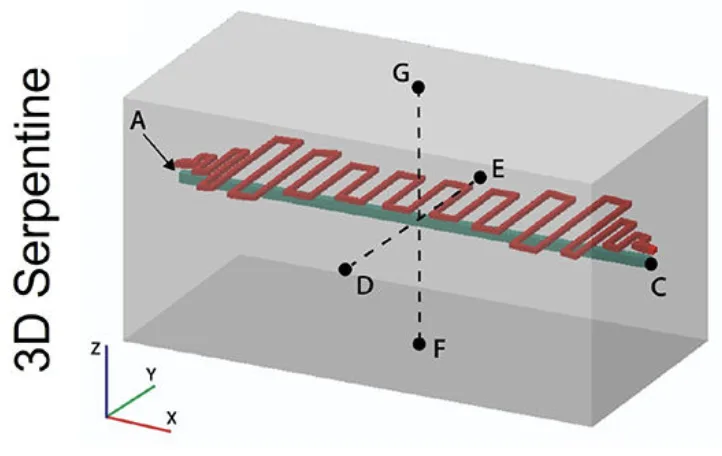
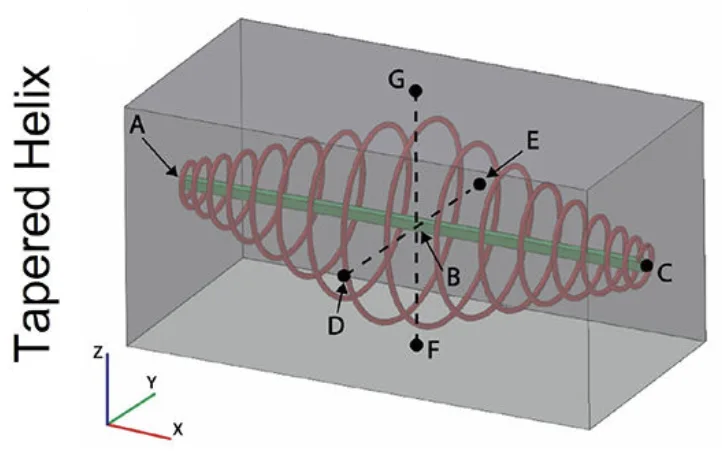
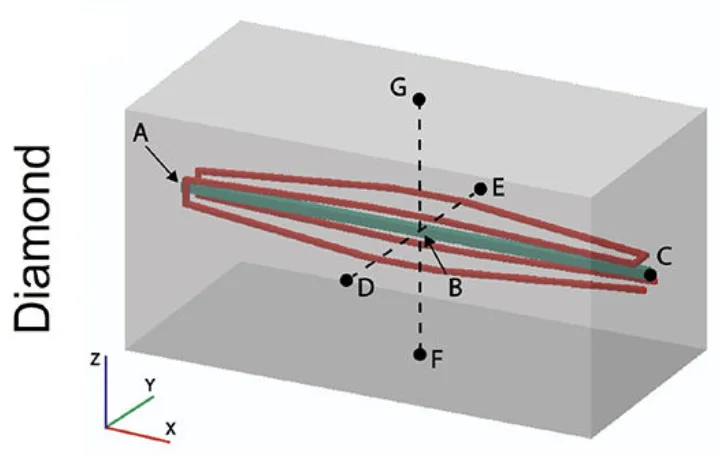
Figure 4. (Top Left) CAD model of the non-planar serpentine heater channel, curved in three dimensions to direct more heat toward the ends of the chip. (Top RIght) CAD model of the tapered helical heater channel. The coil diameter and spacing narrow near the ends of the chip. (Bottom Center) CAD model of the diamond-shaped heater channel, positioned closer to the channel at the chip's edges and farther away at its center. Source: Sanchez et al. 3D Printing-Enabled Uniform Temperature Distributions in Microfluidic Devices. Lab Chip. 2022.
The non-planar serpentine design curves through the chip in three dimensions instead of sitting in a single flat plane, bringing more heat toward the ends of the channel where heat naturally escapes fastest. It produces the single highest temperature point along the channel, which makes it well suited to melt curve analysis, where knowing the exact peak temperature a sample experiences matters more than an extremely long isothermal region. The tapered helical design widens and narrows its coil spacing along the length of the chip, delivering more heat at the center and less at the ends to counteract the natural temperature falloff near the chip’s edges. It offers a longer isothermal length than the serpentine design without the temperature bump that shows up in the diamond geometry, making it a balanced option for general purpose heating. The diamond design pulls the heating channel closer to the target channel near the chip’s edges and further away at its center, and it produced the longest stretch of near-uniform temperature of the three, along with the slimmest overall footprint. That combination makes it a strong candidate for compact, crowded lab-on-a-chip layouts or for devices where a clear optical path to the sample is needed.
Each chip was printed on a custom high-resolution DLP 3D printer capable of a 7.6 µm pixel size and 10 µm print layers, fine enough to reliably produce internal channels as small as 18 x 20 µm. A complete heater chip could be printed in about 30 minutes, followed by an isopropyl alcohol (IPA) flush and vacuum clearing to remove uncured resin from the internal channels, then roughly 15 minutes of post-print UV curing. To make the design fully functional, the printed heating channel was filled with galinstan, a liquid metal that conducts electricity well enough to generate heat (Joule heating) even inside the tight, curved geometries that 3D printing makes possible but that could not be easily filled using a solid metal wire or thin film. Test chips were sealed to a glass build platform, fitted with external tubing to introduce the galinstan, and bonded in place using a UV-cure adhesive.
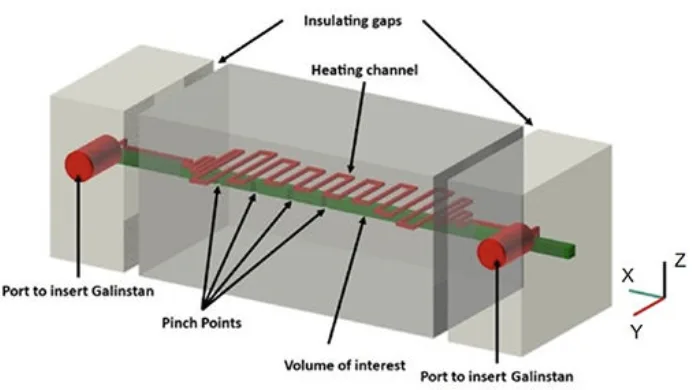
Figure 5. CAD model of the test chip used to validate the simulations, with fill ports for the liquid metal heater, pinch points for placing a thermocouple, and insulating gaps to isolate the heating channel from external wiring. Source: Sanchez et al. 3D Printing-Enabled Uniform Temperature Distributions in Microfluidic Devices. Lab Chip. 2022.
Results
Across all three new geometries, adding a third design dimension substantially improved temperature uniformity compared to their traditional, single-plane counterparts. The non-planar serpentine, tapered helix, and diamond designs each reduced the temperature difference across the target channel relative to their 2D-inspired baseline versions, with the largest single improvement reaching a 91% reduction in internal thermal gradient.
The diamond design produced the most isothermal result overall, holding the temperature difference to less than 0.1°C across 9.1 mm of the 10 mm channel length, a significant improvement over baseline designs from literature that could only maintain that level of stability across a few micrometers. The tapered helix and non-planar serpentine designs also produced multi-millimeter isothermal regions, each with the tradeoffs in peak temperature location and overall chip footprint described above.
These results depended on the fabrication method as much as the geometry itself. The team’s high-resolution DLP 3D printer could resolve the fine internal features these designs required, down to channels of roughly 18 x 20 µm and print layers of only 10 µm, while producing a complete test chip in about 30 minutes. Experimental testing on physically printed and galinstan-filled chips, measured with embedded thermocouples, matched the COMSOL simulation predictions closely enough to validate the modeling approach used to design all three geometries.
“These processes, used for detection and identification of diseases and genetic mutations, have many important uses in the medical industry, such as detecting COVID-19 or DNA genotyping.”
— Sanchez et al., 3D Printing-Enabled Uniform Temperature Distributions in Microfluidic Devices
Products Used In This Study

Questions on how our 3D printing system can work for your research? Connect with one of our specialists.
More Research Article Summaries
McGill University researchers build a 3D printed double-sided mold system to shape and merge brain organoids on a chip
University of Hawaiʻi researchers 3D print wearable "sweatainer" devices with true microscale internal channels
Want to read more article summaries?
We summarize the latest microfluidics and 3D printing research.
Curated from peer-reviewed publications featuring the CADworks3D system.