

SEASON 02 EPISODE 01
3D printing physiological devices for sperm sorting and selection
6th April, 2026
Hemdeep Patel, Robin Boshoven and Dr. Majid Warkiani
Podcast Summary
This episode of Big Ideas at Microscale features Professor Majid Warkiani of the University of Technology Sydney, whose background includes microfluidics training in Singapore and a postdoc at MIT. He now leads a lab focused on additive manufacturing for reproductive biology, tackling male infertility, a factor in roughly half of reproductive difficulties but historically under-researched.
Warkiani discusses how his team uses 3D-printed microfluidic devices to replicate the body’s natural sperm selection process, improving on damaging techniques like centrifugation. The conversation covers two spinout companies: Neogenics Biosciences, which pairs this technology with AI to speed up sperm detection in biopsies, and Smart Microcarriers, which applies similar 3D-printing methods to bioprocessing.
The episode covers how 3D printing enables biomimetic device designs impossible through traditional fabrication methods, along with the real challenges of scaling lab prototypes into commercial, regulator-approved products.
Available On :



"They are still using this 30, 40 years old technology… centrifugation… which is proven nowadays to damage the sperm."
Transcript
Transcript
Hemdeep (00:00) Welcome to Big Ideas at Microscale, the podcast where we explore groundbreaking research happening at the microscale, where micro innovations make a big impact. We’re excited to showcase the incredible work being done by our users from around the world who are pushing the boundaries of microfluidics, lab-on-a-chip, organ-on-a-chip, and beyond. Through these conversations, we hope to learn from their experiences, uncover their insight, and bring their big ideas to a wider audience. So whether in a lab, on the go, or just curious about the future of microtechnology, join us as we dive into big ideas at Microscale.
Welcome back to Big Ideas at Microscale. My name is Hemdeep Patel. I am the co-founder of Creative CADworks, CADworks3D, and Resinworks3D. I have my co-host, Robin.
Robin (01:24) Yes, hello, I’m Robin. Like you said, I’m the co-host and the technical writer on the marketing team.
Hemdeep (01:31) And today we are very excited to have Majid Warkiani from UTS Australia. He has been one of our strongest supporters ever since we set up the company, he was the person who reached out to us in 2018.
Majid (01:42) Majid Warkiani, that’s it.
Hemdeep (01:57) And at that time, I remember the conversation we had, because of the time difference, him in Australia, us in Toronto, Canada, I woke up and stayed awake until midnight, one o’clock in the morning, and it was afternoon for him. I remember having a full conversation about what he was doing and the challenges he was having with 3D printing and his research, and what we were doing on our side. From that point on, I’ve had the chance to watch his research develop through articles coming out, just being amazed at what he’s been up to. I’m really excited that we get a chance to bring his knowledge and research to a much wider audience. So welcome, Majid.
Majid (02:45) Fantastic. Thank you very much, Hemdeep. It’s a great pleasure to be here to chat with you and Robin today. I’m excited as well, looking forward to our chat.
Robin (02:54) Why don’t you go ahead and tell us a bit about your professional background, whether academic or commercial, just give us your background.
Majid (03:07) Sure. Hello everyone. My name is Majid. I’m a professor of biotechnology at the University of Technology Sydney. I did my PhD in Singapore, and my postdoc in Boston at MIT with a group of talented scientists who had been working for decades to develop cool applications for microfluidics. Since the start of my PhD, the microfluidics field has grown very rapidly, on the back of advancements in micro/nanofabrication in the semiconductor industry. What fascinated me since my PhD was how these gadgets can mimic the environment of the human body, where we could play with cells and bodily fluids such as blood, things like cell separation, which is the major focus of my research activity here at UTS.
As Hemdeep said, I’ve been an advocate of microfabrication through additive manufacturing. This has been an exciting field, which I believe CADworks3D played a key role in, because when 3D printing became popular, 15 or 20 years ago, there was no dedicated machine for microfluidics. I struggled a lot with early versions of these devices trying to build miniaturized, fully functional chips in the lab. We had a lot of issues. But I was glad that in 2017–18 I came across this nice platform you put together, especially all the work you did with resin development to make it work. And as Hemdeep said, we’ll discuss more, we’ve built a lot of cool things, not just me but many scientists, on the back of this technology, many of which have either been translated to market as commercial products or are on their way toward commercialization.
Hemdeep (05:06) I didn’t know you were at MIT or did your postgrad in Singapore, that gives you a really interesting pathway to where you are now. What were you seeing at that time in terms of 3D printing? By the time you needed a tool, what changes and applications did you start seeing that were replacing the clean room and similar approaches?
Majid (05:32) Exactly. When I finished my master’s program in Iran, I got to see someone who came from Virginia Tech to give a seminar. The first time I saw a miniaturized device, I believe it was a gas sensor built on a silicon wafer for chromatography, I was fascinated. I still remember the pictures from that time, 2007 or 2008: how small the microchannels were that they’d managed to make, much smaller than a human hair. He showed an SEM photo comparing the channel to the thickness of a human hair. After chatting with him, I said, this is fantastic, I’m finishing my master’s, I want to go somewhere to do micro/nanofabrication. He recommended a couple of colleges in the US and Canada, and then mentioned Singapore, did I know that Singapore has fantastic colleges, NTU and NUS? They’re in the global rankings and are excellent in micro/nanofabrication, the first CD by Sony was actually produced in Singapore. Singapore was a hub for so much micro/nanofabrication work, including the birth of the CD as we know it.
So I looked into it, saw what beautiful colleges they had, found friends who’d gone there earlier, and the scholarships offered were much more generous than the North American scholarships I was seeing. I applied and got admission within months, and ended up in Singapore. Singapore is a small island with a couple of universities, but two of them, National University of Singapore and NTU, are in the top 10 or 20 globally, and they’ve contributed enormously to micro- and nanofabrication, including additive manufacturing; they were early advocates of additive manufacturing. At NTU there’s now a dedicated additive manufacturing center doing a lot of fundamental research.
I started getting exposed to this machinery, the bulky machines at that time were either sintered-powder-type devices or filament printers; you couldn’t really do microscale work with them. It was cool to see how things were evolving. During my PhD, I spent half of my life in the clean room, which was miserable, every time you wanted to make even small changes, you had to go through the whole procedure again. You can imagine how much failure I had with SU-8 lithography and everything else not working in our favor. One of our constant discussion points was: can we do this differently? At that time I was working in dimensions ranging from 100 to 150 microns for most of my work. So I started looking for CNC macro-machining people doing mold manufacturing for injection molding, and ended up building some molds with CNC rather than doing lithography on SU-8, for casting PDMS. I kept saying there should be a solution, 3D printing should come in between, because why should I spend $1,000, $2,000, and a few weeks for someone to mill a pattern into aluminum or steel, when for most structures milling wasn’t even possible? Singapore and NUS had very good CNC machining facilities, fancy five-axis, ten-axis CNC for industrial work, which I had the privilege to use. From early on I saw companies like Toyota and Sony come to Singapore for small projects, bringing pieces of metal they wanted to put in the next-generation Toyota Camry that were hard to manufacture. For small-scale projects where resolution and quality mattered, Singapore was always a hub.
Hemdeep (10:08) Amazing. Then I think you went to MIT, I remember when we first chatted, you were using predominantly jetted materials; you wanted a mold material and were using a jetted platform, and we found a solution for you. Where does the launch-off point come in where you’re now fully immersed in 3D printing and microfabrication and starting to develop your research?
Majid (10:38) 100%. Whenever you graduate and finish your postdoc, one recommendation your supervisor gives you as you become independent is: don’t do the same old stuff, start something new, that’s how you differentiate your career path. Since leaving MIT, I always wanted to contribute to an emerging field where people could benefit and we could do something new. I was one of the early people trying to promote 3D microprinting in my presentations, it was on my bucket list.
When I came to Australia, I first joined the University of New South Wales, in the School of Mechanical Engineering. In my start-up package I got a few hundred thousand dollars, and I spent most of it buying 3D printers. I told the head of school I wanted to set up additive manufacturing there, and she was generous with extra funding. I ended up buying several machines, including this new generation of miniaturized desktop SLA machines that had just emerged, and I was looking for an open-source type printer I could tinker with myself. I spent a lot of time buying and playing with 3D printers, and that excited a lot of people, it helped initiate a big program through Carbon’s additive manufacturing team, around the time the company Carbon became popular (you may remember the Adidas 3D-printed midsole work, I know one of their early investors, Simon, from back in the US, who later moved to Stanford). Even a simple idea like oxygen-permeable resin curing can become a multimillion-dollar business, I’ve seen those Adidas shoes; the new generation of those midsoles are all 3D printed, on the back of that research.
We did a lot of cool things at UNSW. There was a researcher working on coronary arteries who had a personal heart issue and wanted to build vasculature models for particle image velocimetry, I helped him build those vasculature models directly with 3D printing. There was also work related to oil and gas extraction, similar to research David Sinton (I believe in Toronto or UBC) has done in Canada, and in Australia there’s a lot of mineral research, especially coal. We built models of how gas and water propagate, replicating patterns from SEM and TEM imagery as CAD files and vectors to print and visualize mass transport in the lab.
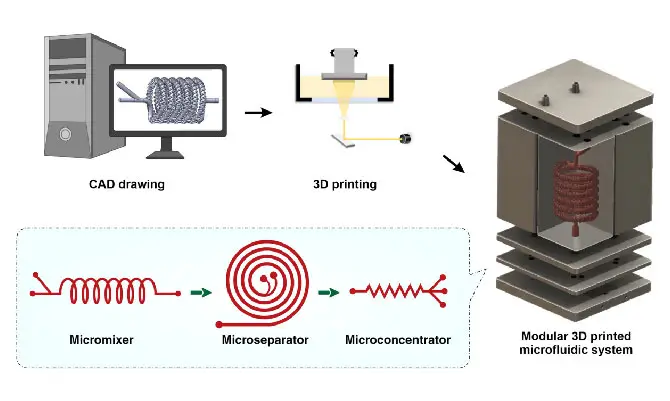
Then I gradually moved toward more biological applications, which is where the Neogenics story, biomimetic sperm sorting, began. When I moved to UTS and was setting up my lab, an undergraduate named Steven, now CEO of the company, came to me finishing his honors program wanting a cool project. I gave him one: building 3D helical micro-mixers, directly printed, one of the first groups to do this, and probably one of the earliest publications using your machine, showing that particle conjugation that normally takes hours could be done via rapid mixing in these devices. That device has since been cited and reproduced by multiple groups.
Steven then wanted to do a PhD, and I had notes on reproductive biology as a field I wanted to contribute to, something not many people were working on. We decided to focus on the male factor, which has historically been ignored compared to the female factor. There’s a global mentality, not just in Canada or Australia or India, that reproductive problems are the woman’s issue. It’s only in the last decade or so that we’ve recognized this is a roughly 50-50 problem, not a female issue. Because of that historical mindset, most of the research over the past 40 years has focused on the female side, devices, drugs, medications, while the male side was largely neglected. That’s where we found our niche about five years ago, and that’s how all of this started.
Robin (16:39) What did the research look like before 3D printing? Were there other fabrication methods you tried before eventually moving to 3D printing?
Majid (16:59) 100%, that’s right. When you start something new, you do a literature review, the first task I gave Steve was to find the state of the art for how people handle sperm in andrology labs. We quickly realized they were still using 30–40-year-old technology, centrifugation, to separate good sperm from bad. It’s now known that centrifugation causes DNA damage that’s not visible to the eye, andrologists can’t see it, and they may pick up a damaged sperm without knowing it. That’s part of why IVF success rates have stagnated around 30–35%, meaning even when every step is done correctly, there’s roughly a one-in-three chance of a successful outcome per cycle, and each IVF cycle costs $10,000–$15,000 on average globally.
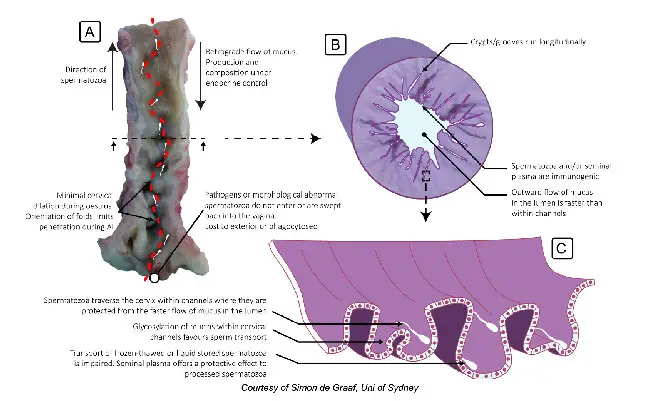
The other standard technique is called “swim-up,” a simple tilting approach letting sperm swim in a density gradient. If you look at the literature on how nature performs sperm selection in the body, there’s a multi-stage filtration and selection process from ejaculation to fertilization that’s conserved across mammals, we recently wrote a review article for Nature Reviews Urology comparing sperm behavior and tracking across different mammalian species. Humans deposit millions of sperm, and only one or a few reach the end of the tract. The selection mechanisms include chemotaxis (response to chemical gradients), thermotaxis (response to temperature differences), microguidance structures the sperm use to navigate (which we mimic with 3D printing), and pH differences, the entrance environment is acidic and kills off most invading sperm through immune attack and harsh conditions, leaving only the strongest to survive and navigate through. Biologically we understand this, but the question was how to mimic it outside the body, inside a microfluidic cartridge, if the human body can select just the top, high-DNA-integrity sperm to fertilize the egg, how do we build a device that does something similar?
Robin (21:27) Did centrifugation attempt to mimic that environment at all, or no?
Majid (21:34) Does the human body centrifuge anything? We have an animation Steven uses in his presentations, imagine an astronaut at 10–20G, how their face distorts in that centrifuge-like environment, that’s essentially what you’re doing to sperm, and then expecting the machine to do the job properly.
Hemdeep (22:03) So in terms of available technology at the time, you’d identified a problem and found a disparity between outcomes and expectations. Did you look back at traditional microfabrication methods for solutions, or pivot right away to 3D printing?
Majid (22:39) The first thing was figuring out which of these selection mechanisms was easiest to mimic and replicate. There’s a well-known concept in the microfluidics community called the “Christmas tree” chemical gradient generator, pioneered by Albert Folch (based in Seattle), who is also an advocate of 3D printing. We wanted to build a chemical gradient, and also a temperature gradient, which required more microfluidics engineering to control temperature across different zones. Building these complex 3D networks going in different directions was very hard, we found SEM images in the literature of such microstructures, and I instantly realized there was no way to build these with traditional planar microfabrication like MEMS or SU-8 lithography. 3D printing was clearly the first choice. Since we were already working with 3D printing for other microfluidics projects, we quickly conceived an approach, although 3D printing itself has inherent challenges around print orientation, whether to do direct printing or mold-and-cast with PDMS for visualization purposes.
We decided to mimic part of this scenario, especially the mechanism called thigmotaxis, the boundary-following behavior of sperm around microstructures, and started building early CAD models in SolidWorks, replicating photos from the literature. We built early prototypes and had to iterate a lot to figure out how closely they mimicked what happens in the human body. Time is always the most important factor for me, and one of the beautiful things about this machine is that it saved us a lot of time and money, traditional microfabrication, even if I could have made it work, would have taken weeks or months. We couldn’t have made this progress without a 3D printer.
Hemdeep (25:13) And I imagine you were also able to run multiple variations in parallel, shortening iteration time while running several projects simultaneously?
Majid (25:28) Exactly, different channel designs and conditions run in parallel. We now have another project we call the “sperm race”, using identical structures but racing bull, human, and horse sperm against each other. We found certain animals have better thigmotaxis behavior, and that correlates with higher natural pregnancy rates in those species, we want to see how that learning transfers to humans. This is only possible with 3D printing: my student team draws a design, goes to the lab, makes it, and within weeks we have data to analyze. That loop of ideation, testing, and iteration is so important in microfluidics, and 3D printing has been the workhorse in my lab, running 24/7.
Robin (26:47) What about biocompatibility, since you’re dealing with sperm cells? Did you have issues keeping them alive or viable, and did you need surface treatments or other protocols to increase survival?
Majid (27:05) Good question. For cases where we do the replication, we use 3D printing just as a mold and cast in PDMS, which has very good biocompatibility. For the resins themselves, we did a systematic study of sperm residence time and the media/resin interaction post-curing, and we honestly didn’t see much adverse effect, other publications have studied this too. If the biological residence time in the channels is short, five, ten, twenty minutes, you’re not going to see much effect.
Robin (27:47) Okay, so that was the case for you, a very short amount of time.
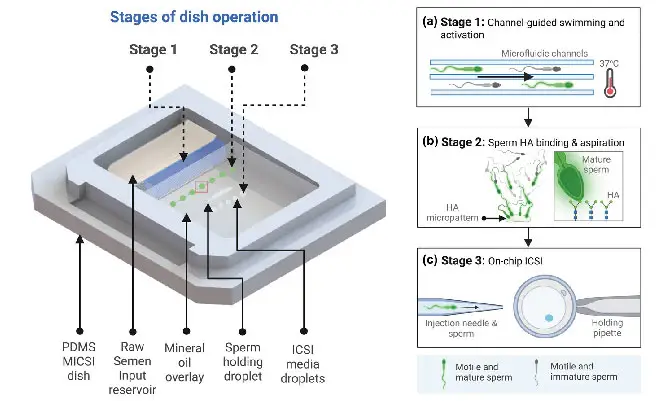
Majid (27:50) If you wanted to incubate for days or months for cell culture or organ-on-a-chip work, that’s something we’d still need to explore. There’s an opportunity that came up in discussions with the TGA [Australia’s Therapeutic Goods Administration], there’s another Australian company called Fertilis, based in Adelaide, building a microfluidic device that holds the egg and guides needles to inject sperm. Currently embryologists use two joysticks, one to hold the egg, one to pick up and inject the sperm, and the pressure applied can cause damage. Fertilis built a device using two-photon 3D printing (a high-resolution technique) where the egg is held and the needle guided through narrow microchannels, making errors nearly impossible for embryologists, enhancing sperm-to-egg injection. It’s another good example of additive manufacturing helping, alongside our own work.
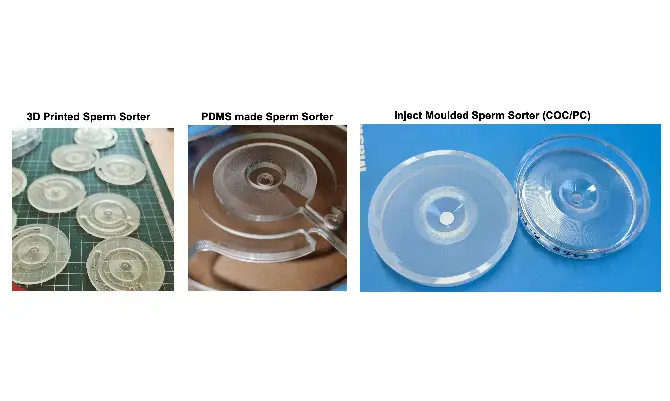
But the issue they face, like us, is convincing the TGA or FDA that these materials can be used directly in clinics. Opinion [likely referring to a specific manufacturer] did a lot of research on coatings and building a resin similar to polycarbonate. From early on, one issue we had was that there’s no way to take a fully 3D-printed device directly to the TGA, the idea of injection molding has always been there in the back of my mind, because if this works, can a company injection-mold it for me? That’s another layer of transition, because 3D printing is fantastic for building and validating an idea, but scaling up to millions of chips is hard to do with 3D printing alone. I’ve traveled to China ten times, Singapore five times, Korea six times, Japan a couple of times, discussing with manufacturers: here’s my 3D-printed device, here’s my PDMS device, can you make it in polycarbonate, can you bond these things together?
Hemdeep (30:57) So when someone uses 3D printing to develop an idea, there’s always this commercialization bottleneck, the scale-up technology isn’t quite there yet.
Majid (31:11) I’d call it an opportunity. Imagine software with an AI component that has deep knowledge of injection molding constraints, able to take your 3D printing design and make it compatible with traditional injection molding, that’s something missing, and I think that’s where the opportunity lies. An open-source design-iteration tool for 3D printers that guarantees mass manufacturability at the end, that’s something I believe is the gap.
Robin (31:56) I know your lab does a lot of work toward commercializing devices, and you’ve worked with industry partners. Do they help with things like developing this AI platform? And when making devices for them, do you use injection molding or still 3D printing?
Majid (32:27) For small-scale, limited-use applications, 3D printing is perfect, we build models and give them out. For example, there’s a company, a subsidiary of a French company, that’s the only place in the world making lyophilized bacteria count reference pills used in food microbiology. They use flow cytometry to count a known number of bacteria into a droplet, freeze-dry it, and sell it, say a pill with 10, 20, or 50 lactobacillus. One issue they had was with the nozzles feeding their flow cytometry machines, so we designed and sold them nozzles using your machine. Since it wasn’t high-throughput, they only have about 20 machines, injection molding wasn’t needed; we just make replacement nozzles whenever one wears out, and it’s consultancy work. Another company needed a custom connector between two bioreactors and had found no existing solution in bioprocessing, so we built them a fully 3D-printed intermediary device. I have many examples like this, industry had a need, didn’t know how to solve it, we built it, and they didn’t need to scale up because they only needed limited quantities. That’s a promising application of 3D printing.
Hemdeep (34:41) I want to rewind, you mentioned mimicking an entire biological process where sperm move through varied environments and conditions. Are those conditions created within a microfluidic chip as a design factor, heat gradients, chemical gradients mimicking pH ranges? How long does it take to transpose a biological system onto essentially a 2D/chip plane?
Majid (35:27) There are a couple of angles. First: of these multiple selection mechanisms, which plays the major role? We realized early on that thigmotaxis, navigating tortuous microstructures, is a bigger selection factor than thermotaxis or chemotaxis. Second: yes, thermotaxis gives results scientifically, but can it be mimicked practically in the lab in a way embryologists will actually use? That’s a different question, scientifically you can mimic almost anything, but whether it’s commercially viable, whether embryologists are willing to spend, say, 40 minutes waiting for sperm to travel from point A to B based on a temperature gradient, is the real limitation.
So out of five or six mechanisms, we chose the one that’s most effective, buildable, and fast enough that embryologists would actually prefer it over the traditional approach. We learned the hard way that no matter how enthusiastic you are, clinical adaptation is a totally different league, the technology needs to work and be essentially foolproof. I have funny examples of embryologists messing up something as simple as sample injection just by not following protocol, which is why we’re now on version 12 of the device, after starting at version 1, specifically to make it foolproof.
We found the thigmotaxis-based microstructure navigation mechanism to be very effective, and 3D printing was the only feasible way to build it. Beyond the injection-molding translation challenge, we’ve had to sacrifice certain design elements to make things manufacturable, and combine multiple functions, our current device is a two-stage design: it performs thigmotaxis-based selection, followed by a hyaluronic-acid binding layer that enhances sperm binding, mimicking how sperm bind head-first to proteins on the egg’s epithelial surface in the body before penetrating. We can also create reversing perfusion flow to test rheotaxis (flow-direction response). We’ve tried chemotaxis and thermotaxis too, but they’re harder to translate, adding chemicals introduces additional regulatory complexity for FDA approval. We’re also doing long-term biological follow-up to see whether sperm selected via multi-stage or two-stage filtration translate into statistically better embryo development or pregnancy outcomes. So yes, these stages are technically mimicable in microfluidics, whether they can be effectively combined in series, and whether the yield is high enough to convince embryologists to adopt it, are separate, harder questions.
Hemdeep (40:34) It comes down to it needing to make commercial sense, otherwise it’s not worth the time. Where is your IVF-related research now?
Majid (40:48) That research became the foundation of a startup called Neogenics Biosciences, founded in Sydney by my former PhD student Steven, along with another PhD student, Dale, an embryologist who joined part-time, got excited, and eventually left his full-time IVF lab job to become the company’s CSO. The company now has about five or six people and has raised some capital. They currently offer two solutions: hardware, the microfluidic selection device, and software, an AI platform for identifying sperm in surgical samples.
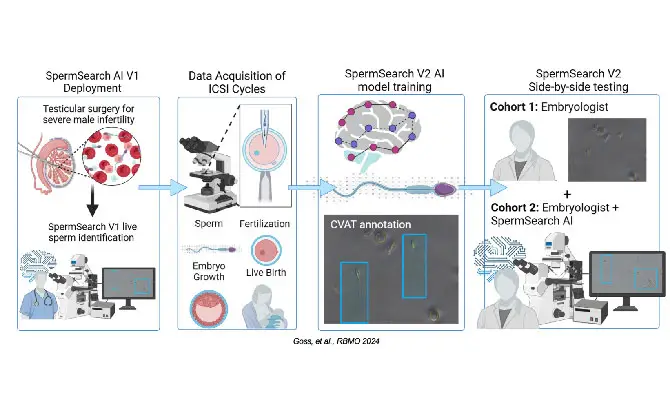
The software addresses azoospermia, affecting roughly 10% of male infertility patients, where there’s no sperm in the ejaculate and a surgical testicular biopsy is required. Embryologists then manually search the tissue sample, full of millions of epithelial cells, red and white blood cells, under a microscope for hours, looking for just one or two sperm. It’s tedious, invasive, and highly error-prone; there have been cases where an embryologist concluded no sperm were found and later sperm were discovered in the same sample that had been missed. A typical sample takes six to ten hours to process, is expensive and risky, and sometimes requires repeat biopsies.
We worked with computer scientists to build and train an AI on published image datasets. This AI, launched in 2024, has become central to Neogenics’ success and received coverage on BBC, CNN, and elsewhere, we discovered there’s more global need and more surgical intervention happening than we realized, with a particular focus in the GCC region where the issue is apparently more prevalent. The AI software acts like a co-pilot sitting on the microscope camera, shrinking the six-to-ten-hour search down to 20–30 minutes, with roughly a tenfold or greater increase in the chance of finding sperm.
Robin (45:21) Can this AI trigger a system to separate the sperm from the rest of the sample, or are you not there yet?
Majid (45:33) The AI can find and annotate the location of sperm in a very messy background of debris, and down the road can score sperm quality, viability, and motility, and could guide robotic micromanipulation arms to the exact location to pick up individual sperm.
Hemdeep (46:06) So that’s your current project, and you said you had two startups, what’s the second one?
Majid (46:13) The second is called Smart Microcarriers. It’s a company in the business of hydrogels and microdroplet formation for bioprocessing. Their main product is microcarriers, built using 3D printing, their workhorse is still a 3D-printed nozzle. They have a high-throughput, stacked version of these devices using pressurized systems to produce billions of droplets, which become digestible, xenon-free microcarriers with no animal components, used for virus production, monoclonal antibody production, and adherent cell culture in bioreactors. They also produce Gelma, hyaluronic acid, and other polymers for microfluidics and tissue engineering applications.
Hemdeep (47:20) Built again on the back of 3D printing in your lab. What’s coming down the pipeline for you?
Majid (47:38) [laughs] This took 12 years of my life, it’s not easy, and there’ve been plenty of failures. We had two startups we had to close down due to technical and people problems; building a startup is genuinely hard. For me, the joy as an academic is seeing my research generate real interest and having brave students willing to push it toward commercialization, even though we’re still halfway there for most of these ventures. My dream is to see this fertility device on the shelves of IVF clinics globally, the software is already installed in about 20 clinics, and I’m hoping for 2,000 clinics by this time next year. But reaching that scale takes enormous energy. I’ve trained over 50 PhD students, and not all are willing to take that entrepreneurial risk, many just want a job after graduating. Finding people willing to take ideas to a commercial stage, training them, building their risk appetite, is one of my key roles.
What’s on the horizon: we have projects on exosomes, enrichment and purification devices. I’ve also been working on liquid biopsy and circulating tumor cells (CTC) for years, and I’m advising a company in China using 3D printing to build a new generation of microfluidic cell-sorting devices, very useful work, though due to geopolitical issues they’ve had to use a Shenzhen-based machine [Boston Microfabrication] rather than ours. I’m hoping to bring similar work to Dubai, there’s a lot of neurosurgery-related and organ-on-a-chip research happening there, and I believe there’s ample opportunity to keep shortening the time from ideation to commercial products. I think additive manufacturing has contributed enormously to that.
Hemdeep (51:17) I agree, teams using 3D printing for microfluidic device creation are seeing firsthand that it shortens iteration cycles; the benefits don’t need to be argued for anymore. I’m curious how you developed the business acumen side of this, I talk to a lot of researchers with great ideas that just sit on a shelf or in a computer. Where did you learn how to actually pull an idea apart and rebuild it into a business?
Majid (52:12) Nobody teaches you this, honestly, it’s a hard-won skill, and it’s a genuine gap in our educational system, whether in North America, Australia, or Asia. We rarely teach students resilience or the curiosity to look at available technologies and figure out how to build something useful with them. I was lucky that since my Singapore days I was part of research groups with an industry-grant mission and real deadlines to deliver against, not just academic research for its own sake, my PhD group built large-scale water filtration and bacteria separation systems, and my own PhD focused on miniaturized isoporous membranes and filters. At MIT, some of that work became a startup around liquid biopsy and early cancer diagnostics, I wasn’t directly involved but observed how the technology was licensed out and commercialized, which taught me a lot.
Then I built my own startup, it didn’t work, we shut it down after a year. The second attempt also failed due to funding disputes. It takes a while to find the right combination of people. I remember a conversation with someone senior in MIT’s IP/patent-filing department who told me that of every hundred patents MIT files, about 99% amount to nothing, the institution makes its money off the 1% that becomes something huge, like a company acquired by a major pharmaceutical firm. That’s the mentality even at an institution like MIT, most protected research doesn’t pay off, but the reward for the rare success is so large it justifies the risk. That’s something I think academics need to internalize, it’s a risky process, with maybe a one or two percent success rate, but if it works, the outcome is extremely rewarding.
Robin (56:02) You’ve said a lot of positive things about 3D printing, but there must be limitations, where does 3D printing need to go to reach the next stage, in your opinion?
Majid (56:02) I believe AI intervention in the software that operates these machines needs to happen, either to optimize the design process to reduce print failures from simple mistakes in orientation, layer thickness, or structural design, or to reduce wasted materials. In my lab, a lot of failed prints happen due to user error, sometimes machine issues, unclean build trays, resin filtration, or film layers, there are many failure points. I think there’s a real opportunity to build software that makes 3D printing more foolproof, reduces failure rates, and can suggest, for a given design, alternative printing approaches or flag which options would translate more easily to injection molding down the line.
On materials: more chemistry and biocompatibility research is still needed, and there’s a real gap between companies developing new materials and getting them through FDA-type approval processes, even for a validated resin, if a company has already done extensive characterization work, that should reduce redundant third-party validation for others. For gametes specifically, standard cancer-cell-line or stem-cell testing isn’t accepted, assessment standards are entirely different, which we learned the hard way; I wish I’d known that back in 2018.
There’s a lot of room for improvement, and I think we’ll see much more innovation, companies like Boston Microfabrication are pushing boundaries and solving problems that existed in 2017–2018. But we need more dedicated centers, research labs, and government investment. The early additive-manufacturing hype cycle, big investment checks around 2015, cooled off because it didn’t deliver fast enough, and a lot of VCs pulled back. But I believe we’ve passed that plateau, and as more examples like Neogenics emerge, people build trust that 3D printing can really deliver. We need more of those examples.
Hemdeep (1:00:27) I’d agree, I think we’re now at the stage where established players are firmly proving the benefits of the iterative 3D printing cycle; people no longer need to ask what the benefits are.
Robin (1:00:50) I think it’s more about helping people piece together the full range of applications, many of our industry partners didn’t even realize 3D printing was their solution. That’s partly the purpose of this podcast, showing a wider audience what 3D printing can actually do, far more than people thought back in 2015 or 2018.
Hemdeep (1:01:18) And researchers can take ideas that have been sitting on a shelf or in a computer and, thanks to faster iteration through 3D printing, potentially turn them into commercial ideas. You actually helped us validate a master mold for PDMS back around 2019, the first material we made for the master mold. Are you still using PDMS devices as your platform, or are you moving to monolithic devices? What materials are you using now?
Majid (1:02:02) We’re still using that brown-colored resin from back then, and we play with a lot of materials. We use both direct-printed devices, building open channels and bonding a second layer of PMMA on top to create closed-loop microfluidics, and, most of the time, 3D printing as a master mold to build replicas. I’ve even used 3D printing to build nickel electroforming molds for injection molding, bypassing CNC-cut stainless steel molds for coarse injection molding work, I did that with a company in Melbourne. Mostly, though, we use PDMS replicas, largely because visualization matters, people believe what they see, so being able to show where sperm go and how they bind is important for most academic applications. But yes, we can use resins directly, use PDMS, or use molds to eventually injection-mold into polycarbonate or PMMA.
Hemdeep (1:03:42) I think we’ve come to the end of this one, Mary Frances is going to have a great time editing this, since so many ideas came up as we talked. Let me thank you, Majid, you woke up early on a Saturday morning to join us, which was very kind. As always, it’s been very interesting talking with you. The work you’ve put into your startups, including the failures every entrepreneur faces, really shows who you are and the success that’s followed. I wish you all the success in the year ahead in Dubai, I’m sure we’ll connect again then. Thank you very much.
Majid (1:04:51) My pleasure, thanks for having me guys. Enjoy the rest of your day, Friday afternoon for you, right? Hopefully some nice rain rather than snow, and a good cup of tea with your family. Looking forward to chatting more or seeing you at an upcoming conference, Hemdeep.
Hemdeep (1:05:11) I hope so too. All right, thank you guys.
Robin (1:05:16) Thanks so much for tuning in to Big Ideas at Microscale. If you enjoyed the episode, make sure to follow us and stay up to date, you can listen on Apple Podcasts and Spotify, or watch the full video on YouTube. You can also follow us for more updates and behind-the-scenes content on LinkedIn, Instagram, Blue Sky, and X. We’re CADworks3D across the board, that’s spelled C-A-D-W-O-R-K-S-3-D. For show notes, paper references, and bonus resources on today’s topic, visit our website, cadworks3d.com, spelled C-A-D-W-O-R-K-S-3-D.com.
Hemdeep (1:06:02) Thank you for tuning in, and as always, stay curious, keep exploring, and never stop asking the big questions shaping our world. Whether you’re in the lab, on the go, or just curious about the future of technology, join us as we continue to dive into big ideas at Microscale.
Additional Resources
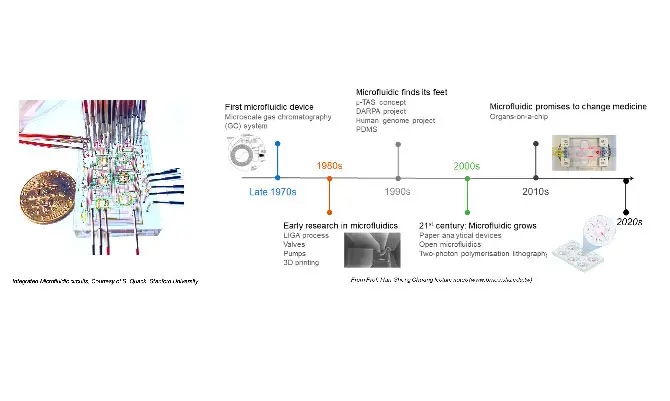
000333_Microfluidics History and Birth
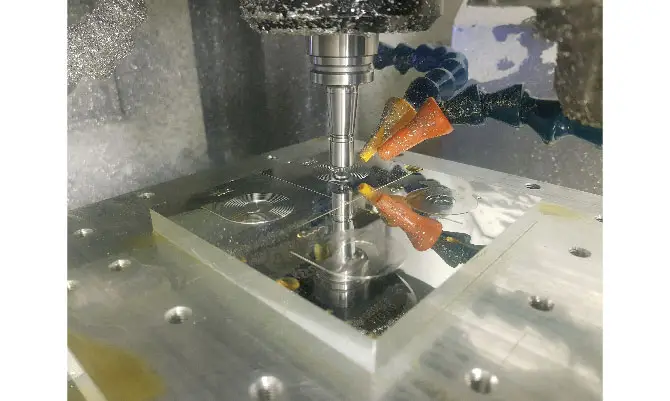
000931_CNC cutting of a Microfluidic master mold for Softlithograghy [1]
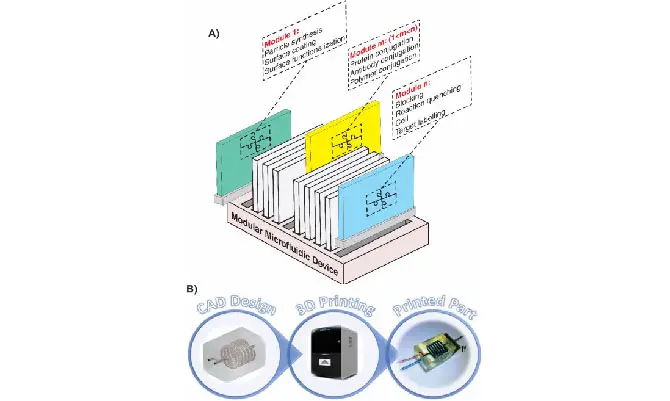
001611_ 3D Printed Micromixer for Particle Conjugation [2]
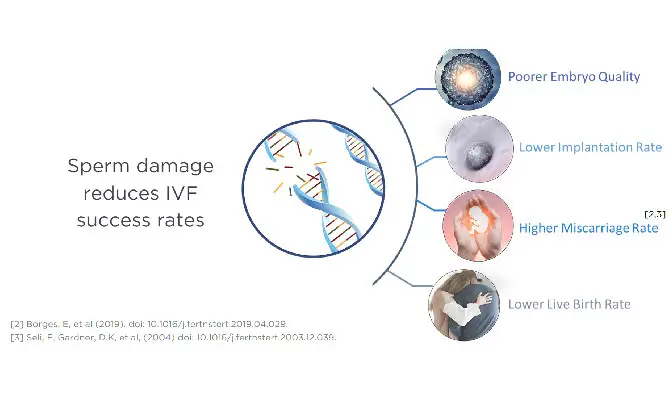
001855_Sperm DNA Damage and its consequences [3]
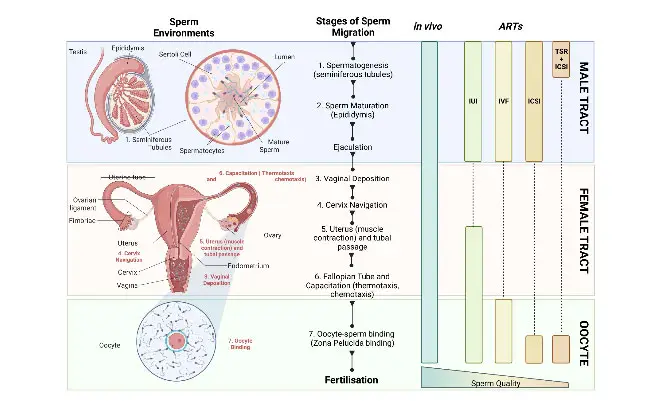
002033_Sperm Journey in Female Reproductive Tract System [4]
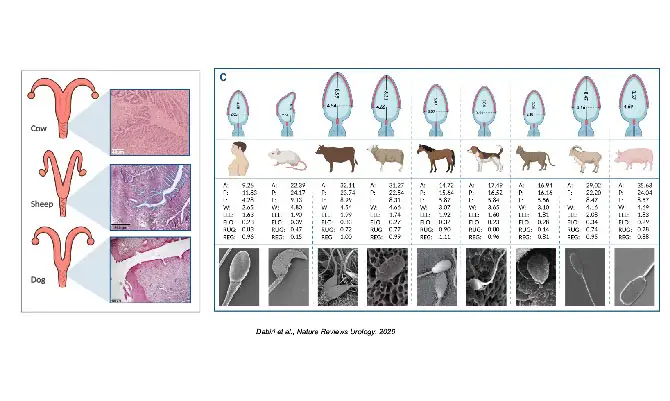
002053_Sperm across different Species [5]
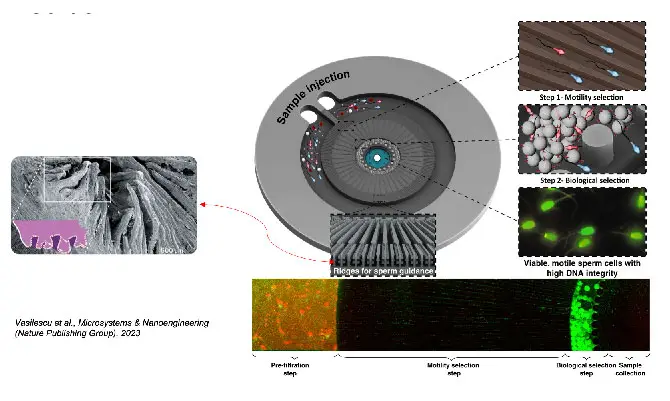
002552_3D Printed Microfluidics for sperm Sorting [6]
003249_ 3d Printed, PDMS and Inject Molded Microfluidics [7]
003701_Fully 3D Printed and Integrated Microfluidic Sorter for Bioprocessing [8]
003853_Sperm Thigmotaxis
004152-Microfluidic ICSI [9]
004640_SpermSearch AI [10]
Reference :
Say Hi to our Guest
Dr. Majid Warkiani @ University of Technology Sydney
More Episodes

NEW Episode 02
1st June 2026 . Season 2
The versatility of 3D printing for device fabrication
From fiber fabrication to micro and nano bubble generation, we sit down with Scientific Application Specialist Dario Bogojevic, Doctoral Researcher Niloofar Ghasenzaie, and Graduate Researcher Stephanie McGinnity to discuss 3D printing as an effective device fabrication tool for a wide range of applications.
Episode 07
6th October 2025 . Season 1
Hemdeep speaks with Drew, Anne, and John from AbbVie’s SPaRCS group, a curiosity-driven, skunkworks-style team exploring how diverse expertise, rapid prototyping, and cutting-edge 3D printing are unlocking new tools for drug discovery.
Guest Episode 06
15th September, 2025 .Season 1
Hemdeep and Robin sit down with McGill PhD student Chen Li to explore his academic journey, his research on air-liquid interfaces and epithelial cell differentiation, and the innovative process behind building custom lab setups.