First Time Printing Microfluidics? Start Here.
From CAD to Device in Just 1 Day
As 3D printing becomes increasingly essential in research, our advanced system is empowering researchers worldwide to achieve remarkable results. With advanced printers and specialized materials, innovation has never been easier to access.
Subscribe to our newsletter for the latest updates on our microfluidics solution by entering your email below. Note: To subscribe, please accept cookies. Without cookie consent, the subscription option will not be available.
Watch 4-Step Demo
Watch 4-Step Demo
STEP 01
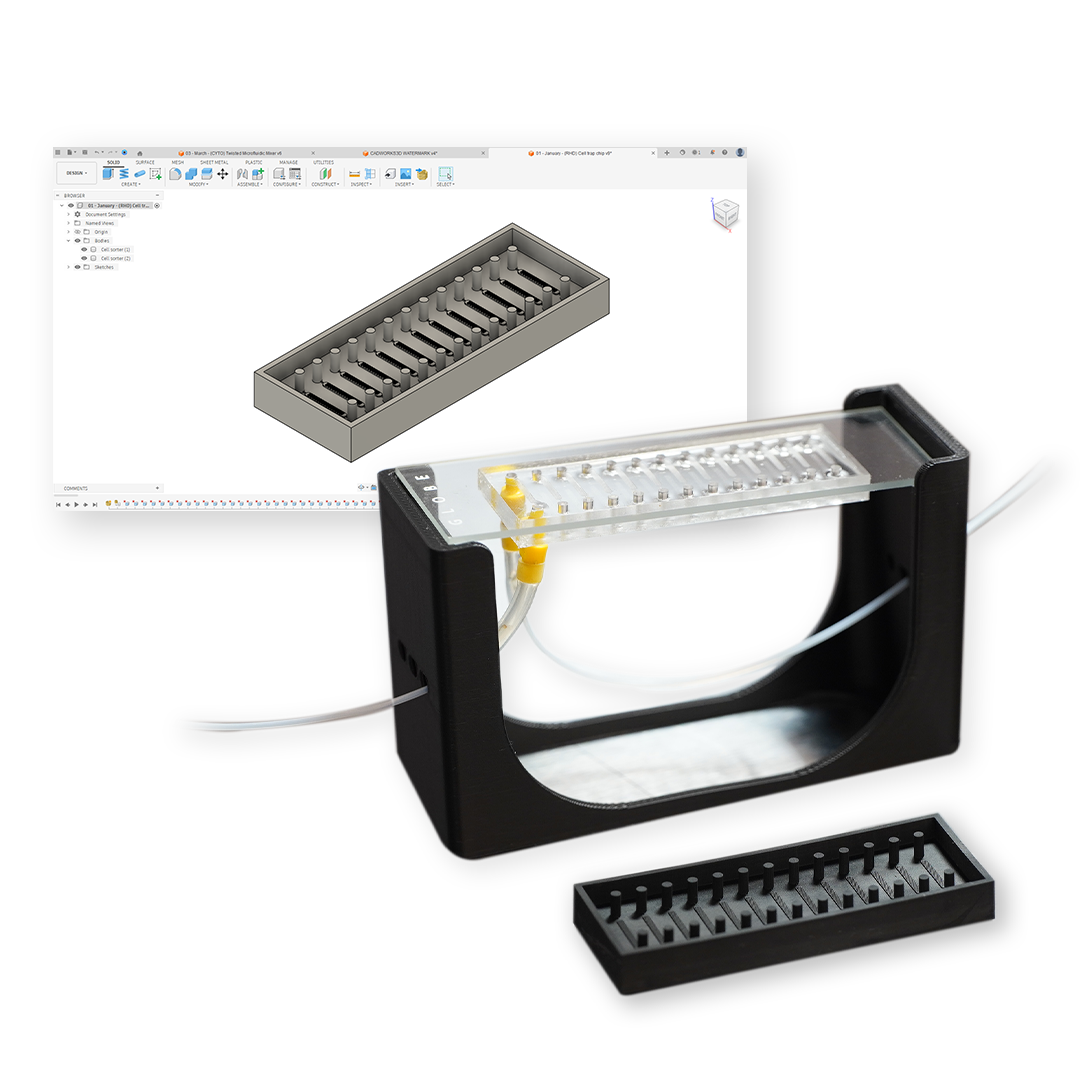
CAD Your Design
You can design your microfluidic device using either your preferred CAD software or the Drag-and-Drop FLUI’DEVICE software included with our complete 3D printing system.
Step 02
3D Print Your Devices
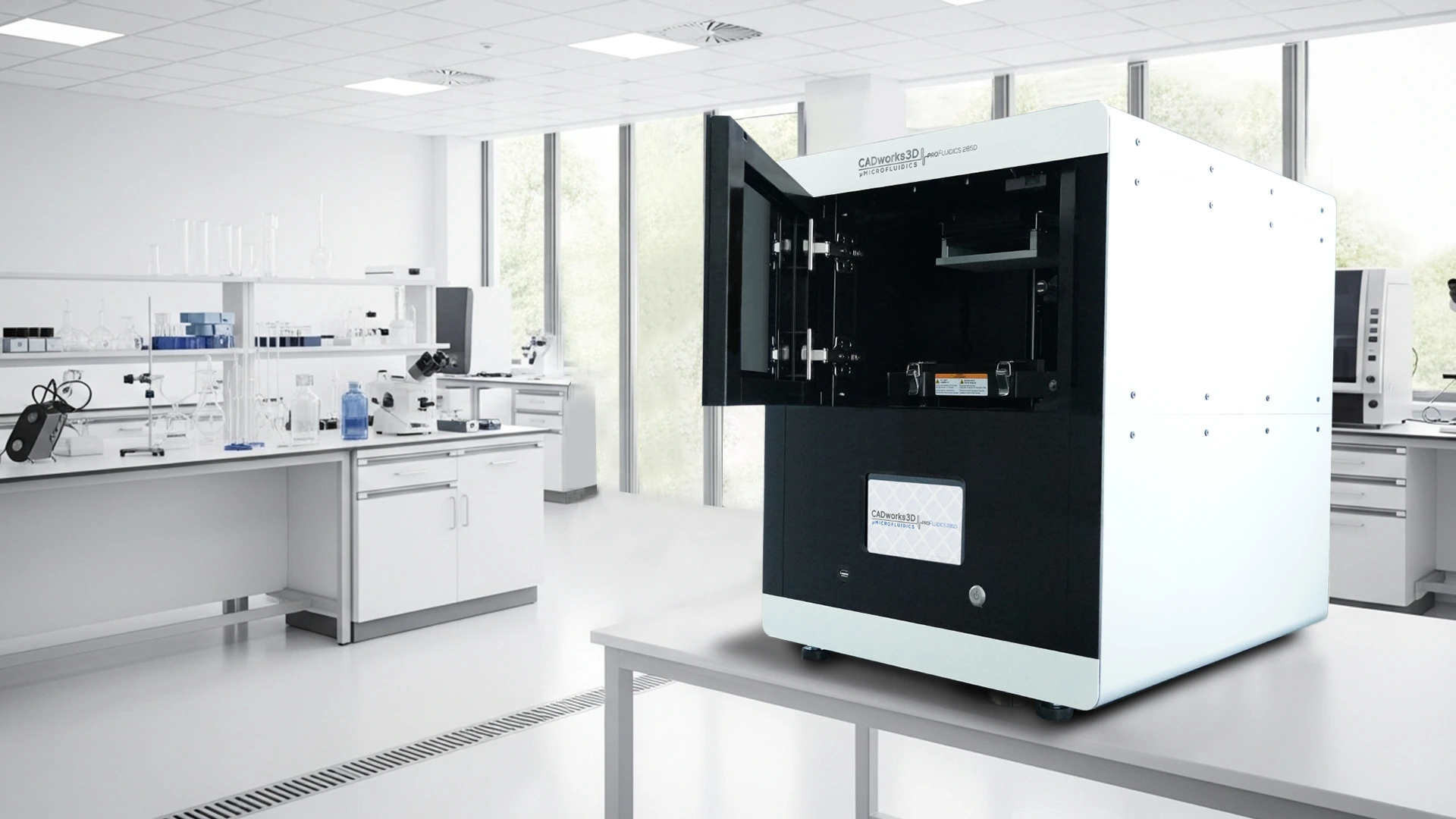
Start 3D printing your device at your benchside using our specialized 3D printer and materials designed for microfluidics. Simply upload your file, click “start,” and let the printer handle the rest.
Step 03
Clean Your Device
Remove the device from the buildplate, flush the channels with IPA, and cure it following the specific guidelines for each device.
Step 04
Ready to Use
Start your research and enjoy the convenience of quickly creating another device if you need to adjust the design to meet your requirements.
Built For Microfluidics. Not General Prototyping.
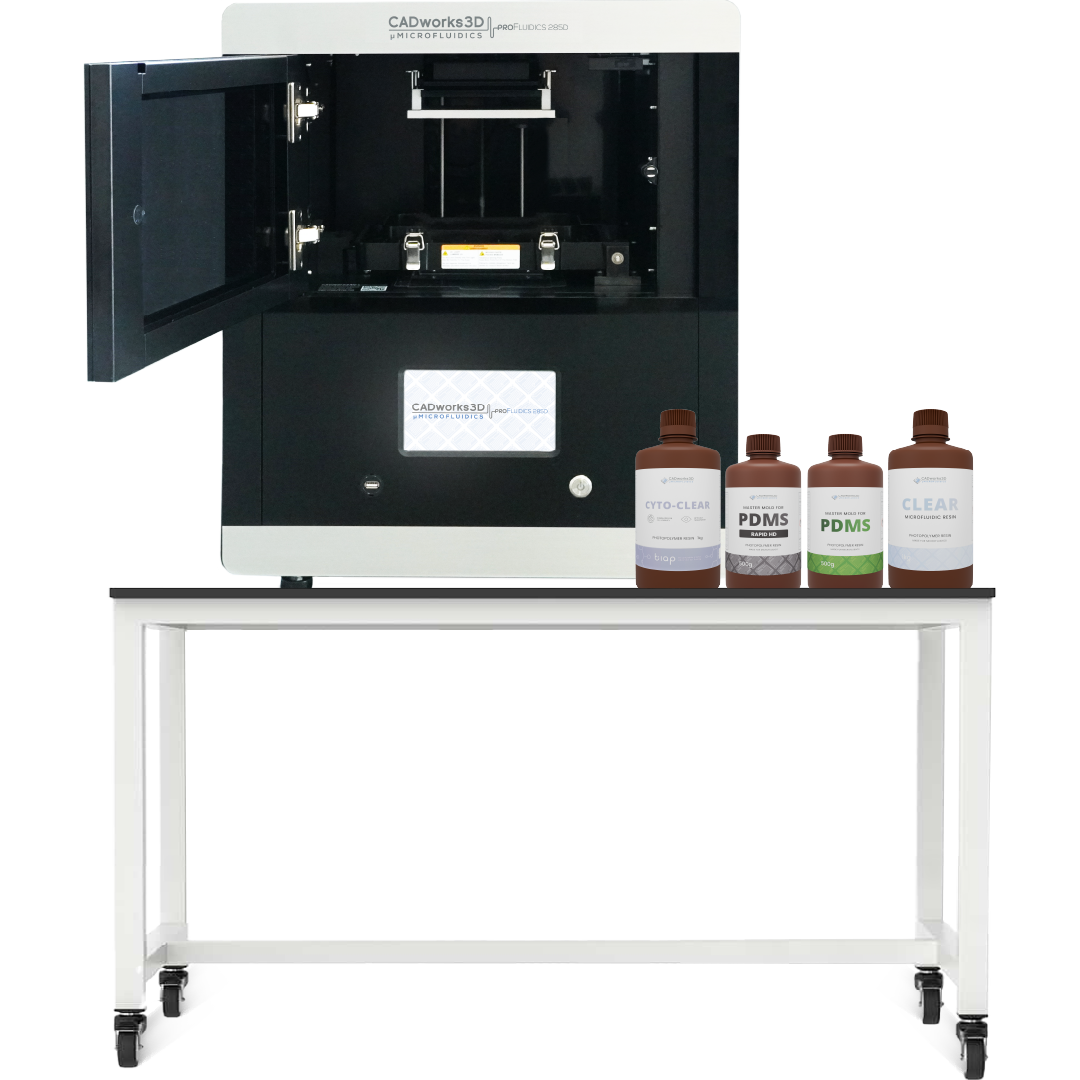
A Complete 3D Printing System
Many high-resolution 3D printers work well across industries such as dental, jewelry, and prototyping. However, microfluidics requires more than just resolution.
Challenges like open microchannels, smooth master mold for PDMS, and biocompatibility demand a specialized approach. Our complete 3D printing system is built specifically for microfluidic fabrication, with features like 50µm open channels and 0.18µm Ra surfaces for precise PDMS casting.
Every aspect, from printer to materials, is designed for fast, reliable device creation in just one day. For researchers who need rapid iteration and consistent results, our specialized system offers the precision and dependability that general printers can’t match.
Learn from Real Stories
“We can do a lot of continuous measurements and repeated measurements with these interconnectors using 3D printing.”
PhD Candidate, Surath Gomis, at the Kelley Lab in University Of Toronto
“I can 3D print a chip in only 20 minutes.”
PhD Candidate, David Philpott, at the Kelley Laboratory in University of Toronto