
Discover > Big Ideas at µScale > Season 02 Episode 04
Podcast Episode
76 min video
Full transcript
Can Immune Cells Thrive in a 3D-Printed Chip?
Lymph-node-on-chip models offer a way to study how the human immune system responds to vaccines, cancer, and autoimmune disease, but keeping sensitive immune cells alive inside 3D-printed devices presents a major materials challenge. This conversation explores how Rebecca Pompano and Hannah Musgrove transitioned from traditional SU-8 and PDMS fabrication to resin 3D printing, reducing device development time from three days to just a few hours. It examines their three-year search for a biocompatible solution, culminating in the use of Parylene C coatings to keep lymphocytes viable inside printed chips. The discussion also covers tubing-free impeller pumps for multi-organ systems, practical approaches to improving optical clarity, and the need for better materials in microfluidic research. It concludes with Pompano’s new venture, Lympha Bio, and the future of immune-response modelling for drug development.


Guests
Dr. Rebecca Pompano and Hannah Musgrove
University of Virginia


Hosts
Hemdeep Patel and Robin Boshoven
View guest's academic bio
Dr. Rebecca Pompano
Professor, Co-founder of Lympha Bio
University of Virginia, Departments of Chemistry and Biomedical Engineering
Rebecca Pompano is an Associate Professor of Chemistry and Biomedical Engineering at the University of Virginia. An analytical chemist turned immunoengineer, she builds 3D-printed lymph-node-on-chip models to study vaccines, cancer and autoimmunity, and co-founded Lympha Bio to bring human immune models to drug developers.
Publications
Lab on a Chip, 2025
ACS Applied Bio Materials, 2023
Micromachines, 2021
Hannah Musgrove
Postdoctoral Researcher
Oak Ridge National Laboratory
Hannah Musgrove is a postdoctoral researcher in surface engineering and tribology at Oak Ridge National Laboratory. During her PhD at the University of Virginia, she developed methods to make resin 3D-printed microfluidic devices clear, high-resolution and safe for sensitive immune cells, including Parylene C coating.
Publications
ACS Applied Bio Materials, 2023
Analytica Chimica Acta, 2022
Lab on a Chip, 2022
Discover > Big Ideas at µScale > Season 02 Episode 04
Podcast Episode
76 min video • Full transcript
Can Immune Cells Thrive in a 3D-Printed Chip?
Lymph-node-on-chip models offer a way to study how the human immune system responds to vaccines, cancer, and autoimmune disease, but keeping sensitive immune cells alive inside 3D-printed devices presents a major materials challenge. This conversation explores how Rebecca Pompano and Hannah Musgrove transitioned from traditional SU-8 and PDMS fabrication to resin 3D printing, reducing device development time from three days to just a few hours. It examines their three-year search for a biocompatible solution, culminating in the use of Parylene C coatings to keep lymphocytes viable inside printed chips. The discussion also covers tubing-free impeller pumps for multi-organ systems, practical approaches to improving optical clarity, and the need for better materials in microfluidic research. It concludes with Pompano’s new venture, Lympha Bio, and the future of immune-response modelling for drug development.

Hosts
Hemdeep Patel
Robin Boshoven
Guests
Dr. Rebecca Pompano and Hannah Musgrove
View guest's academic bio
Dr. Rebecca Pompano
Professor, Co-founder of Lympha Bio
University of Virginia, Departments of Chemistry and Biomedical Engineering
Rebecca Pompano is an Associate Professor of Chemistry and Biomedical Engineering at the University of Virginia. An analytical chemist turned immunoengineer, she builds 3D-printed lymph-node-on-chip models to study vaccines, cancer and autoimmunity, and co-founded Lympha Bio to bring human immune models to drug developers.
Publications
Lab on a Chip, 2025
ACS Applied Bio Materials, 2023
Micromachines, 2021
Hannah Musgrove
Postdoctoral Researcher
Oak Ridge National Laboratory
Hannah Musgrove is a postdoctoral researcher in surface engineering and tribology at Oak Ridge National Laboratory. During her PhD at the University of Virginia, she developed methods to make resin 3D-printed microfluidic devices clear, high-resolution and safe for sensitive immune cells, including Parylene C coating.
Publications
ACS Applied Bio Materials, 2023
Analytica Chimica Acta, 2022
Lab on a Chip, 2022
Institution
University of Virginia
Episode
Season 02 Episode 04
Publish Date
03 November 2026
Biocompatible 3D Materials
Immunology
Organ-on-a-Chips
Are 3D-printed microfluidic chips biocompatible with immune cells?
Not out of the box. Rebecca Pompano’s lab found that commercial photopolymer resins, including ones marketed as biocompatible, killed primary lymphocytes within about four hours, likely because of leachates from acrylate-based resins. Coating the printed chips with Parylene C kept the cells viable for the 24 to 48 hours their experiments need.
How does Parylene C coating make 3D-printed devices safe for cell culture?
Parylene C is deposited from the vapor phase at low temperature, so it forms a thin, continuous polymer film on every exposed surface, including inside microchannels. The film seals toxic leachates into the resin and also reduces moisture uptake, which slows cracking during repeated incubator use. It barely affects optical clarity.
How much faster is resin 3D printing than SU-8 and PDMS soft lithography?
In the Pompano lab, an SU-8/PDMS chip took at least three days from design to testing, including shipping a printed photomask and clean-room time. A resin-printed chip took about two to three hours, depending on size and post-processing.
How can I make 3D-printed microfluidic chips clear enough for microscopy?
Most haze comes from surface roughness rather than the resin itself. Hannah Musgrove’s group improved clarity by buffing and sanding, adding a thin coat of clear nail polish or vacuum grease, and choosing print orientations that give smoother viewing surfaces. How far to go depends on whether you need to resolve single cells or just check a channel.
How do you run a multi-organ-on-chip without tubing or an external pump?
The Pompano lab prints the chip with a built-in pump well that holds a small 3D-printed impeller, spun by a motor underneath. It recirculates media through a loop of channels past tissue compartments, such as a lymph node and an upstream tumor or injection site. The whole system sits in a standard incubator with only a power cord running out.
"So a big thing ended up becoming biocompatibility, making sure that our cells and tissues, if they were happy in this environment that we were making for them. And on top of that, we needed to be able to look at them under a microscope. So we really needed something that was optically clear.."
Hannah Musgrove, University of Virginia Alumni
Hosted by Hemdeep Patel and Robin Boshoven. Summary written by the CADworks3D editorial team. Big Ideas at Microscale is produced by CADworks3D. The researchers used CADworks3D equipment in the work discussed and were not compensated for this interview.
On this page
More podcast episodes
Equipment referenced in this episode
Clear Microfluidic Resin
Related research article summaries
ETH Zurich: 3D printed moulds for a cell-recirculating hanging drop chip
Printed microchannel phantoms for validating flow models
Surface roughness effects in resin-printed fluidic channels
Full Transcript
Transcribed automatically and edited for clarity. Technical terms and researcher names verified with the guests. Spotted an error? Let us know.
Read Transcript
Hemdeep: Welcome to Big Ideas and Microscale, the podcast where we explore groundbreaking research happening at the micro scale, where micro innovations makes a big impact. We’re excited to showcase the incredible work being done by our users from around the world who are pushing the boundaries of microfluidics, lab on the chip, organ on a chip, and beyond. Through these conversations, we hope to learn from their experiences, uncover their insight, and bring their big ideas to a wider audience. So, whether in a lab, on the go, or just curious about the future of microtechnology, join us as we dive into big ideas at microscale. Welcome to another episode of Big Ideas at Microscale. My name is Hemdeep Patel, founder of Creative CADworks, CADworks3D, ResinWorks3D. I’m joined by my co-host, Robin. Robin, how are you doing?
Robin: I’m doing good Hemdeep, how are you? And how our guests as well.
Hemdeep: Very well. Yes, we I’m very excited ⁓ having this conversation. We’ve got Rebecca Pompano, who’s the associate ⁓ professor of chemistry and biomedical engineering at the University of Virginia. And joining her and us will be Hannah Musgrove, who’s who was working with her at the University of Virginia as a grad ⁓ researcher assistant and now at Oak Ridge National Lab. ⁓ and so welcome to the both of you to our podcast here.
Rebecca: Thank you so much for having us.
Hannah: Yeah, thank you for having us.
Hemdeep: Yeah. This is the first time that we’ve had a podcast where every person well, no, we’ve had these type but everyone is at a completely different location. Sometimes we’re in the same places, but I guess power of technology allows us all to sort of ⁓ come in from ⁓ wide places. so now why don’t we start with I guess ⁓ I gave a very brief introduction, ⁓ Rebecca. Why don’t you sort of give us a a much more fuller ⁓ C V of what you’ve been doing, what you’re currently doing, and we’ll then ⁓ touch ⁓ on with what Hannah’s been doing as well.
Rebecca: Yes, of course. So maybe I’ll start with my trajectory, my career trajectory. ⁓ so I did my undergraduate degree in chemistry at a small college, the University of Richmond, which is in Virginia, ⁓ and got a really great foundation there in analytical chemistry. And then when I went to grad school, I stayed in analytical chemistry. I went to the University of Chicago for my PhD. but I began to explore ⁓ what at the time I thought of as just biology. So I just said, I’m gonna do chemistry with a biological application. And I was always a little nervous about that because I ⁓ strongly preferred the the physical nature of chemistry and how there was quantitation ⁓ and so the ability to predict based on physical principles. And biology seemed unpredictable and ⁓ often is taught in this way of memorizing ⁓ that I I think doesn’t do it any favors. because once I got into it ⁓ in my PhD, I learned there’s so much amazing complexity and there are underlying principles that govern it, but but we don’t yet understand those. And so that actually became fascinating. And so I ⁓ primarily worked on microfluidic technology in my PhD, doing a lot of microfabrication class Classic SU8 and PDMS devices. ⁓ And then I did a postdoc in immunology, complete pivot, no microfluidics at all for three years, ⁓ developing vaccines, nanoparticle-based immunotherapies. And then I eventually came to UVI to start my own lab.
Hemdeep: Wow. Wow. So I think ⁓ it’s funny you say that. I think my marks and it I think first and second year biology reflects the what you just said, that it is the rigors of memorization, I it just does not work for me and ⁓ I have marks to prove that. ⁓ Hannah, how about you? What was your pathway to where we are right now?
Hannah: Yeah. ⁓ so I’ve heard Rebecca’s story before, but I’m also just realizing it’s like, I’m doing something so similar. ⁓ so I started off in undergrad, really going more into analytical chemistry as well. And that was at Austin P State University in Middle Tennessee. ⁓ and then I went to UBA for grad school and I was in Dr. Pompano’s lab.
Rebecca: Yeah.
Hannah: And while I was there, I learned a lot more about biology, things that I again found a little sticky similarly in undergrad, just from the memorization and everything. but really got to learn so much about it while I was in her lab. And while I was there, I also worked a lot on Microfluidic development and 3D printing, as we’ll talk about. And where my pivot is right now is I’m now doing a postdoc. looking at surface engineering and tribology, which is looking at how interfaces of materials are interacting and trying to really categorize those by application. so no microfluidics right now, but a lot of surfaces, a lot of materials, and still some of that analytical chemistry coming in. ⁓ yeah, so that’s that so far that’s what I’m doing.
Hemdeep: So now ⁓ Rebecca, I think when I looked at your CV and then when you started running your lab, I think w you came in with a with a skill set that was on traditional micro fluid manufacturing and applications. So how did how did you add 3D printing to it? What was it a an application that you needed to add in order to sort of replace or was it an application to sort of broaden the scope of what you were doing?
Rebecca: Yeah, that that’s a great question. So I we definitely started the lab with traditional microfluidics. When I first got to UVA in twenty fourteen, we set up a whole room to do SU8 based photolithography, ⁓ making features ⁓ that were pretty large though for that technology. So my lab, because ⁓ so we work looking at clean Whole samples of tissue. We specialize in looking at the lymph node, which is the organ that responds to vaccines and infection and cancer. And we work either with tissue from mice or human. In either case, the samples are millimeters in scale. And so as a result, our fluidics tend to be maybe a tenth of that. So hundreds of microns in dimension. because we’re usually trying to target a particular region of tissue or we might just be trying to flow media over a particular region of tissue. So we really need what SU8 photolithography could offer. ⁓ And so after about five years of sort of painstakingly making a remaster in the clean room, I began to read papers coming out of ⁓ the Norton and Woolley labs. ⁓ really didn’t need wood. after. Tomas Gervais in Montreal and Albert Folk in Seattle and seeing that they were leveraging this new technology that, you know, had just kind of started coming on the scene a few years before. And I thought, ⁓ wow, this really aligns with the length scales that we need, you know, hundreds of microns of interior channels, ⁓ while nowhere near as good as protozoology, ⁓ is perfect lithography. For what my research needs. And so ⁓ we we’ve pivoted partially to 3D printing starting in around 2019. ⁓ And it was really to at first supplement what we could do in the clean room because it was faster. I was really interested in the ability to iterate faster and to move away from planar fabrication. So the idea that you could have a three dimensional ⁓ Aspect to your channel design, making use of integrated channels and micro wells all in the same device, which is really difficult to do in, or well, let me sorry, let me say ⁓ making use of integrated channels with large dimension wells sufficient to hold millimeters of tissue. That sort of combination of length scales was hard to do with traditional PDMS-based fabrication mission and yet is really straightforward with 3D printing. And so that was something that I was excited to move into.
Robin: do you have like a ballpark number for how much quicker it w making your devices or with like with 3D printing as opposed to the SUA molds or SUA devices?
Rebecca: Yeah, So for SUE, I would generally say from the concept of what the design should be until we had a chip in hand with a minimum of several days, because we would, you know, draw it in CAD, that part’s the same or similar. But then we would need to send it and get our master design file printed onto a transparency and then shipped to us from across the country. So that added a minimum of 24 hours. And then an afternoon in the clean room. in And then maybe the next morning making the first rounds of PDMS from that. So we’re talking minimum really three days maybe to conceive of a design and then be able to test it. ⁓ in comparison for the three D printing, maybe I’ll let Hannah pipe in from when you conceived of a design, ⁓ how long until you could hold it in your hand.
Hannah: So ⁓ I would say probably about two to three hours, depending on how big it was and how much post-processing we needed. ⁓ it was great. It was really helpful for someone who ⁓ was still learning all of the engineering that needed to go behind microfluidics to be able to make something in two hours and be like, ⁓ I didn’t realize that I need to change this channel shape. And then you change it and then a few more hours. So you’re learning within the day. Very helpful. That was very helpful.
Hemdeep: So if I was to jump back ⁓ and ⁓ sort of go backwards on that, from ⁓ from the ⁓ undergrad work that you did and you then joining this lab, what was that ramp up like? ‘Cause it sounds like ⁓ you didn’t really ⁓ have a full grasp of where are you going to land in terms of microfluidics and you’re going to be thrown into ⁓ designing or d were you aware that you’re going to end up designing ⁓ microfluidic devices and that eventually you’re going to be using three D printing?
Hannah: Yeah, so my undergrad research was actually more focused on ⁓ chemical education. Yeah. And I helped look at more traditional wet lab method methodologies. So I hadn’t jumped into microfluidics, but it was something that I want that was really the main reason for me to go into grad schools. I wanted to do microfluidics, help create devices, especially with biological or medical applications. And ⁓ but yes, I didn’t have the experience yet. ⁓ I just figured I’ll learn it. It’ll be fine. We’ll I’ll catch up. and so yes there was And as a factor. It worked out. It worked out. And ⁓ Rebecca and my lab mates are great support. And so a lot of that was me going with this general idea of what I wanted to do. I wanted to help make these devices, help make accessible tools. It was a really big push for me to get into the field. and then we ⁓ I’m toward UVA and there was this ⁓ just so much going on over there. But with my lab mates or the people who became my lab mates, I went over to the poster and it was Rebecca’s work. And it was like, we just got this 3D printer and look at how quickly we’re learning this and look at what I made and they had all their devices and I was like, this is this is cool. I might want to look into this.
Hemdeep: And would that have been around Rebecca, would that have been around twenty eighteen or so, I guess? ⁓ yeah.
Rebecca: Yeah, I think we bought the printer. in twenty eighteen or twenty nineteen. Yeah. and then Hannah came in twenty nineteen. So it really would have been this brand new thing. And a graduate student in the lab at that time, Megan Catterton, had really taken the lead on getting to know that instrument. ⁓ and one of the things that we quickly learned was to think of it as a scientific instrument and not as this sort of push button magical thing that pops out of the device. You know? ⁓ which I think is how Right. Like on you know, you see ads on Amazon for 3D printers. You know, of course it’s a completely different technology with the fused up position, but you know, they make it look like you just sort of conceive something and poof, there it is. Right. And we very quickly learned when you’re trying to print micro scale structures, there’s a real engineering and science and expertise to it. And for sure. And so s students in the lab really get low. rose to the occasion and learned it essentially from scratch, you know. And maybe something worth noting is that we were chemists, right? We still are chemists. And so the material science aspects and the stress and strength engineering aspects were completely new to us. And ⁓ I think there was real value in learning those things. I mean we needed to print well. to the. and so we kind of over the course of a few years dug in and learned a lot of those things. ⁓ but I think that’s something that new people that are new to 3D printing and maybe switching from PDMS to be informed that they need to learn these things, you know, because there’s totally different stress and strain profiles on a 3D printed polymeric chip than there is on a elastomeric PDMS chip.
Hemdeep: Sure. And I think ⁓ the reference that you had was the fact that ⁓ you there was a paper out by Greg Norton at that in around that time. It was actually his TED Talk in 2017 that actually inspired ⁓ our company to sort of ⁓ try to focus on that. And I remember seeing that TED talk and just going, That I need to know how they did all of that. I really, really need to know. And ⁓ wow, wow, it’s amazing where these Eureka moments sort of appear out of ⁓ out of nowhere. Yeah.
Rebecca: Yeah, yeah, for sure. I mean, I think I probably saw, you know, with them talking at conferences and, you know, reading those early papers to come out on how to get better resolution. And I just thought, this is where this field is gonna go. You know. I need to learn how to do this and in in order to make our best chips that we can.
Hemdeep: So now i ⁓ now you’ve adopted three D printing in the lab, and obviously between I think you just touched on it that ⁓ getting a three D printer and then using it are two big steps. And obviously the printer is one of the big steps ⁓ to optimize the print profiles as you do it. But then there’s also chemistry part that you touched on in terms of the photopolymers that you’re using. What other challenges you started ⁓ seeing in terms of what you needed in order to effectively transfer or migrate from a a clean room or wet room ⁓ sort of technology into bench side technologies.
Rebecca: So we somewhat quickly. Realized that the big bottleneck was resin choice, ⁓ and of course. And ⁓ for us, we ended up generating a list of requirements. And I think I’m gonna invite Hannah to speak because this became one of the key accomplishments in her PhD: was figuring out how to make devices that met all of our many criteria for working with lymphoid tissue, which is one of the most fragile tissues that I’m aware of.
Hemdeep: before Hannah starts, ⁓ can you tell me why you picked the lymphoid tissue for your research? Yeah.
Rebecca: Yeah, so I’m very interested in modeling immunity in vitro. ⁓ nowadays there’s a fancy name for this. the National Institutes of Health and the FDA are going with the term novel alternative model NAMS. And before that it was micro physiological models, and before that it was organs on chip. And so ⁓ but so this term is evolving, but my lab. Basically, from the beginning, has been using either tissue explants ⁓ or in vitro combinations of cells and gel to try to model immune activity outside the body. And we’re doing that so that we can help inform the design of better immunotherapies and vaccines, and also to look at mechanistically what happens during immune responses so that you can begin to. ⁓ better understand how cells are interacting in this tissue at when a cancer is forming upstream or when an autoimmune disease is getting started. And so that’s why we focus so much on this tissue.
Hemdeep: Okay, all right. All right. So now Hannah, your expertise that you started to develop as a result of this research.
Hannah: Yeah. ⁓ so we quickly found out that just very similarly to how when we’re looking in a tissue, that each individual cell is completely different when they’re together in the tissue, which is why we need to look at it in these systematic ways. ⁓ the same thing is happening with our materials. It’s you know, we have this beautiful simple and elegant 3D printing. But there’s so much complexity going on when everything’s putting together. We have the different ⁓ interactions between your resin and your how you’re printing it. You know, you have your base plate roughness, you have your Teflon sheet underneath. Is how worn down is it? That actually impacts what we were looking at a lot. Because what was happening is when those chips came off, now we have all these surface interactions between the cells and the ⁓ microfluidic. plastic itself. So a big thing ended up becoming biocompatibility, making sure that our cells and tissues, if they were happy in this environment that we were making for them. And on top of that, we needed to be able to look at them under a microscope. So we really needed something that was optically clear. That became a really big part of all of this. And then we wanted to look at Course having high resolution. as Rebecca said earlier, we weren’t necessarily looking at nanoscale type ⁓ channels, but we still needed sub-millimeter channels occasionally. and so being able to print everything and ensure that our materials are meeting those three standards of resolution, optical clarity, and biocompatibility. That became yeah, that became a big part of my research in our lab for a little while. and we were able to really take together, we wanted to use commercial materials. We weren’t necessarily, we weren’t a synthetic lab. So we wanted to use things that were available to other biologists that we can just purchase and use. ⁓ so it became a really big characterization project. ⁓ We learned a lot from that process and we also learned that 3D printing in and of itself may not be the final step that we needed this extra step, this extra material. We ended up using Pearlene C to code everything in order to really support ourselves. ⁓ and maintain optical clarity. Yeah. The Pyrroline C that was more so for the biocompatibility aspect, or did it have a large effect on optical clarity as well? So it really didn’t impact the optical clarity to a large degree for our purposes. And really the only reason I think it changed is just it slightly had an impact on the surface roughness. So we were changing kind of refractivity more than anything else. ⁓ But yes, it was that was mostly for the biocompatibility. ⁓
Robin: What did that workflow look like? Is it a coding? Is it something you had to insert within the channels? ⁓ could you explain a little bit about that? Yeah, so it’s not the most convenient ⁓ workflow. Or at least it wasn’t when I was still in the lab.
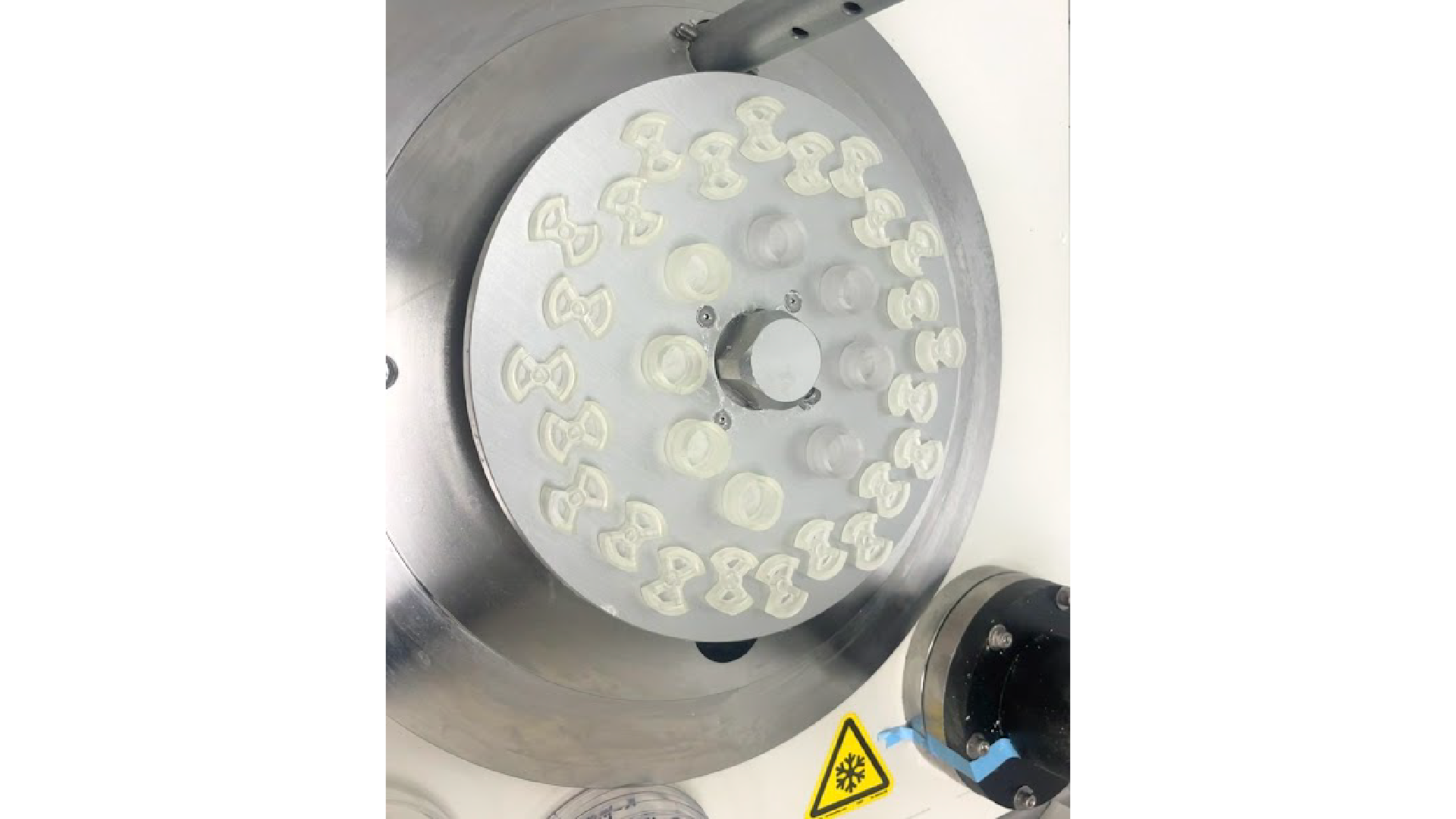
Hannah: Real. Yeah, and I haven’t but we’re gonna let had to tell it the way It’s been a while. Well when I was there, we were still shipping out the materials to be coated and the pelean C coating process is ⁓ it’s a very established process. It’s used in electronics all the time. ⁓ we were starting to see it used in the field more often with microfluidics and it it’s just the gas of this polymer gets ⁓ deposited in relatively low temperatures onto your material. And because it’s forming in a gas phase and then s creating that polymer coating as it’s hitting your device, you’re actually able to get full coating both inside channels and on the outside of your device. So that kind of gas vaporization was really helpful and really useful. It was still saved us some time in that we’re able to test short term projects, making sure all of the physics was working in our microfluidic device. And then once that was established, then we can send it off, get it coded, and put our cells on. ⁓ so that that’s what the workflow is was then. As it say the same, Rebecca?
Rebecca: Yeah. So fortunately we’ve been able to improve it. ⁓ yeah, as Hannah said when we first started, no one in the entire state of Virginia had a Perallen coder. And we really looked. ⁓ maybe there’s one quietly in a defense lab somewhere, but there were none that we could access. ⁓ and so Hannah really spearheaded making contact with the facility at Duke University. ⁓ and they have Done a wonderful job even to this day working with us. So we would ship our chips to them and then they would coat, which the actual coating only takes a couple of hours, and then they would have to repackage, you know, a hundred tiny little microscope things and then send them back to us. ⁓ and ⁓ so we did that for years. but actually, fortunately, ⁓ just last year, the college at University of Virginia decided to invest. in us and so we were able to purchase our own periled coder and so we’re now the first university in the state of Virginia that I know of to have a Perallen coder and people are coming to use it here ⁓ which is exciting. So now we can print the chip and then walk over, you know, we print it, do the post cure, and then we can go straight into the Perallen. So that has been a big improvement.
Robin: Is it a very meticulous process, or is it just very hands-off? You just put it in a machine and let it do a thing?
Rebecca: Yeah, that’s a good question. It’s somewhat hands off. So ⁓ it involves putting each piece into a large chamber and any surface that is exposed to the vapor phase will become coated. So you do have to think about ⁓ is there, you know, the bottom that it’s resting on, that’s not going to get coated unless you have a way to sort of dangle the piece in the chamber, right? So they we do think about And ⁓ how chips are being oriented when they’re being coated. If we really need all sides coated, we may have to go in and turn it over ⁓ or find this way to dangle it. But other than that, it’s pretty much, it’s, it’s, I mean, it’s totally different scientifically, but it feels like putting something in the microwave. It’s just like, you know, all right, we put it in, close it, vapor phase comes on, there’s a coating, and then you know, later you take out your angles. Peace.
Hemdeep: So now between there must have been some other trial and error steps along the way before you got to this ultimately this final solution. What did that look like in terms of trial and error? Like, you know, ⁓ how long did that take and how painful must that have been? Because I I know we do a lot of trial and error on our side and it is sometimes we pull our hairs out as a result of it.
Rebecca: Yeah, so maybe I’ll just start by saying ⁓ the biocompatibility problem plagued the lab for years. So we started, as I said, in twenty nineteen, we buy the printer and I thought this is it, we’ll never make another PDMS chip. We’re done, you know. And then very quickly we realized, wow, we put our tissue on there and it’s dead in four hours. I mean, just dead. Like the cells really did not like the resin. ⁓ year. The it we work with lymphocytes. They are very sensitive to their redox environment. ⁓ they’re very sensitive to acrylates apparently, and so ⁓ resins were leaching things. it was a real problem. and we didn’t solve it for years. don’t think… Hannah, when did we start? the Perallen coding, I don’t think it was until 2022. Yeah. Yeah. So for about three years we struggled mightily with this. And Hannah, do you want to say all the things we tried? Because people would always come up to us and be like, well have you tried my favorite way? We tried everything.
Hannah: Me too? Yep. We tried a lot of things. ⁓ and these are just the things that I remember that I remember I tried. And then you know, my lab mates Meg ⁓ Catterton and ⁓ Sophie Cook, they also tried a bunch of different things. So it was three of us working on it. so I know that we tried pre-leaching everything, so we would soak the ⁓ products in different solutions, either salt water, some type of organic solvent. We tried a few different solutions. ⁓ I don’t think any of those really got our biocompatibility to go over four hours, which is what we were looking for, is very highly viable cells on a chip over four hours. So we looked at overcuring where we were just taking everything and treating it with extra doses of UV, making sure that we were getting all of those photo initiators activated, curing all the monomers inside of it. ⁓ The issue that would happen from that is that you get that degradation switch after a certain period of time. That the ones that have cured start now to be taking in too much UV energy, those backbones break and you s you still end up with similar problems. You have all these pieces that can still come out of that plastic. At one point I think I tried putting a silicone grease over everything, but you can’t really even or I couldn’t evenly coat all of the channels with the silicone. Yeah. and that would eventually wash out as well. So ⁓ I and then I think we also tried doing a fluoresceine ⁓ coating at one point. Yeah. And I don’t this was more Meg’s project and we created really cool ⁓ hydrophobic regions on some of the materials. ⁓ I think we were still over time. we still had leak shades coming out of the surface or and some of that also ended up being due to I think some of the porosity of the material. So we we looked a little bit into that. So we there was a lot of a lot of different things that we were ⁓ looking into and just not nothing really got the biocompatibility up. And so that’s when it became Why don’t we just cover it? Like cover it, keep it tight, make sure it doesn’t come out.
Rebecca: And I’ll say the inspiration for us trying that, you know, as Hannah said, we weren’t the first people to paralleline coat a 3D printed chip. and b but at the done. And so at least to us kind of, you know, relatively new to the 3D printing world, you know, we were reading papers, seeing what other people are doing. What most people seem to be doing was either the leaching or the overcuring or some combination of those things. At the same time, wasn’t commonly. and then I was at a Gordon conference in 2020, actually the Immune Engineering Gordon Conference, which I was ⁓ chair of, and then Yu Li Jun from Seoul National University came up to look at some of our research on a poster. And i he was talking with me and I said, ⁓ we have this problem, the printed chips, they just kill everything. And he goes, Why don’t you just peril encode it? You know. ⁓ he said, he said, that’s what we do for every everything. And I thought, well, okay, like what is this? I need to learn about this. and so it was really New Lee’s tip ⁓ that sent us in the right direction. ⁓ and after we met with New Lee, kind of thinking, we should try this parallelink coding thing. But as I said, we couldn’t find an instrument. And so we kind of stalled that and we kept at it with the leeching and the over carrying for another long time. And then we met. Then we were. ⁓ Brian O’Grady from Vanderbilt University at BMES had just finished us a project where he had parallel encoded chips for use with neurons. And he presented that work, and that was kind of what pushed us over the edge, because we said, all right, well, if neurons can grow on a parallel encoded chip, hopefully lymphocytes could live on one as well. And so that was kind of the final driver that told us, all right, we really need to put in the work to find one of these instruments that we can use. and he finished. and that’s when we discovered the one at Duke and worked out ⁓ some very complicated interuniversity contract agreements to be able to use that. and so once we got that all in place, we were able to try it and it worked great, like on the first try, if I remember correctly. So sometimes inertia is the biggest barrier, you know. Had had we just tried it sooner. So I very much appreciate these people that came before us and gave us. See that. Yes, here. the push to try.
Hemdeep: And i is is lymphocytes ⁓ considered the gold standard for biocompatibility? Is that sort of the high bar amongst all available cell lights?
Rebecca: So I would say that they should be, but to be honest, ⁓ not that many people work with parasites. So I think the challenge is they people who work with them either use traditional polystyrene and polypropylene culture wear, you know, so they’re traditional biomedical scientists, or maybe they’re still putting them in PDMS chips. with lymph. them. the combination of. Lymphocytes in 3D printed chips is still probably pretty rare. ⁓ and so I think that was part of the challenge for us is that we were trying to work in this unusual intersection. ⁓ and so we ran into this challenge. But I would actually say yes, lymphocytes should be the gold standard because ⁓ we’re constantly ⁓ being marketed resins that are claimed to be biocompatible, and they’ve usually been shown to be biocompatible with something. be. like a Gila cell or a fibroblast cell. ⁓ And and they work really well for those cells. ⁓ But when we try them with the lymphocytes, they just are not successful. And we have done some head-to-head comparisons with fibroblasts and seen that indeed fibroblasts can live on some 3D printed surfaces and lymphocytes don’t. So there really is this cell type to cell type variability.
Hemdeep: And then in terms of the cell type that you’re using right now, there’s also I think some of the papers ⁓ you’ve also now started combining them with ⁓ with co-tissue, is it, applications. ⁓ how does that all how do you combine all of that together within one chip design itself?
Rebecca: So one of the errors that We were really excited to leverage the nonplanar nature of the 3D printed chip was to make organ co-cultures. And I I think that might be what you’re asking. So ⁓ the goal there is to be able to co-culture, ⁓ for example, a lymph node culture, whether that’s a tissue explant or a 3D culture, and then co-culture it with an upstream tumor.
Hemdeep: That that’s that is what I’m asking.
Robin: Yeah. ⁓
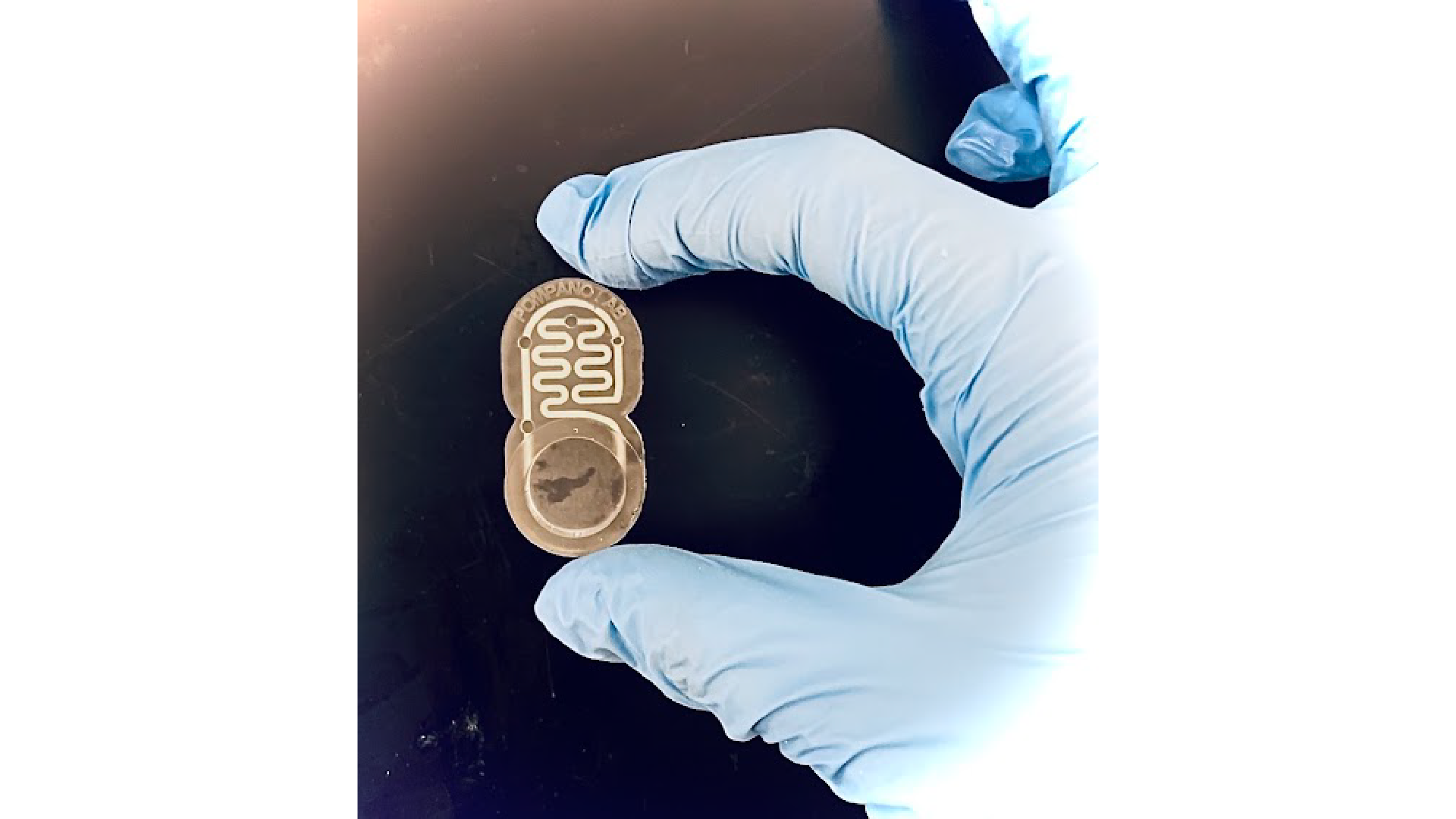
Rebecca: Or an upstream vaccine injection site, or an upstream gut module, for example, or a brain module if you have a blood-brain barrier in the middle. So in we would do that in order to be able to study the immune interaction between the lymph node and the sort of parent organ that it is draining to the node. And so we’ve moved in that direction, having started trying to do that first in PDMS chips. that required, you know, multi-layer devices with a membrane in the middle to kind of support a piece of tissue, but allow fluid flow to go through the tissue and through the membrane. And you can imagine assembling these multi-layer chips with membranes out of PDMS was kind of a tedious assembly. A talented postdoctoral scholar from my lab, Sangzhou Shim, developed that technology and showed that co-culture was possible. For example, he cook cultured a tumor explant with a lymph node explant and showed one metric of of immunosuppression in the lymph node by the tumor. So that was exciting. but then we we wanted to move away from the manual fabrication in part because a big motivator was that we wanted to be able to hand these devices to our immunology colleagues. So colleagues working in School of Medicine labs who have very little familiarity with working with microfluidics. ⁓ and they certainly aren’t going to be patient if we hand them a batch of hand assembled multi-layer chips, and maybe one out of five of them is misaligned and doesn’t work, or you know, they’re just not gonna be happy with that. They’re used to buying a 96 well plate and it works every time, right? So ⁓ so one of the draws for 3D printing. for us then was its reproducibility ⁓ that once you’ve locked in your design, you should be able to print it the same way every time, you know, and there won’t be this ⁓ person to person or batch to batch variation ⁓ in in the functionality of the microfluidic chip at the end. ⁓ so so yeah so we’ve been kind of working on that now for years. ⁓ We’ve developed a whole. Suite of versions of these multi-organ chips, including some with their own onboard impeller pumps, which is basically evolved from a spinning stir bar to spin fluid. That was developed by Sophie Cook, another former PhD student in the lab. And so you have a spinning impeller driving fluid through a microfluidic loop of channels and passing that fluid by ⁓ tissues that are in culture ⁓ in the chip. And so this whole ensemble piece, including the place where the pump is gonna go, the microfluidic channel, two different compartments for tissue, this is all being built in one print, you know. ⁓ and so we really liked that. That was one of the big accomplishments for the three D printing in in the lab, I think.
Hemdeep: That was one of the actual articles that we had really wanted to dig down deep into because we I think ⁓ when we looked at ⁓ what the application was and how this entire application could go directly into the incubator and it could just be self-sustaining was amazing. ⁓ what prompted that thought of sort of now taking systems and then just sort of making it a sort of like a cohort of its own? and be able to be independently sort of functioning.
Rebecca: Yeah, as I Said we started by working with PDMS chips well for this, right? Well, we also started with a conventional pump system, meaning a peristaltic pump, to basically pick up fluid from the outlet and then put it back in at the inlet so that you could have recirculating fluid flow through the through the channel. That required culturing the chips in the incubator, of course, to control the humidity and control the CO2 content. ⁓ and keep it sterile, but the you had to decide, are you gonna put the entire peristaltic pump in the incubator or are you gonna put it outside the incubator and have long tubing running in to support your chips? it turned out, at least for the pumps that were available at the time, neither of those was really a good choice. So the commercially available peristaltic pumps at the time ⁓ were putting out a lot of heat. pumps. ⁓ they like a lot of heat. So we tried culturing with our pump right next to the chip in the incubator. That’s good for having short tubing, which is good for you know less chance of fluidic disturbance, less chance of contamination and bubbles. ⁓ but the downside is it very rapidly caused the incubator to overheat. ⁓ incubators I something I didn’t necessarily know before, but I very quickly learned is incubators are designed to heat up from room temperature. But there is no mechanism to cool them if there’s something inside that’s a heat source. So ⁓ they are not made for that. So ⁓ so Song Zhou, who had developed the chip, ⁓ was really committed and dedicated, and he would come every four hours and swap out an ice pack. To keep the incubator from overheating. And we would do this for 24 hours, every four hours. So we only did those experiments a few times. ⁓ Then we published that paper and then we said, we need a better system than this. You know, this is not good. ⁓ and so ⁓ the other option would be to put the incubator, ⁓ put the pump. Outside of the incubator, as I said, but the long tubing is really problematic. And we ran other experiments with other chips that had these feet-long tubing connections from outside to inside. And the big problems are that sometimes the tubing will pop out of the chip while it’s inside the incubator and you don’t know. And so now your chip has failed mid-experiment. And you don’t know. Also, when you have feet of tubing, there’s just high likelihood of catching a bubble in there. So Hannah has a whole paper on making bubble traps for that reason. And so we really didn’t like that solution either. And from what I talk with other microfluidic and organ on chip people, a lot of people do it that way, but don’t love it. You know, it’s just awkward and finicky. And again, my biomedical colleagues are not about to run feet of tubing in and out of their incubators. They’re just not excited about that idea. So ⁓ when Sophie Cook joined the lab, ⁓ we kind of just finished that first paper with the, you know, every four hour ice packs and the PDMS chips. And I said, all right, I’d really like another pump. You know, how about your first PhD project is to just choose another pump for the system. And I actually thought we would just buy maybe a cutting-edge peristaltic pump that doesn’t overheat. ⁓ But in the end, what she ended up doing was inventing this idea of an onboard impeller pump. ⁓ and so ⁓ that opened a new research direction in the lab. ⁓ and now we continue to innovate on that general concept and ⁓ we’ve actually moved away from the initial designs that that we’ve published and we have a paper that we’re putting together on the new versions of this pump, ⁓ which I’m really excited about. But the general principle remains the same, which is that we wanted a system that didn’t require any tubing. You could just put the whole thing in the incubator. The only thing that we do need is one power cord running out. But many incubators have a place to run a power cord, so that’s okay. ⁓ But we don’t have tubing that can pop out, leak, have bubbles, have contamination. And so that was the idea. Sorry, that was kind of a long answer, Hamdi. But we wanted this standalone system ⁓ for ease of use. And so we actually continue to develop that ⁓ in in the
Robin: Is the impeller pump ⁓ a modular piece that you kind of put within or on top of the device or is it inbuilt into the actual device? So like it’s one single unit.
Rebecca: Yeah, question principle you could do it either way. We do it as one piece in with the device. ⁓ mainly you don’t have to worry about having leak-free joints between the device and the pump compartment. ⁓ but in principle, I know others have done sort of modular 3D printed microfluidics where they put O-rings in between the pieces. And so in principle, I suppose you could print it separately and then connect it to your channels. and in print. so that we but we haven’t pursued that.
Robin: Okay.
Hemdeep: And how long does you how d how long would it take you to validate even this pump? ⁓ obviously the pump just doesn’t sort of ⁓ create itself ⁓ out of thin air. It almost is ⁓ a a a full on task on ⁓ of its own at that point.
Rebecca: Sure, it was. there’s a whole paper that we developed. It was during the lockdown period of the pandemic. ⁓ and so Sophie and Hannah worked together to make this happen. Sophie was building pumps at her kitchen table. ⁓ and then Hannah would come in, you know, when it was like one person could be in the lab at a time, and Hannah would come in and print. and then drive them to Sophie’s house and then Sophie would test the pumps. ⁓ so so anyway, so that was a exercise in resilience at that time. ⁓ but yeah, so ⁓ Teamwork. Yeah. There’s no quarantine time between the There was a quarantine I mean there was a time where nobody was in the lab, but fortunately then we
Hannah: back to this. Yeah, this is very much a I would go in by myself, print it off, take it in my car, leave it on their porch, go back to my car away from this driveway. And then she’d take it inside and then we get data. We would see her data on Zoom afterwards.
Hemdeep: Wow. And what kind of scale were you printing at? Like w what were the relative feature sizes within this pump? ⁓ are you at a millimeter, smaller, bigger than that?
Hannah: Yes, there are multiple parts to this. The very beginning it was just a ⁓ stir bar inside of the printed chip, and the printed chip was still at millimeters. I think it was the smallest channel in there was like 500 microns was the thick the thinnest that we got at the time. but yes, the main part of it was still quite big for a micro. device. We used pretty much the whole stage of the of the ⁓ printer that we were using. ⁓ but that got smaller over time. ⁓ and then Sophie did start developing her own impellers and her own ⁓ systems for using not just the stir bar, but now we have our own little impeller. So there was a lot of design and those are three D printed as well. Yeah. I mean those are tiny.
Rebecca: Yeah, yeah. There so we’ll print something that’s a few millimeters in diameter, ⁓ but it might have, you know, more intricate features kind of to control the shape around the edge of the impeller. ⁓ we do print those in clear, although I don’t know that that’s essential, ⁓ Robin, to your to your question. ⁓ we don’t usually try to look through the impeller, ⁓ but we do print our devices in clear resin so that we have at least a chance of imaging inside of the channel. at least
Hemdeep: If I was to combine ⁓ the sort of parts that we’ve talked about where ⁓ you identified a 3D printer, you identified material that you would like to use. It was not biocompatible, you figured out a coding ⁓ for it. Now, in terms of the overall systems that you when you now start producing, are you sort of going And saying that, you know what, ⁓ we’re not interested in trying to develop our own photopolymer. We’re gonna just use whatever we’re using right now. But we’ve got a test case for a specific type of coating, the pr this praline coating that really, really works. It addresses all of our issue or the requirements that we have.
Robin: And then does this do you feel now you’ve got this really this magic bullet that allows you to really, really move forward, or are you finding that there’s still gaps that you really ⁓ wish that someone could come in and address for you.
Rebecca: That is such a good question. I definitely think there’s still gaps. Are there still big unmet needs? So right now we have a workable solution, is what I’ll say. ⁓ We use ⁓ resins that are designed for microfluidics. For example, we often use the Me Craft ⁓ we still call it BV007, although it I think it’s clear. ⁓ we use that because it has low viscosity and so it prints the channels very nicely, but it is very toxic to our cells. So the perlin is essential. ⁓ and one thing that that one is susceptible to after repeated use in the incubator is ⁓ cracking. And Hannah spent quite a bit of time characterizing this. perulin does reduce the cracking because it reduces the amount of humidity that gets in. So that’s good. but eventually it’ll still crack. So so I would say we continue to test alternative resins, hoping to find either ones that will have the low viscosity and sufficient print resolution ⁓ for us, but maybe a little bit better thermal stability. ⁓ that I bet is out there and we just need to kind of put in the effort to screen resins in in more extensive sets, you know. ⁓
Hemdeep: I think we need to get some of our newer material in your hands.
Rebecca: That would be great. I would love to test them actually. ⁓ but the other one that I am not convinced is out there would be one that we don’t have to paralynk coat for biocompatibility. ⁓ and so that we continue to test anytime that somebody says they have a new resin chemistry and that it’s biocompatible, we’ll test it. So far, every one of those has still killed the lymphocytes. ⁓ so I think lymphocytes are this high bar, you know. they’re just so sensitive, right? But ⁓ but you would love to be able to print organs on chip and have them be immunocompetent. So it’s not a problem of you know insignificant importance, right? ⁓ and so I’m kind of ⁓ torn between hoping and waiting that someone comes up with a totally novel chemistry, perhaps it doesn’t rely on acrylates. photopolymerization but just a completely different chemistry ⁓ to and yet prints at high viscosity. I mean I’m sorry at low viscosity and high resolution. or should we do it? So we’re chemists, you know. Yes. And we’ve learned
Hemdeep: That was the question I was about to ask you, is that you are chemists and
Rebecca: Positioned to do it. we know what we need, and we’ve spent a lot of time thinking about the chemistry of these materials. It’s mainly a question of bandwidth and where we want to put our focus. So currently I have the lab kind of steered in the direction of the organ on chips. You know, we’re trying to push the biological frontiers with immunocompetent modeling ⁓ and develop devices that support that, right? So if you’re in that Context, you don’t necessarily want to ask a PhD student to spend their entire PhD formulating resin chemistry, right? It feels like ⁓ maybe too wide of a split across the lab. That said, we may reach a point where that becomes essential. And so, ⁓ you know, if someone were to come to me and say, ⁓ here is, you know, half a million dollars to develop a new resin, like. I would put some students on that and I think we would do it, you know, but ⁓ for now, for now we’re gonna focus our energy and resources on kind of the immune engineering and using the 3D printing, really making the most of its capabilities to advance the organ on chip engineering.
Robin: I know there’s always been that perceived trade-off between biocompatibility and you know high resolution. Since you started back in twenty seventeen, twenty-seven, eighteen, have you found that trade-off has been like slowly improving or and also what would you say is like your the point where okay, I’m happy with this biocompatibility and this size channel? Like, do you have that? Kind of in your mind already.
Rebecca: I mean, for biocompatible. It’s so far it’s been kind of binary. With the periling coating, they’re viable for you know a couple of days, which is really the longest that we’ve tested. ⁓ one of the things for later is we’d like to be able to test can we keep things in 3D printed channels for a week? so far we haven’t needed to go that far, primarily because our tissue models that we use, like the tissue itself kind of is done after 48 hours. So there’s been no need to push the coating longer and maybe it’s already fine. I mean, perulin is used on stents that get implanted in people’s bodies and they’re there for years. So presumably it should be very stable. ⁓ so I don’t know that I can answer your question about whether the trade-off has been improving because it was kind of like the perlin just masks all the problems. and that was good enough for us, you know, but ⁓ perhaps the resins now that are coming out that are more compatible, say with fibroblasts and things like that, they might actually be improved over what was available in in twenty nineteen. It’s just still not good enough for the lymphocytes. So I so I’m not able to answer the question.
Hemdeep: Yeah. And so what would be the gold standard in terms of if lymphocytes are the gold standard for cell lines, what would be the time standard that would be considered ⁓ you know, a a a make or break sort of thing?
Rebecca: That’s a great question. think it. really depends on your application. So like I said, for now we require 24 to 48 hour biocompatibility for our current studies. ⁓ If I was going to study long-term organon chip development, ⁓ the NIH standard for a long-term chip is 30 days. So you would want to push that far. ⁓ Most of those 30 day Organon chip cultures are being done in ⁓ chips that were injection molded or hot embossed or something. So they’re in a different type of material, right? ⁓ like a thermoplastic. And so those are naturally often more biocompatible. I haven’t yet seen a 30-day 3D printed organon chip, although it’s possible it’s out there and I just haven’t looked for it, you know, but yeah, hopefully that makes sense.
Hemdeep: Yeah.
Hannah: Was there any other surface modifications that you had to do besides the pyrolink coating? I know in your research, especially with optical transparency, or optical clarity, you were doing things like buffing, sanding, that sort of thing. Do you find that you still need to do those processes in order to get the optical clarity you need? We do them sometimes if.
Rebecca: If we want to be able to resolve what is happening inside of the channel, like if we want to be able to see cells inside of a channel, ⁓ we do need to still do the buffing. In fact, a current student, ⁓ Paris Doo in my lab just went back and reread Hannah’s paper where she developed ⁓ these protocols and she tested a bunch of them again to kind of bring them back into use. because we wanted to be able to see inside of the channel so that otherwise it’s rough, you know. ⁓ Hannah, do you want to talk about how you developed that?
Hannah: Yeah. And ⁓ this was also this part particularly was done a lot in collaboration with Meg. we just decided one day we’re like we’re gonna try everything we come across on Reddit on all the forums. We’re gonna see how to make those more clear. And really what we were noticing is that ⁓ very little of it had to actually do with the comp the resin itself. If a resin is made to be a clear resin, it it’s fairly clear resin. You can see through it. The optical transparency meets what I would call clear when it’s advertised that way. ⁓ what would make a difference is the surface roughness of where you’re looking through. That refractivity there you’re getting reflection going off in different angles because the surface is bumpy. ⁓ that really can change what you’re seeing when you’re looking at such a polarized light system through a microscope where the direction matters a lot. So a lot of that ended up being the sanding, the buffing, making sure it was clear. ⁓ But another thing that we did is we had some clear nail polish in the lab from something else. Clear nail polish over the top. It
Rebecca: Yeah.
Hannah: worked great. We were able to see through it. And that’s just because it’s already another clear red sin like material that you’re putting over the top and smoothing everything out. ⁓ so on top of that, similar again, silicone grease, vacuum grease, very thin layer of that. Kind of helps smooth everything through. If you can get the application smooth enough. so it was it was All of those things combined, I believe at one point Meg also looked at different print orientations. Yes. and yes, the the that makes a big difference as well. ⁓ just because of how everything’s coming off of your Teflon sheet or how rough your base plate is that ⁓ changes the surface roughness and then impacts the optical clarity. So a lot there’s a lot of There are a lot of different ways. I think that can’t help improve the clarity. ⁓ it’s just picking again per application and do you need something super precise or is visually clear good enough? really depends on on what the application is.
Rebecca: Thank you. Yeah, and how small inside are you trying to detect, right? So if we’re trying to look at a single cell and it’s eight microns across, we need fairly good smooth surfaces, you know. But if we’re just trying to resolve is this channel blocked with a chunk of dust or something, that you know, that’s a much lower bar, right?
Robin: All of features.
Hannah: Yeah, I think with that it would be really interesting to see how the printing systems themselves, because it’s been a while since I printed, ⁓ if there’s been movement in how those can impact micro-scale, nanoscale roughness on these materials.
Hemdeep: Yeah, I think there always has been development on that. I think the only the problem that you run into is that that you have to be able to reproduce it on the on the material side. And not all materials react the same way, nor are they helpful either, right? ⁓ you can have with the best intentions, ⁓ you still have to have, as you said, Teflon sheet, your bill plate and your photopolymer also have to work in conjunction in order to deliver what you expect. ⁓ I guess the I guess ⁓ now for both of you, ⁓ you it looks like as if both of you have moved off into trajectories that sort of fit your ⁓ what you were working on. Rebecca, you’ve started you have a startup. ⁓ Hannah, you’re doing interfaces at Oak Ridges, which obviously is work that you had done ⁓ at the lab here. ⁓ why don’t you give us a brief outline of what it is that you’re doing right now with the work that you have developed over the last couple of years, I guess. I guess we’ll start with Hannah then.
Hannah: Okay. Yep. So we’ve been talking a lot about all of these interfaces and how dynamic and application specific they are. And so I think one of the fun things that I’ve been learning from my postdoc is just ⁓ how set up. the characterization of those are in the material science world that there’s a deep understanding of of course it’s system dependent, of course these interfaces, it’s ⁓ again not it’s not the sum of its parts, it’s a completely different thing. These interfaces are important to study. So I’ve had a blast kind of just learning how that’s being done. of course kind of what’s happening more now that I’m seeing is on larger scale printed applications where there’s metals being printed, there’s ⁓ cement big things and there’s a lot of corrosion characterization and how does that work in these different really intense big environments? And so my thought is hopefully afterwards as I move forward, Taking a lot of that and looking at the micro scale and looking at, okay, we’re using these in these different environments. So can I use these dynamic ⁓ methods that I’m learning on these smaller scale devices? so as Rebecca was saying, the need of ⁓ wanting these materials for a biolab where you can just plug it in and play. I would I would like to look at that more if The opportunity comes up. So that’s what I’m hoping for is to kind of combine some of ⁓ combine some of that work to fill that need and ⁓ work with others to have those materials well characterized and for different applications specifically in those dynamic moving scenarios.
Hemdeep: And is it ⁓ I guess in this case you’re saying that you’re moving away from a biological interface, but rather sort of a general interface of ⁓ a variety of ⁓ materials, correct?
Hannah: I do miss some of the biology right now. I I find it really interesting application. So it’s still there. I’m not using it completely right now, but ⁓ you know, I I really wanted to move into a postdoc where I could learn more about materials. ⁓ to bring that in. So that’s that’s what I’ve been doing. It’s been fun. So
Hemdeep: Wow.
Hannah: I don’t know where I’m gonna go next right now. That’s a little stressful.
Rebecca: Are you looking at your next career stage?
Hannah: I am. I also realized that I missed teaching. I miss being around just that kind of academic environment a little bit where there’s a lot of energy about learning fundamental things and then applying them to all these new connections. And that’s a hundred percent happening everywhere. ⁓ I re I do miss the teaching aspect. of it. So I’m looking more towards academia positions.
Hemdeep: I think ⁓ I think Rebecca is actually looking for a marker. She really doesn’t like marking papers, so look at this. I here’s an introduction right there. I know, I know.
Rebecca: than that. But Hannah is an excellent teacher. So to anyone listening who wants to hire a new faculty, I would say she should ⁓ you should you should look at her application.
Hemdeep: for sure. And we’ll put ⁓ you know in the LinkedIn notes ⁓ down somewhere below will be ⁓ everyone’s LinkedIn ⁓ handles for sure. And how about you, ⁓ Rebecca? I know that you the last we spoke, ⁓ that you’ve spun off a small startup, ⁓ Lymphobio. ⁓ why don’t you pitch and just tell us what it is ⁓ this this company
Rebecca: about. Yeah, so lymphobite, it’s Something really new and exciting for me to do because I’ve been faculty now for long enough that while I still learn things every day, I sort of know what I’m doing as faculty. Whereas as a new founder of a startup, I do not know what I’m doing. And there’s kind of joy in this ⁓ evolution into you know doing something totally new. ⁓ so the the goal of Lymphobio is to make available To pharma companies and regulatory agencies, the ability to predict human immune responses, ⁓ and starting off with toxicology. So being able to predict how will a drug that is in the pipeline on its way to FDA approval for the first clinical trials, being able to predict how those drugs impact the immune response and showing that hopefully the drug doesn’t negatively impact the immune response. so we’ve developed a lymphoid model on chip that starts with human blood and then can predict antibody responses. And so the goal is to be able to use that to ⁓ to support drug development.
Hemdeep: Wow. ⁓ I think ⁓ a couple of episodes ago we had interviewed Majid ⁓ from UTS Sydney. And ⁓ I always am fascinated when academia sort of step out from their comfort zone and go into entrepreneurship. W what is that transition like for you? ⁓ when I speak to those in the academia, I’m always I’m amazed and I am I’m quite ⁓ I really look up to their ability to very much have a very structured look at things. They really look at they’re very rigorous about what they want to do. There is a a clear cut pathway from A to Z and they sort of go through all the steps. ⁓ for myself and my brother, co founder of the company, we’re we’re not from academia. We’re pure entrepreneurs and we do not do anything in a straight line. Everything is shotgun. And we throw everything at the wall and you know, whatever sticks, we move it with it and then we get distracted and you know, squirrel and all of this stuff happens. So how is it that you sort of migrate from academia to entrepreneurship? What was that like for you?
Rebecca: That’s a great question. And I am still in early days of this migration. So my co-founder is Jennifer Munson, who’s a professor at Virginia Tech and the Fraylin Institute. and the two of us founded this company in October of 2025. ⁓ but it’s with technology that we’ve been developing for many years now, ⁓ since before. ⁓ COVID hit even. And so ⁓ and so it’s really exciting to begin thinking about how do we move this technology from something where we’re iterating it in the lab. It’s always kind of what is the next research step, right? In the academic space it’s how do we make this technology even better all the time. And in the company space it’s how do we use what we’ve already built. And have it actually make an impact now? To what extent is that possible to kind of branch off from what we’ve already done, or perhaps from just one more research step and then go off? And can it already be of use to ⁓ researchers in pharma who need to look at immunotoxicology? Could it already be of use to people working in the biodefense space ⁓ to test? different adjuvants, for example, in vaccine design. ⁓ and so kind of one of the big shifts was in trying to stop myself from always thinking, well, there’s always more. We’re not done, which is my, I guess, academic hat, right? That everything can always be made better. And pivoting to with what we already have, it can already do some things. And getting comfortable with saying like, well, we could stop this little piece here and actually have it. become usable for others. And my goal in my lab has always been to make technology that will be useful for the research community. Like that has that’s always been the driver. And so this founding of the company has been kind of this huge leap toward that, I feel like. ⁓ And so I’m really excited to see where it goes. And we’re currently in the process of trying to raise ⁓ What’s called non-diluative funds for people that don’t do startups. That was a term I had to learn six months ago, but all it really means is grants, you know. So we’re raising grants. Fortunately, as an academic, I know how to write grants. So this part I’m I can do. ⁓ I lean ⁓ with fondness and great need on my co-founder, Dr. Munson, because she actually ⁓ founded another company previously. And so She has ⁓ a clear idea of kind of what the stages are as the company it needs to evolve and kind of what the steps are. And ⁓ I’ve really benefited from her experience as well as ⁓ from guidance from the innovation offices at University of Virginia and Virginia Tech. They’re both they’re all in behind us and they’ve been really helping, ⁓ The leader of the UVA Innovation Office came and sat in my office to help us incorporate the company. I mean, that was amazing. I just really really got right because again, I haven’t done this before. And so I’m here, hopefully, in the end, I hope to become the scientific vision behind this company, but I would be very happy for someone to be CEO and run it. You know, but ⁓ right now we’re a small operation, it’s just the two of us. ⁓ and we’ll have some researchers coming on this summer, a researcher and an intern. So we’ll be growing a little bit, ⁓ and we’ll see where it goes from there.
Hemdeep: Well, based on the work that you’ve done ⁓ so far, ⁓ I I can only see success in this case. I don’t I don’t see any downtime. And I think it helps the fact that you come from a very ⁓ a rigorous background and I think that does help ⁓ take it from me. it helps to have structure in your life. When you don’t, it really is ⁓ it’s ⁓ it’s a real haymaker. I really
Rebecca: But maybe I can learn from you the approach of just trying things.
Hemdeep: No, no, ⁓ no, no, you do not want to. No, my we have so much between myself and my brother, we have so many projects that have just sort of go on a shelf. And they’re projects that we had really developed to the point where we could have commercialized and then we sort of stepped back o ⁓ not out of anything other than something else, ⁓ tweaked our interest. And we’ve got too many of those and ⁓ it it’s quite unhelpful sometimes. So yeah.
Hannah: Both you need both kinds of people, right? You need the more chaotic, the idea throwing’s. Yeah, the chaotic people, but who have amazing ideas, and then you have the people who are like, okay, wait, hold back, like take a step back. Let’s pick up these pieces that you just throwing all across the floor and then put it together.
Hemdeep: They can walk and before. That’s our Monday morning. That really is a Monday morning. All of it. And then we just look at them and ⁓ and my team will just stare back at me and just like all shaking heads going, You really you don’t quite understand how this works. ⁓ okay, so you can’t do this, can’t do this, can’t do this, can’t do this. Maybe that one it’ll take us about a month to do. And so we you know, and then we start all over again on Monday again the next ⁓ Okay. Great.
Hannah: But it’s a fun cycle.
Hemdeep: Yes, it is a fun cycle.
Hannah: And say the national lab work is very much more similar to there’s such a balance. There’s really both going on at the same time where there’s let’s put everything out that we could possibly think of and then refine and refine and refine. Mm-hmm. Definitely.
Hemdeep: Yeah, and I think for many it ⁓ it it’s exhilarating because there’s a sense of energy about the idea ⁓ ideation of just so many ideas. But then there are many who just look at that and they see chaos and there’s no thread that connects any of the pieces together ⁓ where they can pull on one thread and just align things. It would be helpful for, you know, having some sort of alignment of idea to process to testing to deliverables, so on and so forth. And ⁓ yeah, I think ⁓ I’m finally learning that part, but it’s you know, here we are.
Robin: Okay. I think that will conclude this episode of Big Ideas at Microscale. We really want to give you both like a huge thanks, Rebecca and Hannah, for joining us and you know, giving us a lot of amazing insights into your work, ⁓ whether it’s in microfluidics, immune cells, and just the amount of 3D printing knowledge you’ve gathered over the years.
Rebecca: Okay.
Robin: And yeah, we’re really looking forward to seeing what you both put forward ⁓ in your respective field and what comes next. Thank you.
Rebecca: Thank you so much. It’s been a pleasure to talk with you. Thanks for tuning in to Big Ideas and Microscale. If you enjoyed the episode, make sure to follow us and stay up to date. You can listen on Apple Podcasts and Spotify, or watch the full video on YouTube. You can also follow us for more updates and behind-the-scene content on LinkedIn, Instagram, Blue Sky and X. We’re Cadworks3D across the board. That’s spelled C-A-D-W-O-R-K-S-3D. For show notes, paper references, and bonus resources on today’s topic, visit our website, catworks3d.com. That’s spelled C-A-D W-O-R-K-S-3D.com.
Hemdeep: Thank you for tuning in and as always stay curious, keep exploring, and never stop asking the big questions that are shaping our world. Whether you’re in the lab, on the go, or just curious about the future of technology, join us as we continue to dive into big ideas at microscale.
Additional Resources
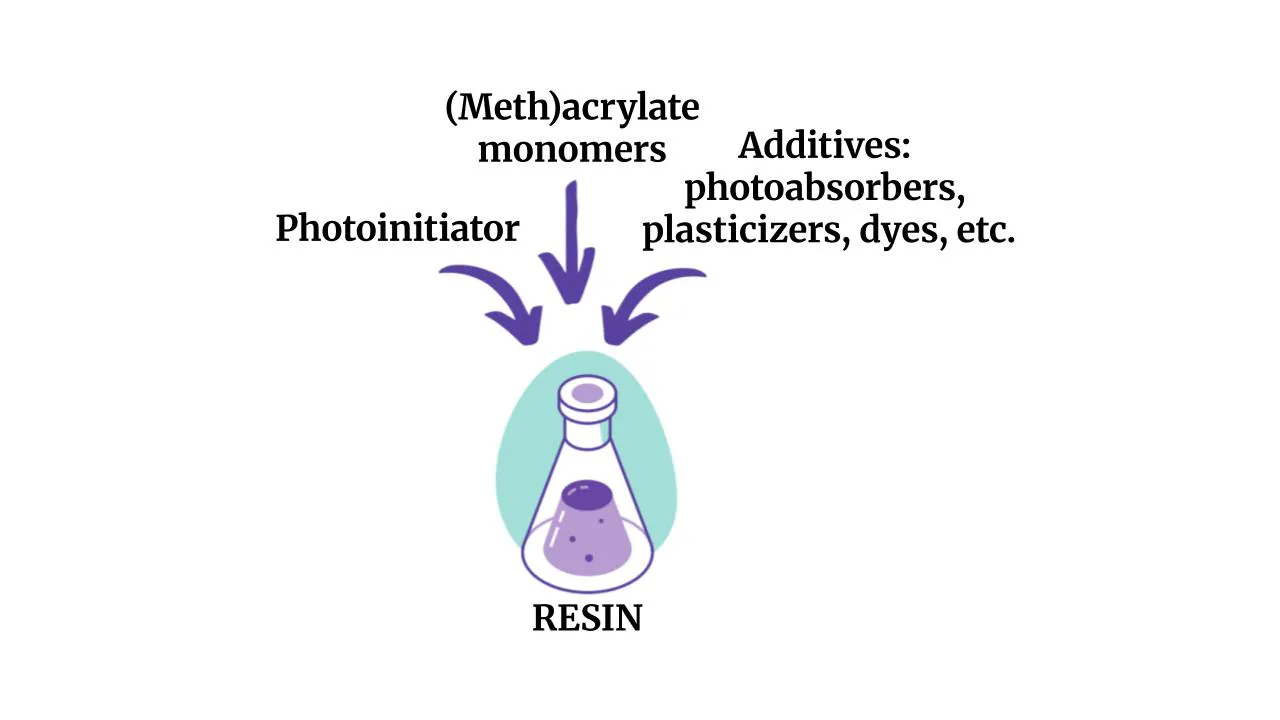
Resin composition for discussing cytotoxicity

Multi-Tissue Chips – PDMS to 3D Printed
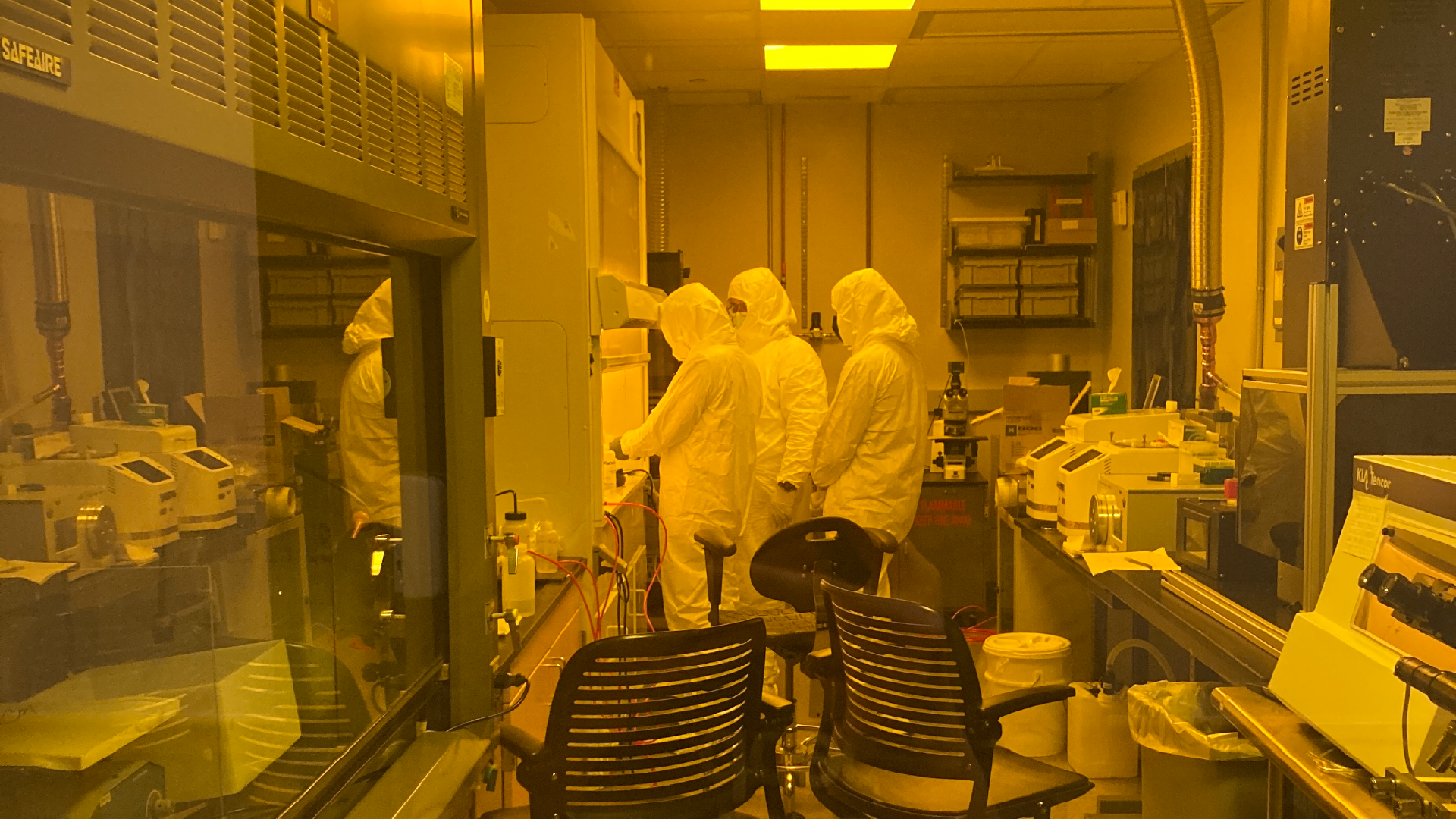
Cleanroom Training 2021
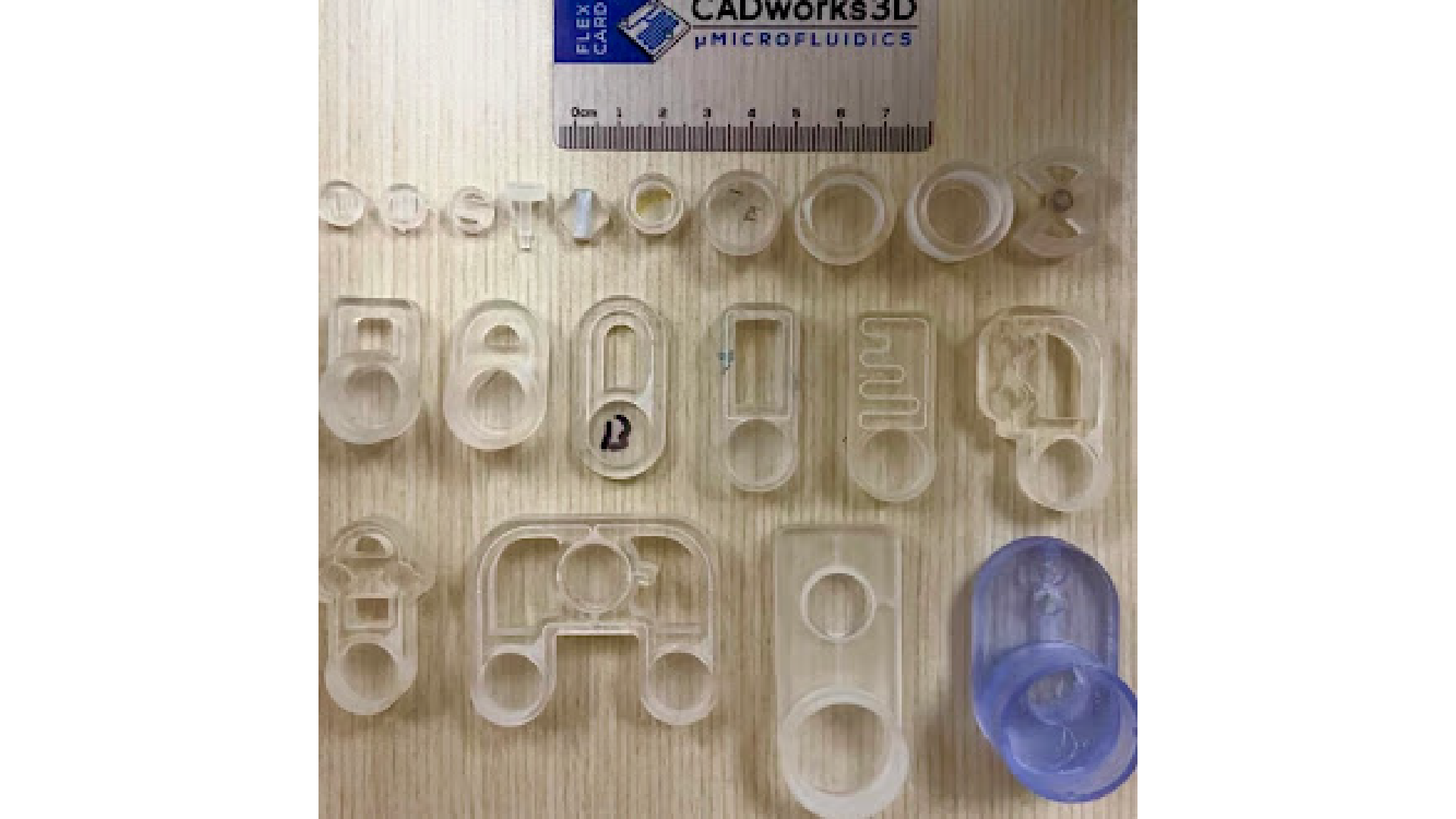
3D Printed Chips
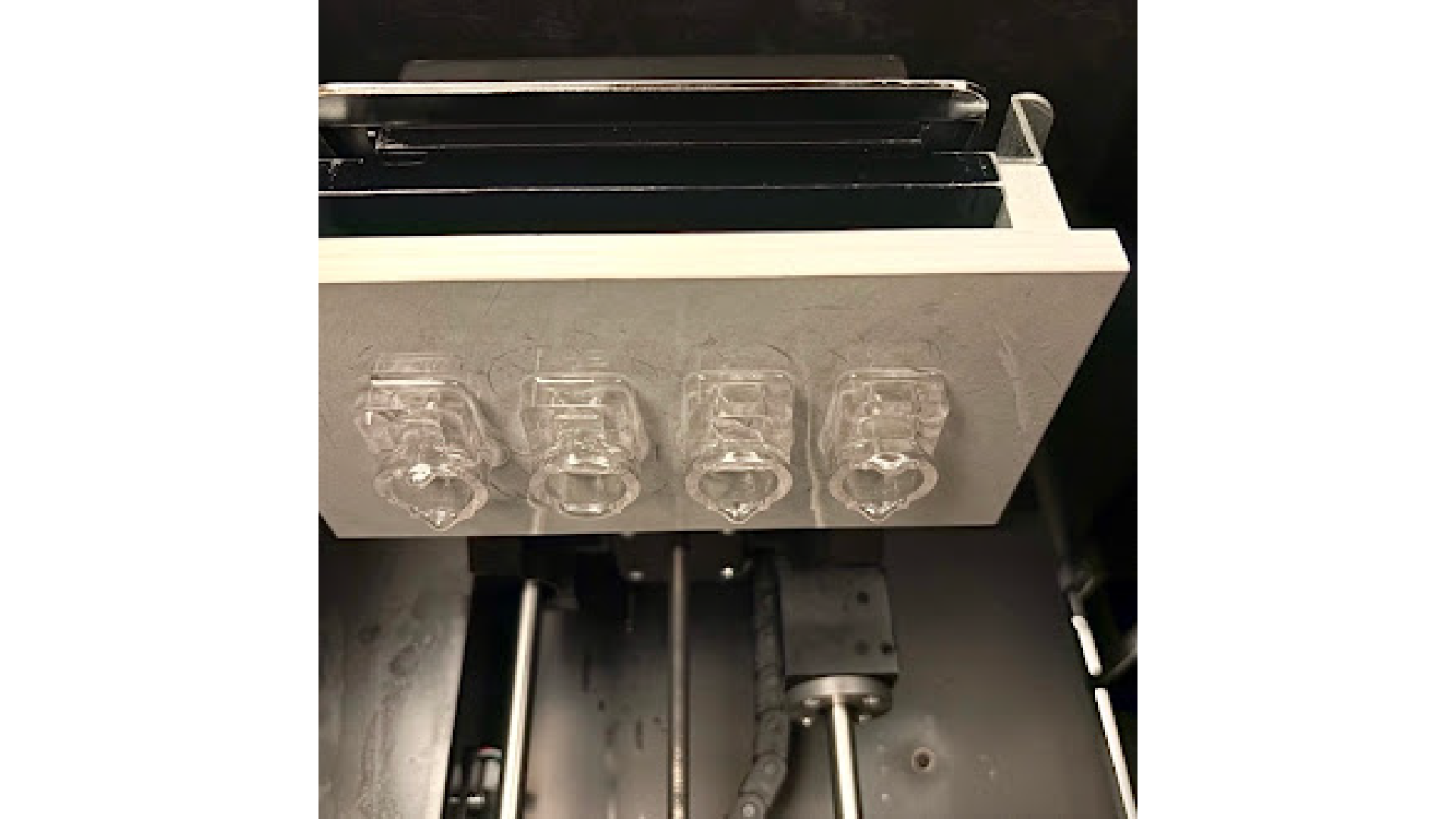
Chips on Buildplate
Chips is Parylene Coater
Pompano Lab 3D Printed Chip