

GUEST EPISODE 02
Germplasm Repositories for Aquatic Species
5th May, 2025
Hemdeep Patel , Robin Boshoven , Dr. Jack Koch
“How is 3D printing facilitating the study and conservation of aquatic species?”
In this eye-opening 3-part series, Hemdeep and Robin sit down with Dr. Jack Koch, technobiologist and assistant professor at the Aquatic Germplasm and Genetic Resource Center (AGGRC) at the LSU Agricultural Center. Together, they explore how 3D printing is advancing cryopreservation techniques to support the learning of and conservation of aquatic species. In each episode, you’ll:
Part 1
Hear how Jack’s childhood fascination with marine life led to groundbreaking work in cryopreservation and the development of accessible tools to safeguard aquatic genetic material.
Part 2
Dive into the challenges of collecting genetic material, standardizing cryopreservation methods across diverse species, and how the AGGRC is using 3D printing to create an adaptable, open-source solution.
Part 3
Discover how Jack and his team are empowering researchers, scientists, and conservationists worldwide with access to ready-made cryopreservation kits—or the ability to 3D print their own—to build germplasm repositories tailored to the species they study.
So whether you’re a researcher, a marine conservationist, or just fascinated by where technology and life science meet, this series is one you won’t want to miss. Listen now and see how small-scale tech is making a global impact beneath the surface. Listen now and hear how innovation at the micro scale is making a global impact… beneath the surface.
Podcast Summary
Big Ideas in Microscale sits down with Dr. Jack Koch, Assistant Professor at LSU’s Aquatic Germplasm and Genetic Resource Center, for a three-part deep dive into aquatic cryopreservation and reproductive biobanking. A self-described “technobiologist,” Koch works at the intersection of invertebrate biology and engineering, a field he notes that lags far behind plant and livestock genetic banking.
The episode explores how germplasm repositories preserve eggs, sperm, and embryos across wildly different species, from microscopic hydroids to sea hares with million-embryo egg strands, and examines why 3D printing has become central to the work. Koch breaks down how his team builds low-cost tools, including sperm counting chambers, sealing devices, and dry shippers, that rival commercial equipment costing thousands, while also unpacking AGGRC’s push toward open-hardware “capability kits” for labs worldwide.
Available on :



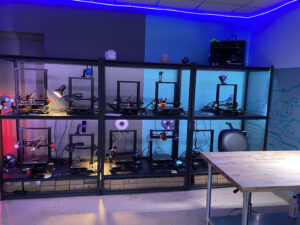
"And we have over 100 3D printers in our building, and we see the power of using 3D printing to progress our research and make it accessible to more people. "
Transcripts
Part 1 Transcript
From Seine Nets to Cryobiology Part 1
Hemdeep: Welcome to Big Ideas in Microscale, the podcast where we explore groundbreaking research happening at the microscale, where micro innovations make a big impact. We’re excited to showcase the incredible work being done by our users from around the world who are pushing the boundaries of microfluidics, lab-on-a-chip, organ-on-a-chip, and beyond. Through these conversations, we hope to learn from their experiences, uncover their insights, and bring their big ideas to a wider audience. So whether you’re in a lab or on the go, or just curious about the future of microtechnology, join us as we dive into big ideas at microscale.
Welcome back to Big Ideas in Microscale. I’m your host, Hemdeep, co-founder of Creative CADWorks, CADWorks 3D, and ResinWorks 3D.
Robin: And I’m Robin, co-host as well as the technical writer within the marketing team.
Hemdeep: We’re excited to start a new mini-series with our guest, Jack Koch.
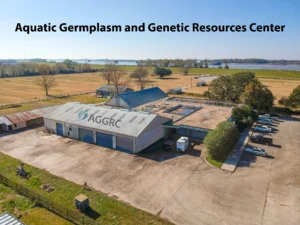
Robin: Jack Koch is an assistant professor at the Aquatic Germplasm and Genetic Resource Center in the Louisiana State University Agriculture Center. His research focuses on developing cryopreservation pathways and germplasm repositories for aquatic species. Welcome, Jack.
Jack: Hello. Thanks for having me.
Robin: Let’s start by diving a bit deeper into your research background. Can you describe your academic career to date?
Jack: I did my undergraduate education at the University of North Carolina, Wilmington, where I got a bachelor’s of science in marine biology. Then I traveled across the United States to Oregon State University, where I got my PhD in integrative biology. Now, like you said, I’m an assistant professor at the Aquatic Germplasm and Genetic Resources Center. When I arrived at the AGGRC, I started as a postdoctoral research associate for three years, and I’ve been an assistant professor for just over six months now.
Hemdeep: We spoke a while back, and since then I’ve done a bit of research, with Robin’s help, into who you are and the work you’ve been doing. Whenever I speak to researchers, I like to find out where that “aha” moment was. Where was the tipping point where you really found your niche?
Jack: My path here has been a bit non-traditional in terms of the variety of projects I’ve undertaken. My PhD covered some enzyme physiology, some genomics, and some microbiology. Traditionally (and I won’t say this is true of most PhDs, since everyone has their own journey), you might focus on one thing for your whole PhD. Mine covered a few different topics.
Then, moving to Louisiana, I had no background in cryobiology at all, which turned out to be an opportunity for growth. I didn’t have a preconceived notion of what cryopreservation was or what needed to happen. I got trained by the group I’m with now, and got to figure things out on my own to form my own knowledge of the process.
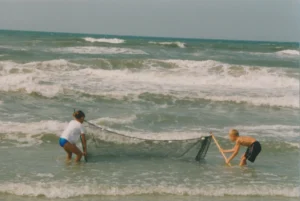
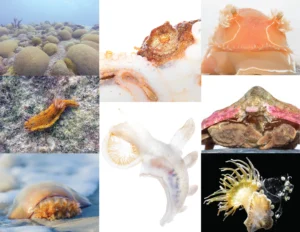
So the “aha” moment for me has really just always been curiosity about the world around me. It started young. We’d go to the beach every year as a family: grandparents, aunts, uncles. Most people sunbathe or swim, but I had a seine net. If you don’t know what that is (maybe we can post a picture), it’s a giant net, about ten feet long by four feet high, with posts on each side, weights along the bottom and floats along the top. I brought one to the beach as a seven-year-old.
Robin: Did you bring it yourself, or did a family member introduce it to you?
Jack: I think I brought it. We’d go into the little stores near the beachfront, I saw one and wanted to try it, and my parents bought it for me, but I was the one who brought it every year. I’d convince whoever came out to the surf with me (my cousin, my grandpa, my grandma, my parents) to drag the net. We’d catch fish, jellyfish, all sorts of things. I think that’s one of the main reasons I’m so curious about the outdoors. But it’s more than just one “aha” moment.
Hemdeep: Would you say you leaned on those experiences as you decided where to do your post-grad work?
Jack: I always knew I wanted to end up near the coast. UNC Wilmington’s main campus is a 10-15 minute drive to the beach with no traffic, which is incredible. Oregon State was a bit further, about an hour and a half. But I didn’t go to OSU for its proximity to the beach. I went there for the person who mentored me through my PhD, Dr. Virginia Weis. She’s incredible; I didn’t fully realize it at the time, but she’s a world-renowned biologist in coral biology. I’d read some of her papers while working on my honors thesis at UNC Wilmington, reached out, and things worked out well.
Coming to Louisiana was also about mentorship and training more than location. Virginia knew my boss, Dr. Terry Tiersch, and when I came to see the facility he basically said, “Jack, you’d really fit in here: you love building and tinkering, and that’s what we do.” Combining biology and technology has become a big part of how I’ve built my program at the AGGRC.
Hemdeep: Robin did a bit of digging and found that you’re also an avid wildlife photographer.
Robin: At least you used to be. Not sure if you still keep up with it.
Hemdeep: How far did you take that? Is it a way to decompress, or where does it stand now?
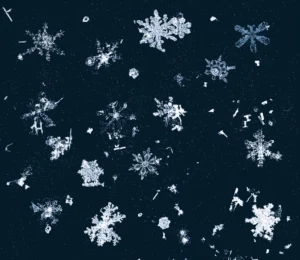
Jack: I don’t get out to shoot as much as I used to, maybe because it’s warmer in Louisiana and less pleasant to be outside. I wish I got out more. We did have a once-in-a-lifetime snowstorm here (ten inches of snow in Louisiana), and I got some really cool pictures of snowflakes. I’m nowhere near the people who take truly incredible snowflake photos, but I have pictures of Baton Rouge snowflakes, which I think is pretty cool. I love photographing wildlife, landscapes, and the night sky; it all fascinates me, and it’s a great way for me to decompress.
Robin: Totally unnecessary, but a little shout-out: I know you also have a store for your photography, so we’ll link it on our webpage.
Jack: Yeah, I print all my photos at home, not through a third party; I have a fairly large photo printer. If anyone wants a print, they’re welcome to it.
Robin: You mentioned it briefly, but how long ago did you join the AGGRC?
Jack: Right after COVID, around when people were coming back from remote work, so 2021. It’s been four years now.
Robin: What’s your specialization within the lab? We heard you’re a good tinkerer who works with a lot of technology.
Jack: They call me a corrupted biologist. My expertise is in invertebrate biology, anything without a backbone: jellyfish, sea urchins, shrimp, oysters, corals, and so on. We have over a hundred 3D printers in our building, and we’ve seen the power of 3D printing to advance our research and make it accessible to more people. My natural tendency to tinker merged quickly with my biological background, and now I combine the two closely; I call myself a technobiologist. When I first said that word out loud, six or eight months ago, I didn’t realize anyone had already defined it, but there’s a paper out of the University of Miami that defines technobiology, and reading it, I thought, “This is exactly what I do.” The opposite (flip the words) is biotechnology. I’m not a biotechnologist; I’m a technobiologist.
Hemdeep: There’s actually a term for the skill set you bring to the team. How does your approach compare to other members of the team, and where do you find your inspiration for solving challenges?
Jack: I run the industrial-scale side of our facility, but we also see an important need to focus on the consumer side of 3D printing. Asking labs around the world to buy a $10,000, $20,000, or $100,000 printer is tough. But if we can build hardware that advances biology on a $300-$400 consumer printer (something you can buy off Amazon or Walmart), that’s a lot of power. My focus on the industrial side is rapid prototyping: moving through as many device iterations as quickly as possible. Others in our group focus more on open hardware, a piece of hardware distributed as a digital file, with the freedom to use it, distribute it, modify it, and share it. Similar to open-source software: think of the Linux ecosystem, a huge community that built an open operating system people can customize to their needs. We see the same power in open hardware.
Hemdeep: 3D printing spans a huge range right now, from $400 up to $100,000. Do you find you need to start at the high end and figure out how to scale a solution down to the $300-$400 range?
Jack: Absolutely. I like to say the limit of 3D printing is your imagination; there are some technical limitations, but most people won’t run into them. That said, a printer’s capabilities are closely tied to price.
We deal with a huge range of biological scale: from whole groups of animals down to something like sperm, a single tiny cell. There are even smaller things, like enzymes and DNA, but we’re not focused on anything that small. For our needs, the scale of most sperm we work with is within reach of consumer printers.
I don’t know if your audience is familiar with what CADWorks 3D does, but you make a printer that can produce microfluidic devices. Traditionally, microfluidic devices are made through soft photolithography, which needs a multimillion-dollar clean facility and six months of time, and if you want to change your device, you start over. CADWorks isn’t the only group making microfluidic printers, but the power of having one is rapid prototyping: we can produce twenty different versions of a device in a single day, to see how different geometries and configurations affect how sperm or cells behave during cryopreservation. That’s incredible for us.
We’re also always thinking about how to get back to consumer scale: for example, 3D printing molds for microfluidic devices. Now we don’t have to ask labs to buy a $30,000-$100,000 microfluidic printer; we can print molds and ship them anywhere, and people can make their own devices from them. It comes down to a lab’s needs: a biologist probably doesn’t need to prototype their own microfluidic device; they just need the mold to look at sperm or cells under a microscope. It’s amazing how these technologies have come together.
Robin: Speaking of devices and cryopreservation, let’s talk more about your key research topic: germplasm repositories.
Jack: Sure, let’s step outside marine biology for a second, to something more people know. Humans have saved seeds for tens of thousands of years: we know how to save corn, and the benefit is you can plant seeds at an optimal time and place, rather than eating all the corn on the cob, so you can make more corn in the future. The seed and plant world is far more advanced in this respect than the germplasm repository world for animals.
So, germplasm repositories, in two words. Germplasm traditionally meant any material used to make a new organism: strictly, eggs and sperm. But we now recognize it as a much broader category: eggs, sperm, embryos, larvae, individual cells, because there’s technology that lets you take the nucleus from one cell and put it into another to create new lines or organisms. In some cases you can even think about whole animals: some are small enough to preserve entirely, and some you can break a piece off of and it’ll regrow the whole animal, a clonal process.
The second part is “repository”: think of it like a bank. A bank is where you store money; they track how much and what type is there. A germplasm repository is a bank of germplasm: frozen, living, or even a museum sample. It’s a place to store samples, track them, and add or withdraw them.
Hemdeep: Is this a mandate for your team specifically, or is it something universities around the world are each contributing to, based on their specialty?
Jack: It’s our mission to help people build germplasm repositories and develop cryopreservation technologies for aquatic species. There’s no mandate, but we see the need. Think about the economic value of oysters, salmon, trout, or your favorite seafood. It’s enormous. You’d think we’d want to protect those genetic resources; we spend a lot of time selecting the right oyster because it’s disease-resistant, or the fastest-growing. Same with fish: people select broodstock to carry particular genetics forward. You’d think all of that would be protected, but it’s not; we’re very far behind in the aquatic field, especially compared to plants.
The dairy bull industry is a multi-billion-dollar global industry built on preserving and distributing bull genetics worldwide. For aquatics, that infrastructure just isn’t there. So there’s no mandate, but we treat it as a very important mission. That said, there is a push from outside groups to make it one: when you submit a grant proposal, it’d be great if the funding agency said, “You’re creating novel genetic resources: here’s the funding, but we want our investment protected, so you need a plan to protect it.” So often, research gets done on a line or genetic resource, and there’s no way for anyone in the future to access it again; it’s not exactly lost, but no one maintains or protects it the way we would a plant variety or a bull line.
Hemdeep: Is this kind of preservation happening more broadly for terrestrial animals too, beyond bulls and livestock, with your team essentially taking the lead for aquatic species?
Jack: I don’t have much information there, but my guess is terrestrial preservation is easier, since we’re terrestrial ourselves and understand terrestrial reproductive biology much better: we can’t just watch a fish constantly to learn when it spawns, whereas terrestrial animals are far easier to observe.
Robin: Is that lack of observation part of why aquatic repositories are so far behind?
Jack: That’s probably a contributing factor: lack of observation, and probably not knowing when to observe, too.
Robin: Or just that no one got around to it yet. So when did this research start emerging?
Jack: Our center director, Dr. Terrence Tiersch, started thinking about this a couple of decades ago and has pursued it ever since. He’s worked with hundreds of aquatic species across aquaculture, wild fisheries, conservation, and more recently biomedical species, all over the globe; he’s been a world leader in this space for a long time. Others have worked in it too; it’s really about putting it all together and recognizing the global scale and need. Terry has been very instrumental in that.
Part 2 Transcript
Germplasm Repositories and the Rise of Cryo Kits Part 2
Hemdeep: In terms of milestones, the number of species you could foresee eventually building a repository for could be very large. Do you have an internal number, or a way of classifying species that are especially important to safeguard?
Jack: We don’t have any internal classification or a set number; there are just so many aquatic species out there. We work closely with the USDA’s National Animal Germplasm Program in Fort Collins, Colorado, a state-of-the-art germplasm repository for animals, with a plant section too, I believe. Plant germplasm repositories are distributed in a network across the U.S., whereas animal repositories are centralized in Fort Collins, and they likely have more curated collection goals.
More recently, people tend to fall into two camps: collecting a high number of samples just to have them, versus collecting samples of strategic importance. Take oysters: there are many lines because people grow them in different farms and hatcheries. We could ask each hatchery for a couple of oysters and freeze their germplasm, giving us hundreds of lines. Or we could say, “Send us the five most disease-resistant oysters in the U.S.,” giving us only five lines, but arguably higher quality. I don’t think there’s a single right answer between quantity and quality: in genetics, quantity is often valuable, because you can run into genetic bottlenecking, where a hundred genes through breeding narrows down to two, and your risk of inbreeding goes way up. It really depends on the mission of the project.
Robin: Going back to why this field hasn’t advanced further, are there big differences in cryopreservation methodology between species? I’d imagine sperm, eggs, and embryos all differ.
Jack: We think of it at different levels. There’s the protocol level: very specific, like “add five milliliters of cryoprotectant to your sperm sample.” Above that is the process level, and at that level, most cryopreservation looks similar whether you’re working with sperm, eggs, embryos, or larvae; there are differences, but a lot is shared. It’s a matter of fitting the process to your environment and material.
Of the specific types, sperm is the most advanced: it’s a single, small, abundant cell. If you collect sperm from something, you usually have millions or billions of cells, so losing half during cryopreservation isn’t a big deal. Eggs are far behind, since they’re typically rich in lipids, which makes freezing difficult. Larvae and embryos are advancing rapidly. Even bigger things, like whole organs such as livers and kidneys, people are figuring out how to cryopreserve, which will help the medical field a lot, but it’s a slow process.
Robin: You have a couple of papers I want to bring up: one on cryopreserving Hydractinia symbiolongicarpus sperm, and one on California sea hare (Aplysia) eggs. If cryopreservation is broadly similar past a certain point, what differed between these two species?
Jack: Hydractinia are pretty cool: miniature versions of the sea anemone Nemo lives in, from Finding Nemo, just a couple of millimeters tall, with hundreds of them on a single microscope slide. Collecting sperm from an individual is difficult, since they only produce a couple of microliters. So the barrier there was collecting enough material to freeze. We built a small open-hardware device that lets you combine multiple slides, so when they spawn you get a couple of milliliters of sperm instead of one microliter. That’s the sperm side, with Hydractinia.
Aplysia are interesting because they’re simultaneous, non-selfing hermaphrodites with internal fertilization. Simultaneous hermaphrodite means they have both male and female reproductive biology at once. Non-selfing means they can’t fertilize their own eggs with their own sperm. Internal fertilization means they’re not broadcast spawners: they actually copulate, forming mating chains of up to twenty individuals, where the first is female to the second, who is male to the third, and so on.
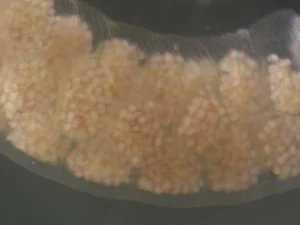
For Aplysia, one option was collecting sperm and working out internal fertilization; the other was working with their egg masses, which look and feel like a wad of cooked spaghetti. Zoom in on a single strand and it’s not just free-floating embryos: there are hundreds or thousands of capsules within the strand, and each capsule can hold up to a hundred embryos. So one egg mass, roughly the size of a fist, can contain millions of babies, consistent with their strategy of producing huge numbers, since only about 1% make it to adulthood.
Robin: Is that egg mass from the whole mating chain, or one individual?
Jack: From one individual: a lot of eggs from just one.
Hemdeep: I can see how setting up a camera in the middle of a pond and waiting for these things to spawn wouldn’t work well; you’d never know when it happened.
Jack: We’re lucky that Aplysia are intertidal (living in the zone where low tide goes out and high tide comes in), so during low tide you can go watch them. For animals in the middle of the ocean, what can you do, hope your boat’s in the right place when they spawn? For the longest time we didn’t even know where great white sharks gave birth, because the ocean is massive. We’re fortunate that intertidal species are much easier to study.
Robin: Do these open-hardware devices cover the whole process, from collecting genetic material through preparing it for cryopreservation?
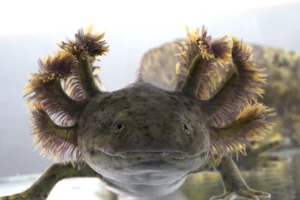
Jack: It’s interesting to look at how our open-hardware technology has evolved. At first we built single devices addressing one step in the process. Now we’re introducing a kit concept, think HelloFresh or Blue Apron, but for cryopreservation: a kit arrives with everything you need. We’re calling them “capability kits.” Our first will likely be for axolotl salamanders. One of the great things about open hardware is that it’s generalizable across species; we’re not building one device for axolotls, one for frogs, and one for sea hares. We’re building hardware usable across all of them.
Robin: Does the hardware get tweaked for specific species, or is it standardized across the board?
Jack: Standardized, across germplasm types, let’s say.
Hemdeep: What’s the key characteristic that lets you use one template across such a wide range of species?
Jack: There are a couple of ways to generalize. You can split by germplasm form (sperm, eggs, embryos, egg masses, tissue); some devices could in theory work with any of those. Or you can split by cryopreservation type. There are two major types: slow cryopreservation, with freezing rates from about 1°C to 60°C per minute, and ultra-rapid cryopreservation (vitrification), with cooling rates in the thousands to tens of thousands of degrees per minute. You could split devices along those lines too, among others.
Hemdeep: Speaking of rapid freezing, it occurred to me that there are humans who want to be cryopreserved. What does that look like, and which method would apply? Wasn’t Walt Disney supposedly cryopreserved, or someone else famous?
Jack: Possibly. There’s a whole field around that, called cryonics, I believe, though I’m not well versed in it.
Robin: Can you explain what’s actually in your cryo kits, and have you started distributing them to the research community?
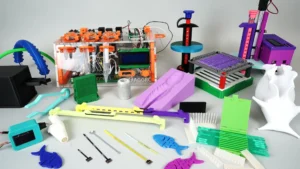
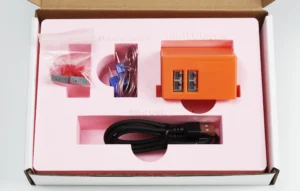
Jack: Picture a cardboard box with different modules inside, each addressing a set of steps in the process. There’s a module for collecting time-and-temperature data, which matters for quality management: confirming samples didn’t overheat, or that they cooled at the claimed rate. A lot of people doing cryopreservation don’t record cooling rate at all; you just have to trust that their samples were, say, five centimeters above the liquid nitrogen, but box size, and anything between the nitrogen and the sample, all matter. Giving someone a way to record that data alongside their sample makes the sample that much more valuable.
There’s a module for filling, sealing, and labeling French straws; they look a bit like coffee stirrers, originally developed by the dairy bull industry. A lot of what we do relies on technology already built by that field; we’re not reinventing the wheel, and when we want to scale to a hundred or a million straws, there’s existing technology to draw on.
There’s a special box customized for each species or group the kit targets. One animal we currently work with, with the National Institutes of Health, is the axolotl, an Ambystoma salamander. You might know them from How to Train Your Dragon: Toothless is based on an axolotl; look up pictures of both and you’ll see how similar they are.
Minecraft has also driven a huge spike in axolotl popularity. Anyway, there’s a special box to help collect germplasm from axolotls in a standardized way. We might build something similar for oysters or salmon; it’s a customizable module. Then there’s the core of cryopreservation (the freezing/cooling process), with a module providing a device to cool samples in a standardized way, in any lab or field setting.
We were also fortunate to find an accessible shipping device called a dry shipper. You pour liquid nitrogen in, and it’s absorbed into a material inside, so rather than sitting as liquid, it stays cold while being shippable anywhere. If you don’t have access to liquid nitrogen, you can charge one up, ship it elsewhere, and do your cryopreservation there. They usually cost more than $1,500, which is a lot in some parts of the world, so having a cheaper option matters. We found a dry shipper for a couple hundred dollars and adapted some of our open-hardware technology to work with it. Altogether, the vision for this kit is to let you do cryopreservation wherever you are: in a lab, or in the middle of the jungle.
Hemdeep: That’s amazing. What’s the timeline for getting this to other researchers?
Jack: We’re in the beta-testing phase; we’ve sent kits to past collaborators and asked them to break them, to tell us what works and what doesn’t. The biggest focus right now is the instruction manual. Cryopreservation isn’t the easiest thing in the world, and the best way to help people feel confident is to make sure they understand why they’re doing each step: the physics and chemistry behind it. That empowers people to troubleshoot and make smart decisions if something goes wrong, so figuring out how much detail to include has been one of our biggest challenges.
As for timeline, I’m not sure, but we may be working on an interest form to find out what species people work with, where they’re located, and their experience level, to gauge demand. We’re not a huge group: eight professional staff, and around forty undergraduate student workers helping across research, husbandry, and building upkeep at any given time, so we’re not capable of producing hundreds of these kits ourselves. Eventually, I think the vision is commercialization: we won’t be the ones shipping kits to people; we’ll focus on the biological groundwork and new devices for the kits, and let someone else handle distribution.
Robin: How does this connect with your open-hardware approach, since that’s a digital file people can print themselves? Are there plans to let people 3D print the whole kit?
Jack: Yes, that’s probably one of the ways we’ll provide it. Going back to the microfluidic device example: we could print devices ourselves for people (difficult at scale), send molds and let people mold as many devices as they want, or send files for people to print and modify themselves. The same applies to the capability kit: we could send a ready-to-go kit, or send the files for people to print. Open hardware is tightly interwoven with the kit concept, and there will likely be many ways for people to access it.
Part 3 Transcript
Open Hardware, 3D Printing, and the Future of the AGGRC Part 3
Robin: …this version of the kits even encourages users to 3D print components themselves, allowing for further customization, which could revolutionize genetic preservation in aquatic species. Jack will also share how 3D printing plays a crucial role in creating cost-effective devices, like sperm-counting chambers, and tools that streamline cryopreservation. Let’s jump right in.
Hemdeep: These kits and this open hardware include a range of modules and devices. I read up on a couple: the strand cryopreservation shuttle system, and the single-sperm counting chamber. How did you develop those, from brainstorming through to something close to a commercial object?
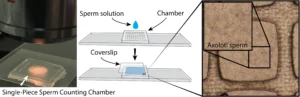
Jack: Let’s start with the single-piece sperm counting chamber. That came from a need to give people a way to count sperm and determine concentration; knowing concentration and motility is important quality information. There are commercial options: a hemocytometer, developed for counting blood cells, and a Makler chamber, developed specifically for counting sperm; those cost around $300-$700 each. If we can make something 3D-printed that costs ten or twenty cents, that someone can print anywhere in the world and use to count sperm repeatably and consistently across labs, that’s wonderful. That’s where the single-piece sperm counting chamber came from: the need for something low-cost and accessible that could be packaged into a kit like this.
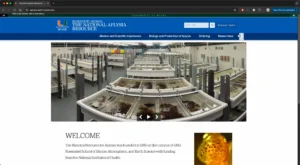
The strand cryopreservation shuttle system came from a need we recognized while developing cryopreservation processes for Aplysia. When we work with outside groups on that project, we work closely with the National Aplysia Resource, based at the University of Miami. Sometimes we (or others) build a device we think a community will find useful, hand it over, and hear back, “We don’t need this,” or “This doesn’t fit our workflow,” or “This would cost us another person.” So we work closely with these national centers through user-centered design: building relationships, asking questions, visiting facilities, making observations, and figuring out what hardware would genuinely help them, especially as they adopt cryopreservation.
The strand cryopreservation shuttle system is a perfect example. We had many meetings with the National Aplysia Resource team, visited their facilities, made observations, and brought that back to the AGGRC, keeping their needs and environment in mind while developing cryopreservation processes for Aplysia.
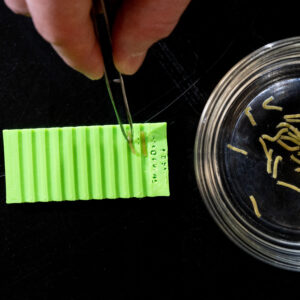
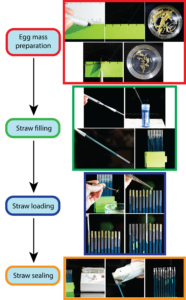
To give you a sense of how difficult it is to work with Aplysia egg masses: imagine a coffee straw, and a small piece of wet noodle you need to package into it, over and over, repeatably.
Robin: How many eggs, or noodles, do you need per straw?
Jack: Say you want one one-centimeter piece of noodle per straw, a hundred straws, and ten minutes to do it: that’s basically not possible. And a single one-centimeter piece of noodle in a twenty-centimeter straw is a huge waste of space, so wouldn’t it be better to fit multiple noodles per straw? But ask someone to package three noodles into a hundred straws in ten minutes, and they’d say a hundred wasn’t possible in the first place: now you want three hundred?
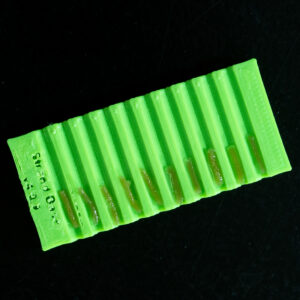
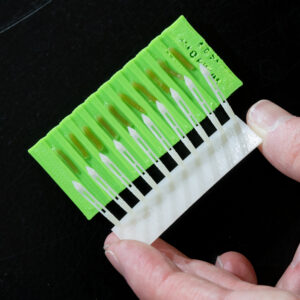
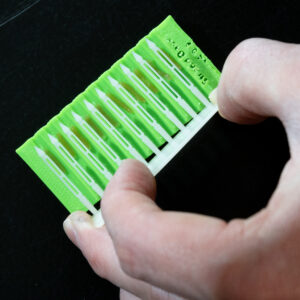
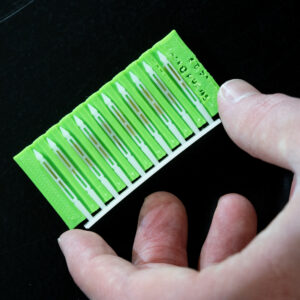
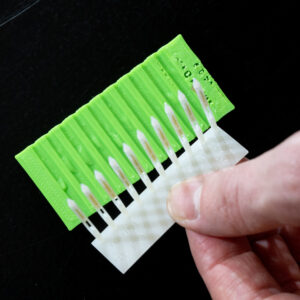
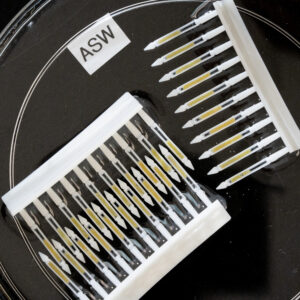
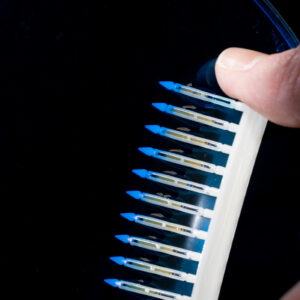
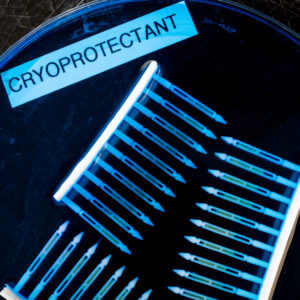
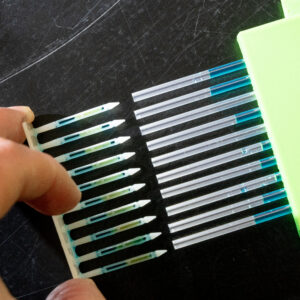
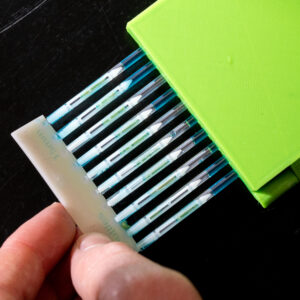
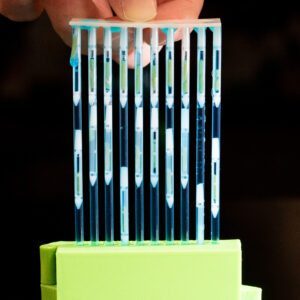
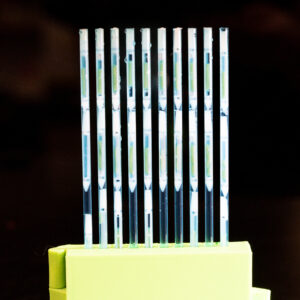
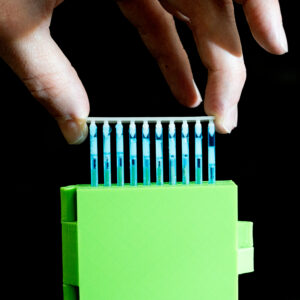
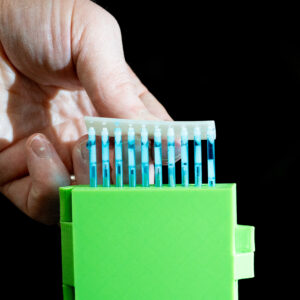
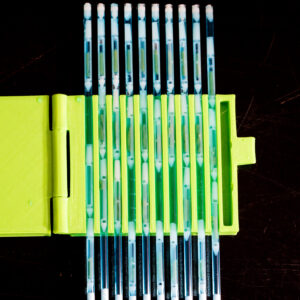
So we built a device where you push down and load ten egg-strand pieces at a time into cassettes, or “shuttles.” I can take those ten and put them back in seawater, or load up a hundred strands ready to go, without the ten-minute clock running yet. Once I’ve packaged a hundred strands, I arrange my straws in the same spacing as the shuttles, and when the timer starts, I just snap ten in at a time, fitting three noodles per straw, with packaging efficiency going way up. That’s the basis of the system: efficient sample handling and packaging.
We also developed a way to seal the straws. Traditionally you’d use an ultrasonic sealer, using high-frequency vibration to melt the straw shut without heat, but those cost around $10,000. Without one, people might heat a pair of tweezers over a flame instead, but heat isn’t great for sperm. So we made 3D-printed sealing balls that work with this system: ten straws, spaced appropriately, ten sealing balls, sealing ten at a time and rapidly cutting the time it takes to fill, seal, and prepare straws for cryopreservation. All printed on a $300 consumer-scale printer with basic resin; it opens the door to so many possibilities, not just for Aplysia, but for other animals around the world.
Robin: For these devices, did you go straight to 3D printing, or try other fabrication methods first?
Jack: While I’ve been there, we’ve only used 3D printing. It came out of my brain one night: it goes back to the idea that the limit of 3D printing is your imagination. You can print pretty much whatever you want. It’s incredible.
Robin: Even so, 3D printing isn’t at its peak yet. Are there still limitations for your research? What are the main ones?
Jack: For cryopreservation, reducing the thermal mass around your sample matters a lot. If a printer can only print something one millimeter wide, that millimeter next to your sample holds a certain amount of heat, and if there were a way to cut that in half while keeping the same structural integrity, that’d be great. That’s a lot of what we run into: reducing material while maintaining structural integrity. That’s when we bring in engineers: I’m not one, but they’ll say, “Add some cross-links here, and you get the rigidity back while reducing material.” Metal and polymer 3D printing are advancing rapidly, especially at smaller scales: metal is great because it’s a heat sink, pulling heat away from a sample much faster than resin. There’s also work incorporating materials like graphene, mixing resins to improve cooling speed or structural integrity.
Then there’s toxicity: of resin, or any material, even the plastics used in fused filament fabrication. You just have to test it. A lot of the time your sample is only in contact with a device for a couple of seconds, or you’re using a sub-sample that doesn’t need to remain viable afterward.
Robin: You mentioned the AGGRC has a lot of 3D printers, what does that look like, one giant room?
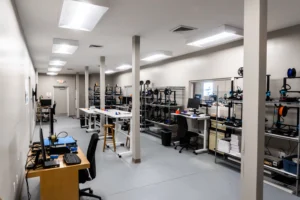
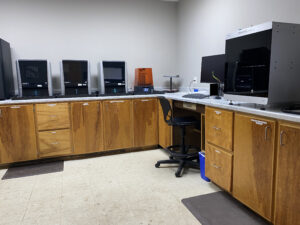
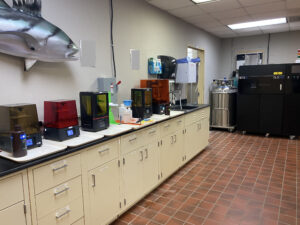
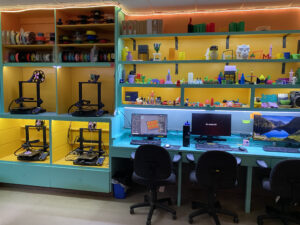
Jack: I think we just broke a hundred printers. You’ll have to come down to Baton Rouge sometime to see it. We have a printer farm: one big room with maybe fifty printers on shelves. But we have printers in other rooms too; a couple in my own office. We have a training and prototyping space with about a dozen printers, where people learn to break printers, fix them, do their first prints, learn CAD and slicing. Then there’s our industrial space at the other end of the building: a room with six or eight printers, and another with a couple of resin printers and a polymer printer. They’re spread across rooms based on the printer’s level and purpose.
Robin: Tell us more about the AGGRC’s overall mission.
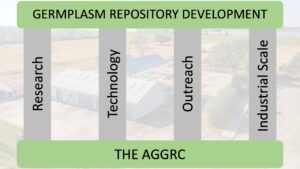
Jack: As I mentioned, we help people and communities around the world form germplasm repositories: thinking through the cryopreservation process, technology development, bringing in other users, deciding where and how to store and track samples, and what equipment and staffing is needed, specifically for aquatic species.
Robin: You mentioned four pillars of the center; can you give an example?
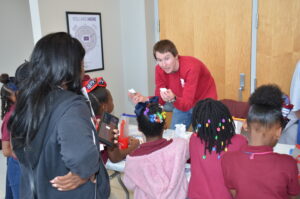
Jack: We support our mission through four major programs. First, basic biological research: studying animals’ reproductive biology, and how different chemicals interact with their germplasm to prepare it for cryopreservation. Second, technology development, split into open hardware and industrial processing. Third, outreach: talking to people across industries, universities, and education levels, both to sharpen our own thinking and to let people know these technologies exist. Fourth, industrial-scale processing: we have equipment that could double or triple the total global aquatic-species germplasm samples in a couple of weeks, given enough sperm to freeze. We use high-level equipment for certain projects and train people on it too, since scaling from ten samples to a hundred, or a hundred to a million, requires different levels of technology, not just more people.
Hemdeep: The center has clearly grown significantly. How did that growth track with the adoption of 3D printing, hand in hand, or was it a necessity? Would the center have reached its goals anyway without it?
Jack: The center would definitely have continued without 3D printing, but growth has been much more rapid, letting us reach more diverse communities in more places. There are commercial cryopreservation technologies we could have used instead. When 3D printers became more accessible (let’s say the center’s first printer cost around a thousand dollars, a big deal at the time since they used to cost much more), they printed something, ran it down the hall, and dunked it in liquid nitrogen to see if it would still flex. It did. Normally you’d expect something dunked in liquid nitrogen to shatter. That was a huge realization at the time: that we could make devices safe to bring near or into contact with liquid nitrogen, bring them to more people, and drive standardization and access; that’s really helped direct our mission ever since.
Robin: Does the community you’re reaching already have 3D printing experience, or is it something you teach them?
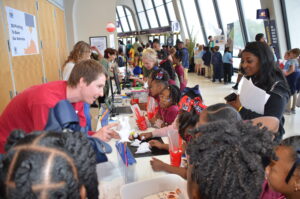
Jack: It’s a mix: some know about 3D printing but have never done it, some have printed a thing or two, some have never seen a printer before. But more local libraries have 3D printers now, and universities (especially those with engineering programs) often have 3D printing facilities their students learn on. There are also more student maker clubs with printers. We don’t necessarily teach people 3D printing directly; we try to create an environment where they can succeed and learn on their own, with support available. We can guide people, but we won’t hand them a fixed recipe, because that doesn’t work every time: 3D printing needs different parameters for different things. We also can’t help everyone directly, so we rely on a network approach: we help one person, they help two more, and the shared knowledge spreads.
Robin: I imagine that’s part of why it’s important for your team to push toward commercial scale rather than staying with industrial printers, I think that’s what your latest paper was about. What devices did you test between the two printer types, and what were the results?
Jack: That goes back to the single-piece sperm counting chamber. One reason devices like hemocytometers and Makler chambers are expensive is that they’re highly precise: the volume under the cover slide is exact, which comes down to manufacturing. The coverslip on a hemocytometer is specially weighted so the sample volume underneath is known, allowing for accurate concentration counts.
Trying to 3D print something like that requires hitting a tolerance level that guarantees the volume under the cover slide falls within a known range, which can be difficult on a consumer printer. We used a CADWorks 3D printer, purchased through a seed grant from the Louisiana State University Agricultural Center, to see what consumer-level versus industrial/commercial-level printers are each capable of. We didn’t want to directly compare them, since that would be unfair: we wanted to know where consumer scale covers one range of sizes, commercial scale covers another, and where they overlap.
Not all the sperm we work with are tiny: Ambystoma sperm are absolutely massive; we call them “aircraft carriers,” huge compared to human or even frog sperm. Printing a device for that scale is relatively easy on a consumer printer. For zebrafish, whose sperm are only about two microns, you’d be hard-pressed to use a consumer-scale printer to build an accurate counting device: the gap has to be small enough that sperm don’t stack on top of each other. That’s where a commercial-scale printer might be needed. So the purpose of that paper was finding where consumer and commercial scales overlap, so we can make informed decisions when designing new devices: whether to print something accessible on a consumer printer, or whether a device needs commercial-scale precision, either printed directly for people or as molds they can pour themselves.
Hemdeep: Given your experience across such a range of printers, what do you see for the future, for yourself, your team, and the repository?
Jack: Standardized devices are one place we’re really pushing, along with making sure the communities using them feel served by them. All the printers in our building are open-material printers, meaning we can use any resin on the market, though we might need to dial in settings, but that goes back to our open-hardware philosophy: we don’t want to be locked into one ecosystem. I think it’d be good to see more companies allow that kind of tweaking, even at an industry level. I understand companies need to make money, and closed-material-ecosystem printers reflect real investment in making things work exactly as expected, but there are also plenty of open-material printers, in both FFF and resin, that work well right out of the box, because they’re workhorses.
Hemdeep: What’s next for the germplasm repository?
Jack: Our mission won’t change much; the number of communities and species out there is so large we could spend decades on it. Where we may change is in how quickly and broadly we enable other communities to build their own processes and repositories for their own species: a more distributed workflow, where we help accelerate the number of groups doing this work, rather than being the only ones. That means more outreach: the vision, really, is a future where students at every level, in any field, know how to 3D print and are familiar with CAD, because it’s becoming a basic life skill.
Robin: Where’s your home base for this wider community, should researchers go through your website, or is there a forum?
Jack: aggrc.com is the best place to start. We also have a community forum: happy to share an invite link for anyone interested in connecting with us and others in the community. Every new open-hardware device we publish gets posted there. We’re also on LinkedIn, Facebook, X, Bluesky, and Instagram.
Hemdeep: That was a fantastic conversation, Jack. We’ll post all the links, articles, and images we discussed in the show notes. Would you like to give a shout-out to everyone who’s made your work possible?
Jack: Thanks, Hemdeep. Thank you to the Louisiana State University Agricultural Center for seed funding relevant to a lot of what we discussed. A big shout-out to the National Institutes of Health’s Office of Research Infrastructure Programs, who support our biomedical work and help national centers across the U.S., including the National Aplysia Resource, the National Xenopus Resource Center, the Ambystoma Genetic Stock Center, the Xiphophorus Genetic Stock Center, and the Zebrafish International Resource Center. Thanks also to our collaborators at Louisiana State University, including Dr. Monroe’s group, collaborators around the world, and funding sources including the USDA and the National Science Foundation. We really appreciate everything those groups do; we love helping people around the world protect the genetic resources of aquatic species.
Hemdeep: Amazing, we’ll add links to all of those teams as well. I’m so glad we had this chance to speak. Thank you very much.
Jack: Thanks, Hemdeep. Thanks, Robin.
Robin: And with that, that’s a wrap on our series with Jack Koch here on Big Ideas in Microscale. Over the past few episodes, we’ve explored the world of genetic preservation and cryobiology research: from Jack’s early curiosity about marine life to the groundbreaking work he’s doing at the AGGRC.
Hemdeep: We discussed the growing need for germplasm repositories to support breeding and conservation efforts for aquatic species, the challenges posed by complex reproductive biology, and emerging cryopreservation techniques helping to overcome those hurdles.
Robin: We also dove into how 3D printing and open hardware are making cryopreservation tools more accessible, affordable, and customizable for researchers around the world. Jack and the AGGRC’s work is an exciting glimpse into how 3D printing is driving solutions to some of the most pressing challenges in conservation and genetic diversity.
Hemdeep: We hope you’ve enjoyed this deep dive into the vital work being done to protect aquatic species. Our next guests are Assistant Professor Veronica Mendez and master’s student Noah Franco, from the University of Waterloo.
Robin: This episode is particularly exciting for us, since they’ve spent the past several months limit-testing and validating CADWorks 3D’s new 3D printing material, the Cyto-clear photopolymer resin. Here’s a short preview of that conversation.
Coming Up Next: A Preview
Hemdeep: So there was a material my brother was working on: he said, “This has amazing properties, but you know how we have to clean our models with IPA?” We were at a large workbench right beside a wall, and there was a very thin, unnoticed layer of IPA on the bench. My brother wanted to light a model, just to demonstrate something, not realizing a drop of IPA had landed on the bench. We didn’t notice anything until a blue flame shot straight up the wall, and we were just like…
Robin: Was this at your mother’s house, or the office?
Hemdeep: No, this was at the office. At my mother’s house, we burned her kitchen.
Robin: Thanks for tuning in to Big Ideas in Microscale. If you enjoyed this episode, follow us to stay up to date. You can listen on Apple Podcasts and Spotify, or watch the full video on YouTube. Follow us for updates and behind-the-scenes content on LinkedIn, Instagram, Bluesky, and X: we’re CADWorks 3D across the board.
For show notes, paper references, and bonus resources, visit our website: cadworks3d.com
Hemdeep: Thank you for tuning in, and as always, stay curious, keep exploring, and never stop asking the big questions shaping our world.
Additional Resources for Part 1



Additional Resources for Part 2

Additional Resources for Part 3
References
Jack’s Photo Store | https://www.media.jackckoch.us/store
Technobiology paper | https://paperpile.com/shared/s7Wt87h0tSr2QC1XFDHmGyg
Kelvin LLC | https://www.0-kelvin.com/
Single-piece Sperm Counting Chamber | https://paperpile.com/shared/sGWWp90INRhOE2tkZROfrAg
Aplysia Packaging System | https://paperpile.com/shared/s7O~_mmNpT5euEMRNcAaFvg
Printables | https://www.printables.com
NIH3D | https://3d.nih.gov/users/aggrc.lsuac
Consumer and Industrial Scale Printers Paper | https://paperpile.com/shared/sg7T4oLdCQb2CppKRicLf0Q
AGGRC website | aggrc.com
More Episodes

Guest Episode 04
7th July, 2025 .Season 1
What are the next innovations in 3D printing for microfluidics? Hemdeep and Robin are joined by Dr. Adam Woolley and Dr. Greg Nordin from Brigham Young University to discuss the limitations in 3D printing for microfluidics and how to overcome them.
Guest Episode 03
2nd June, 2025 .Season 1
What makes a 3D Material safe for living cells? Hemdeep and Robin speak with Dr. Veronika Magdanz and Noah Franco from the University of Waterloo to explore this question through the lens of Cyto-Clear—a breakthrough 3D Material in microfluidics with over 90% cell viability.
Pilot Episode
28th April, 2025 .Season 1
In this pilot episode, our hosts, Hemdeep and Robin sit down to share the inspiration behind this podcast series. They open up about their passion for innovation, and the growing need to bridge the knowledge gap between 3D printing technology and real-world applications.