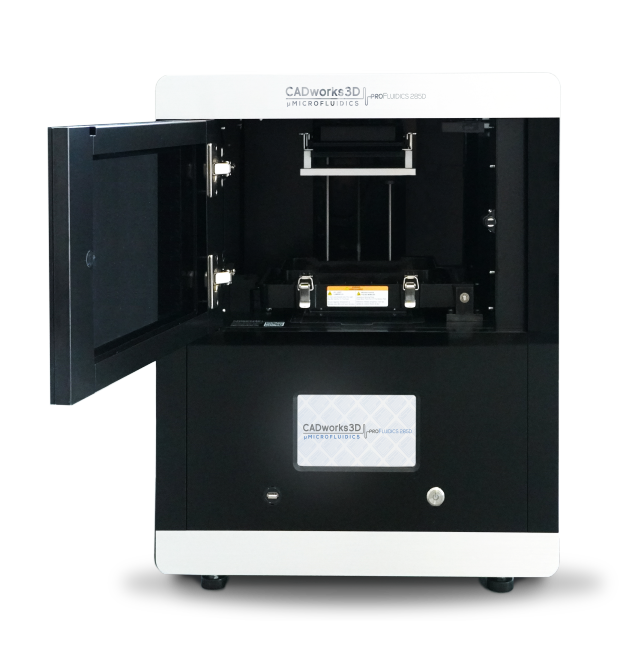
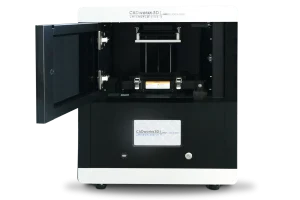
The ProFluidics 285D is a high-precision DLP 3D printer designed specifically for microfluidics applications. Built for accuracy and efficiency, it produces ultra-smooth, high-resolution prints—perfect for intricate microfluidic structures.
Features
4 million pixel projector
Printing area of 110 x 62 x 120mm
28.5μm Dynamic XY pixel resolution
Optimized for
High Precision* 3D print precise channels as fine as 50µm for open features and 80µm for encapsulated features
Advanced Capabilities* RA 0.18µm surface roughness for smooth print
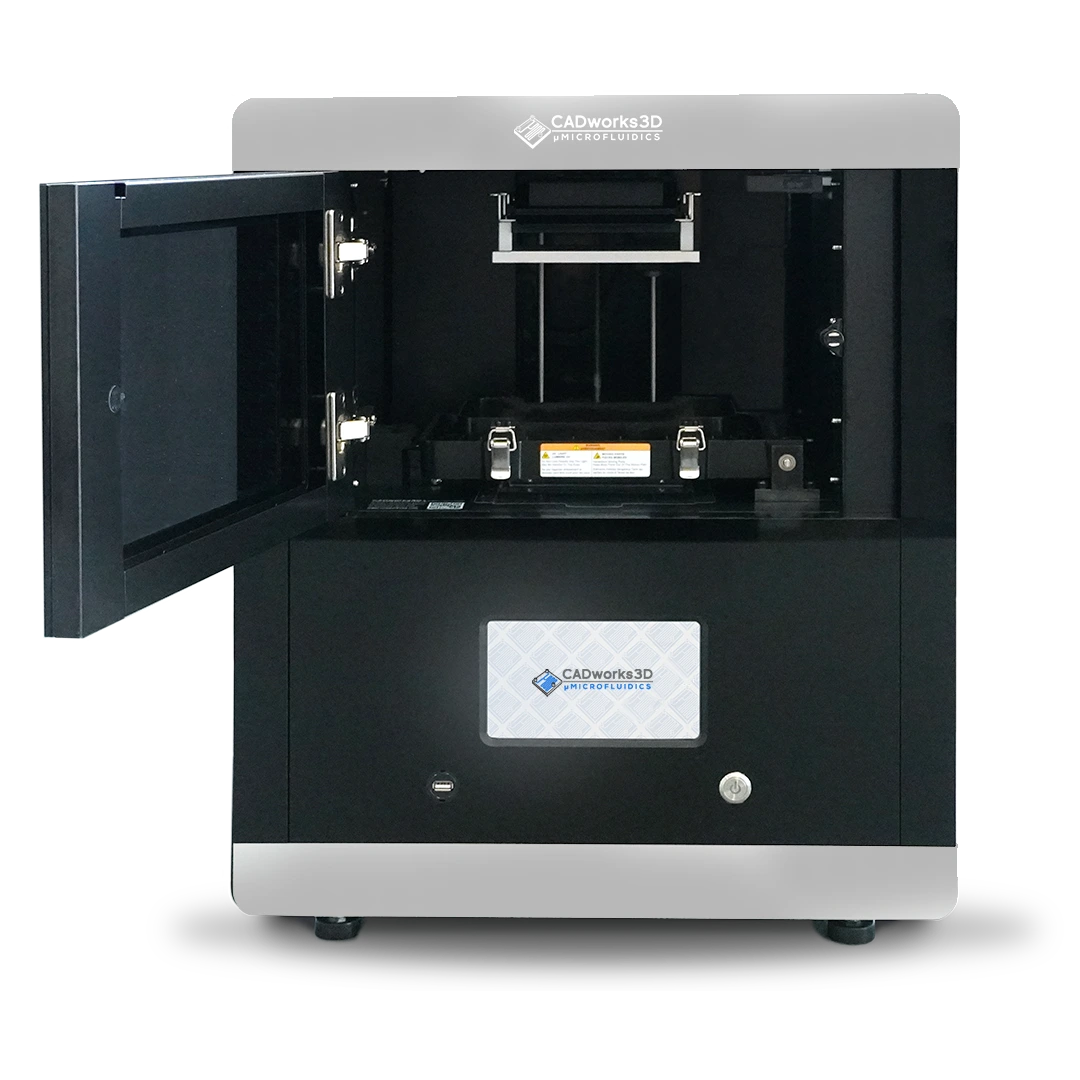
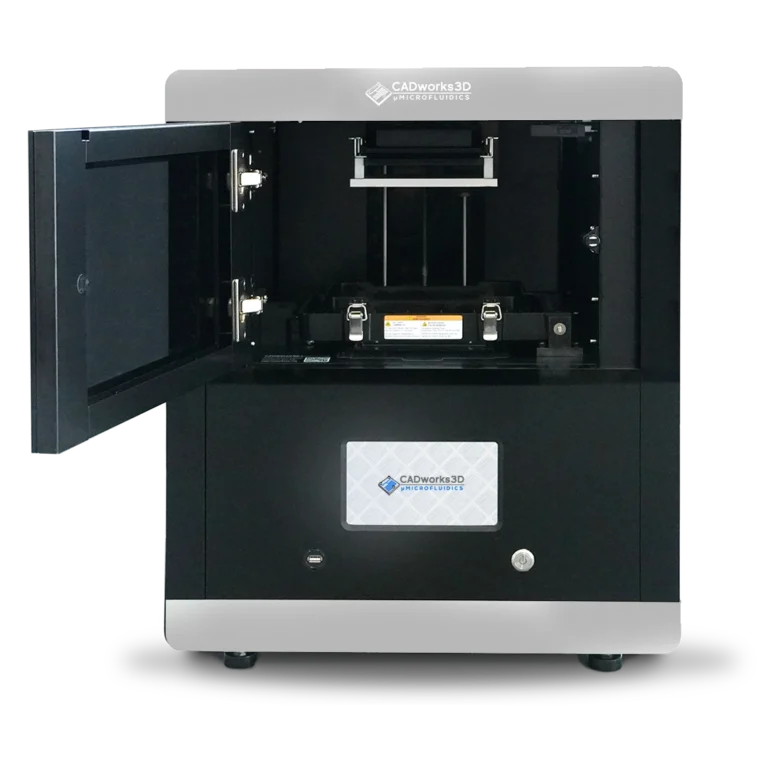
With its pioneering 1080x1920p micromirror array HD projector featuring over 2 million mirrors, the H-SERIES is the trusted choice of researchers, students and scientists. With reliable precision and smooth surface quality, it is an ideal choice for researchers beginning their work in Microfluidics.
Features
2 million pixel projector
Printing area of 57 x 32 x 120mm
XY resolution of 30µm
Optimized for
User-Friendly The H-Series 3D Printer is easy to use, making it an excellent choice for those new to 3D printing
Cost-Effective Prouce high-quality parts for under USD$2 per device, significantly reducing costs compared to outsourcing
Reliable Performance* Ability to create 450µm encapsulated channels and up to 50µm for open features
Efficient Prototyping Faster prototyping at benchside than traditional methods
What Microfluidic Devices Can Our 3D Printers Create?
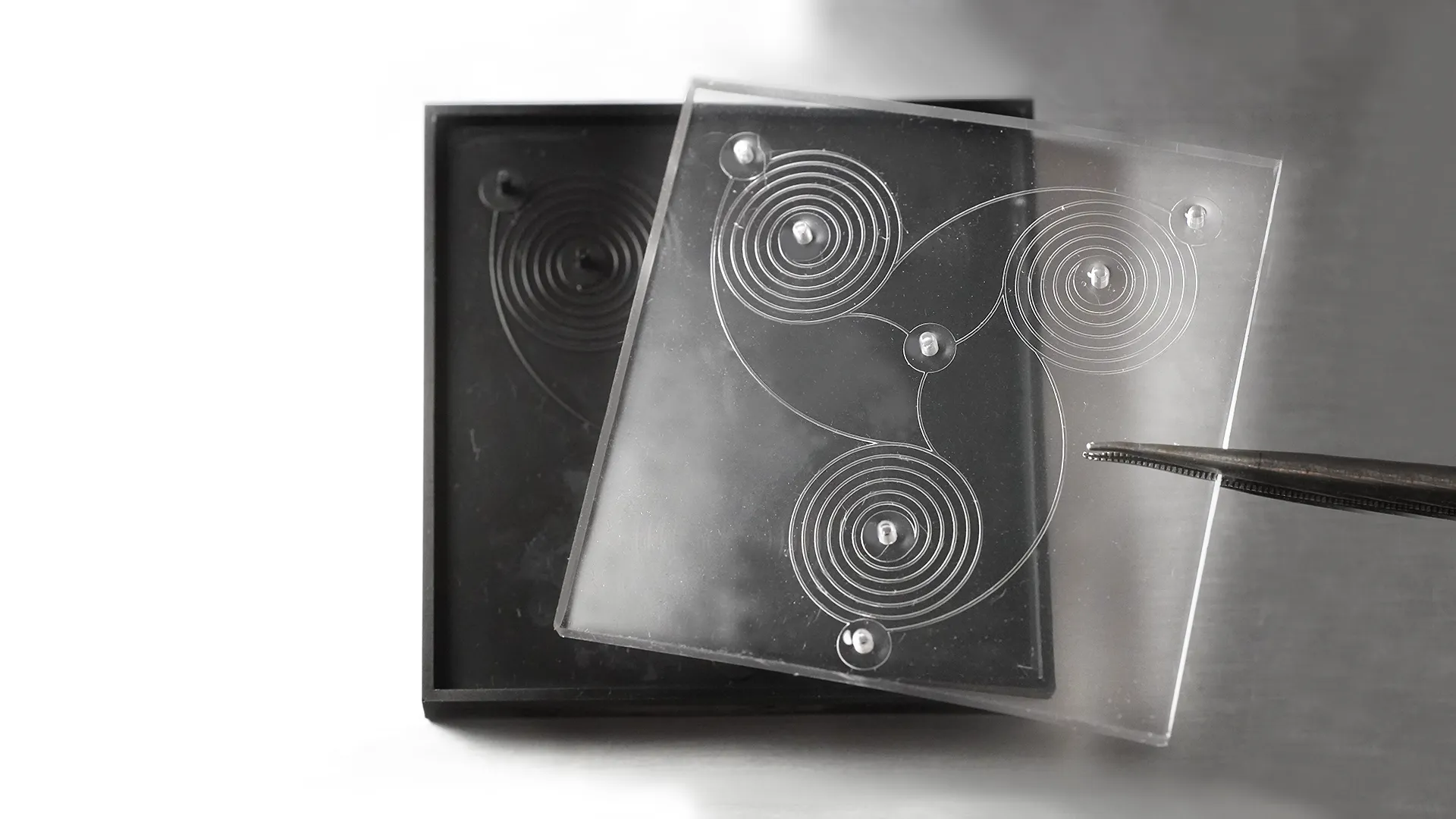
Our 3D printers let you create and test a wide range of microfluidic designs directly at the bench, from rapid prototypes and complex channel networks to microneedles, cell traps, valves, and mixers.
A microfluidic 3D printer is designed to produce the small channels and features needed for microfluidic devices. CADworks3D 3D printers enable researchers to prototype and test high-resolution microfluidic devices directly at the bench.
What materials can I use with CADworks3D 3D printers?
CADworks3D offers specialized materials for microfluidic applications, including Cyto-Clear Photopolymer Resin for transparent, cell-compatible applications and Master Mold for PDMS – Rapid HD for high-resolution master mold fabrication. Material selection depends on your application and the type of device you need to produce.
Is it difficult to use a microfluidic 3D printer?
With our 3D printers, the workflow is straightforward, with three key steps from preparing your design to printing and post-processing. See our 3-step workflow for an overview of the process.